Do you want the best headset?
When shopping for headsets, most buyers focus on three things:
- Features
- Specifications
- Price
Those are certainly important considerations. However, many organizations overlook another factor that can have a significant impact on the overall experience:
The vendor
Whether you're purchasing a single headset or deploying hundreds across an organization, the company you buy from can influence everything from product selection and compatibility to deployment success, user adoption, ongoing support, and long-term value.
In many cases, the headset represents part of the solution.
Choosing the Right Headset Is Important

Selecting the right headset starts with understanding how it will be used.
Questions worth asking include:
- Will users connect to a computer, desk phone, mobile phone, or all three?
- Are employees working in open offices, private offices, remote locations, or call centers?
- Is Microsoft Teams certification required?
- Will users benefit from wireless mobility?
- Is microphone noise cancellation important?
- Will the headset be worn all day?
The answers can dramatically influence which solution is the best fit.
A knowledgeable vendor can help identify compatibility requirements and recommend solutions that align with the user's needs rather than simply selling whatever happens to be popular at the moment.
Not Every User Needs the Same Headset
One of the most common mistakes organizations make is assuming everyone needs the same headset.
In reality, employees often have very different requirements.
For example:
- A receptionist may prefer a mono headset that allows them to hear visitors approaching.
- A contact center agent may benefit from a stereo headset that helps reduce background distractions.
- A hybrid worker may need connectivity to both a computer and mobile phone.
- An executive may prioritize comfort and audio quality during video meetings.
Understanding these differences can help organizations make better purchasing decisions while improving user satisfaction.
Compatibility Problems Can Be Expensive
Many headset returns occur because the solution was not fully compatible with the user's environment.
Examples may include:
- Desk phone compatibility issues
- Software platform requirements
- Connectivity limitations
- Call control functionality
- Microsoft Teams integration
- Zoom compatibility
Purchasing the wrong solution can result in delays, frustration, additional shipping costs, restocking fees, and lost productivity.
An experienced vendor can often help direct you to solutions that are fully compatible with your system helping to avoid mismatches and returns.
Technical Support Matters More Than Many Buyers Realize

For some buyers, support may not seem important, that is, until something goes wrong. Unfortunately, that's often when they discover the difference between vendors.
Some sellers provide little or no assistance after the sale. Others may simply refer customers to the manufacturer for support. Which isn't ideal really.
While manufacturer support can certainly be helpful, the process can sometimes involve multiple layers of troubleshooting, transfers between departments, or extended wait times.
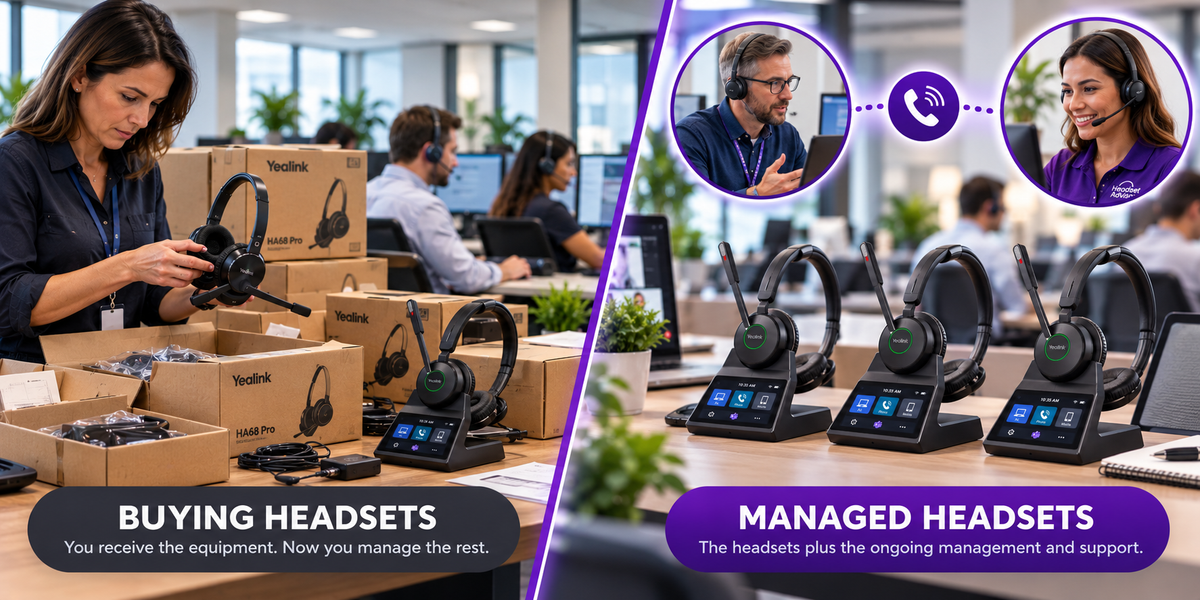
Many organizations prefer working with a vendor that provides direct support and acts as a single point of contact when assistance is needed.
At Headset Advisor, we've built our business around a more hands-on approach. Our California-based team works directly with customers before, during, and after the sale to help resolve issues, answer questions, and provide ongoing assistance when needed.
While that level of support may not matter to every buyer, many organizations appreciate having experienced professionals available when questions or needs arise.
Larger Deployments Often Require Additional Planning
As deployments grow, so does the complexity: More people to deal with, more workstations, more locations, more follow-ups, more questions to answer and the list goes on.
Organizations rolling out headsets across multiple users or locations may need assistance with:
- Product selection
- User evaluations
- Deployment planning
- Device management
- Training considerations
- Ongoing support
Having an experienced partner involved in this process can help reduce deployment challenges, improve user adoption and give you a better overall experience.
Leasing Can Provide Additional Flexibility

Many, if not most organizations automatically assume purchasing is the only option. Whether that’s using a credit card, or purchase order, that’s the way orders have typically been handled.
However, leasing may provide advantages in certain situations.
Leasing benefits can include:
- Preserving available capital
- Predictable monthly rate
- Faster deployment
- No waiting for next years budget
- No compromising on the quantity and models
- Replacement accessories included
- Warranty for the full term of the lease
- Technology refresh flexibility
Not every vendor offers leasing options, which is why it's often worth exploring available acquisition methods before making a decision. You may find leasing offers more advantages than purchasing that can be beneficial when outfitting a team with new headsets.
Trade-In Programs Help Reduce Costs

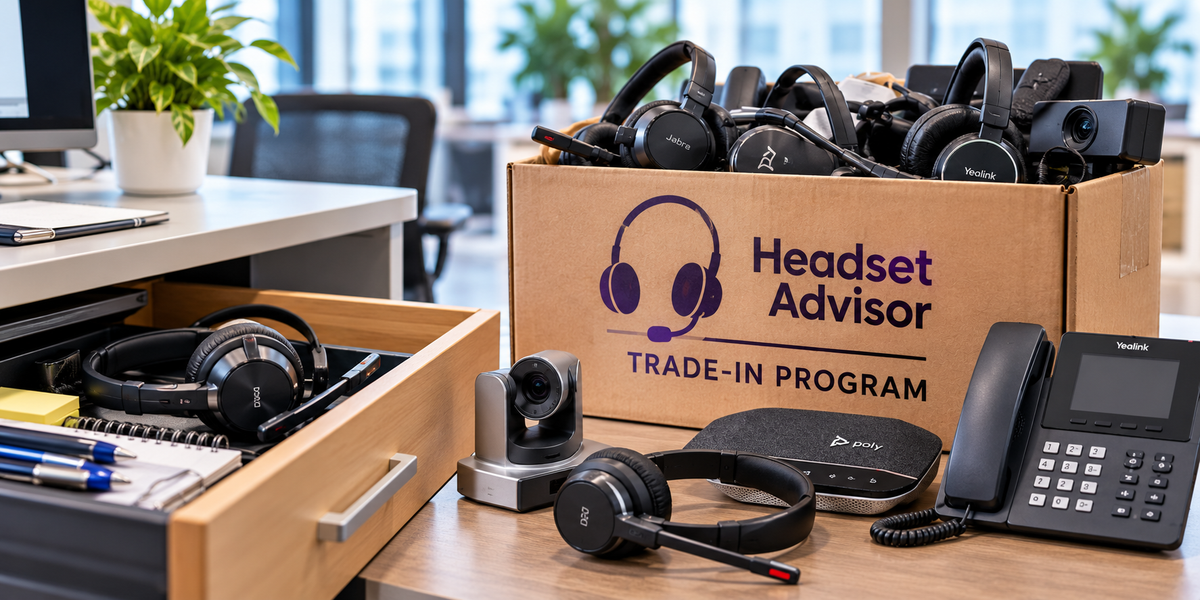
Many organizations have older headsets sitting unused in storage rooms, cabinets, and desk drawers.
Trade-in programs can help to offset the cost of newer equipment while simplifying technology refresh projects.
Potential benefits include:
- Lower acquisition costs
- Removal of outdated equipment
- Simplified upgrades
- Better budget utilization
- Equipment won't end up in the landfill
These programs are generally overlooked during the evaluation process, but well worth the time to explore.
Experience Matters
There is value in working with people who have encountered similar situations before.
An experienced vendor has likely helped customers address challenges such as:
- Large deployments
- Remote workforce transitions
- Call center upgrades
- Microsoft Teams migrations
- Hybrid work environments
- Connectivity issues
- Device compatibility questions
- Purchase and lease
That experience can help organizations avoid costly mistakes while improving the likelihood of a successful deployment.
Price Is Important, But It Isn't Everything

Most buyers have budgets to work within, that’s a given reality. However, the lowest purchase price does not always result in the lowest overall cost.
Poor product selection, compatibility issues, deployment challenges, user dissatisfaction, and inadequate support can all create costs that extend well beyond the initial purchase. Like the age old saying goes:
"The bitterness of poor quality remains long after the sweetness of low price is forgotten."
Low quality could easily refer to a product, or poor service.
For many organizations, the value of expert guidance, responsive support, and long-term assistance far outweighs the modest difference in upfront pricing.
The Best Vendors Focus on Solving Problems
The most valuable vendors do more than process transactions.
They help customers to identify their unique requirements, and then evaluate their available options. This helps to avoid compatibility issues and encourages a successful deployment. The better ones too will respond to problems in a timely manner rather than being slow to respond to these issues.
In other words, a good vendor can help reduce risk, and risk is something that most buyers and IT professionals want to avoid. A well chosen vendor can go a long way towards mitigating risk.
Final Thoughts
Choosing the right headset is important, but choosing the right vendor may be just as important.
While features, specifications, and pricing will always play a role in the buying process, the vendor behind the solution can have a significant impact on compatibility, deployment success, user satisfaction, and long-term value.
Since 1994, Headset Advisor has helped organizations navigate these decisions by providing expert guidance, leasing options, trade-in programs, noise canceling software solutions, deployment assistance, and free ongoing technical support.
Whether you're purchasing a single headset or planning a large deployment, working with a knowledgeable partner can help ensure you get the right solution, and the support needed to make it successful. So don't hesitate to contact us for some expert advice.
 Frequently Asked Questions
Why does the headset vendor matter?
The vendor often plays a key role in product selection, compatibility guidance, deployment assistance, and ongoing support. A knowledgeable vendor can help reduce risk and improve the overall buying experience.
Is manufacturer support enough?
Manufacturer support can be helpful, but some organizations prefer working with a vendor that can provide direct assistance and act as a single point of contact when issues arise.
What should I look for in a headset vendor?
Look for factors such as product expertise, technical support, deployment assistance, leasing options, trade-in programs, industry experience, and responsiveness.
Why shouldn't I buy based solely on price?
The lowest purchase price does not always result in the lowest overall cost. Compatibility issues, comfort and sound quality may be lacking, support challenges, user dissatisfaction, and replacement costs can quickly outweigh initial savings.
Can a vendor help with large headset deployments?
Yes. Experienced vendors can often assist with evaluations, product selection, deployment planning, user adoption, and ongoing support for larger projects including set up assistance, or train the trainer service.
Do all headset vendors provide technical support after the sale?
No. Some vendors provide extensive support, while others may offer limited assistance or refer customers directly to the manufacturer. It's a good idea to understand what support is available before making a purchase.