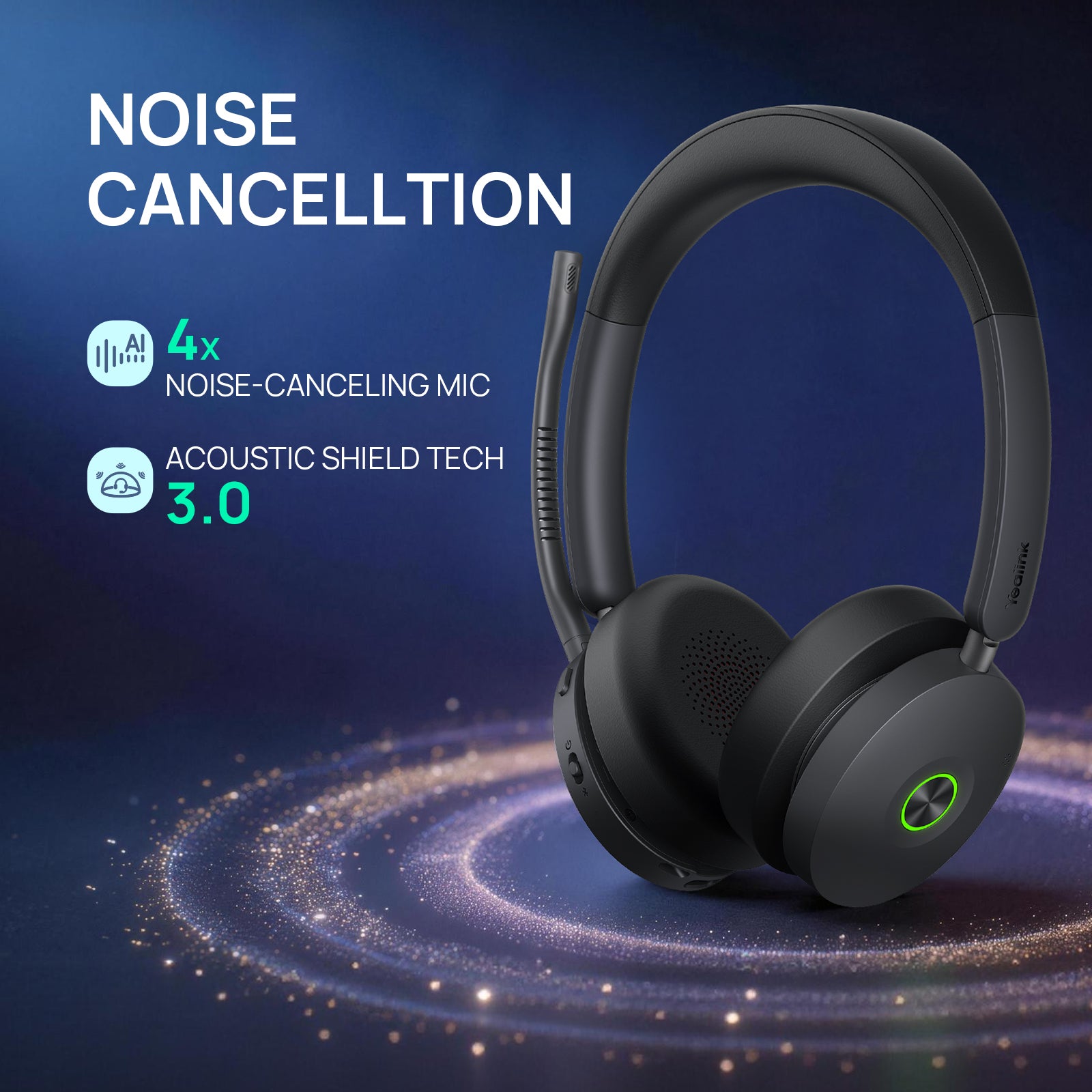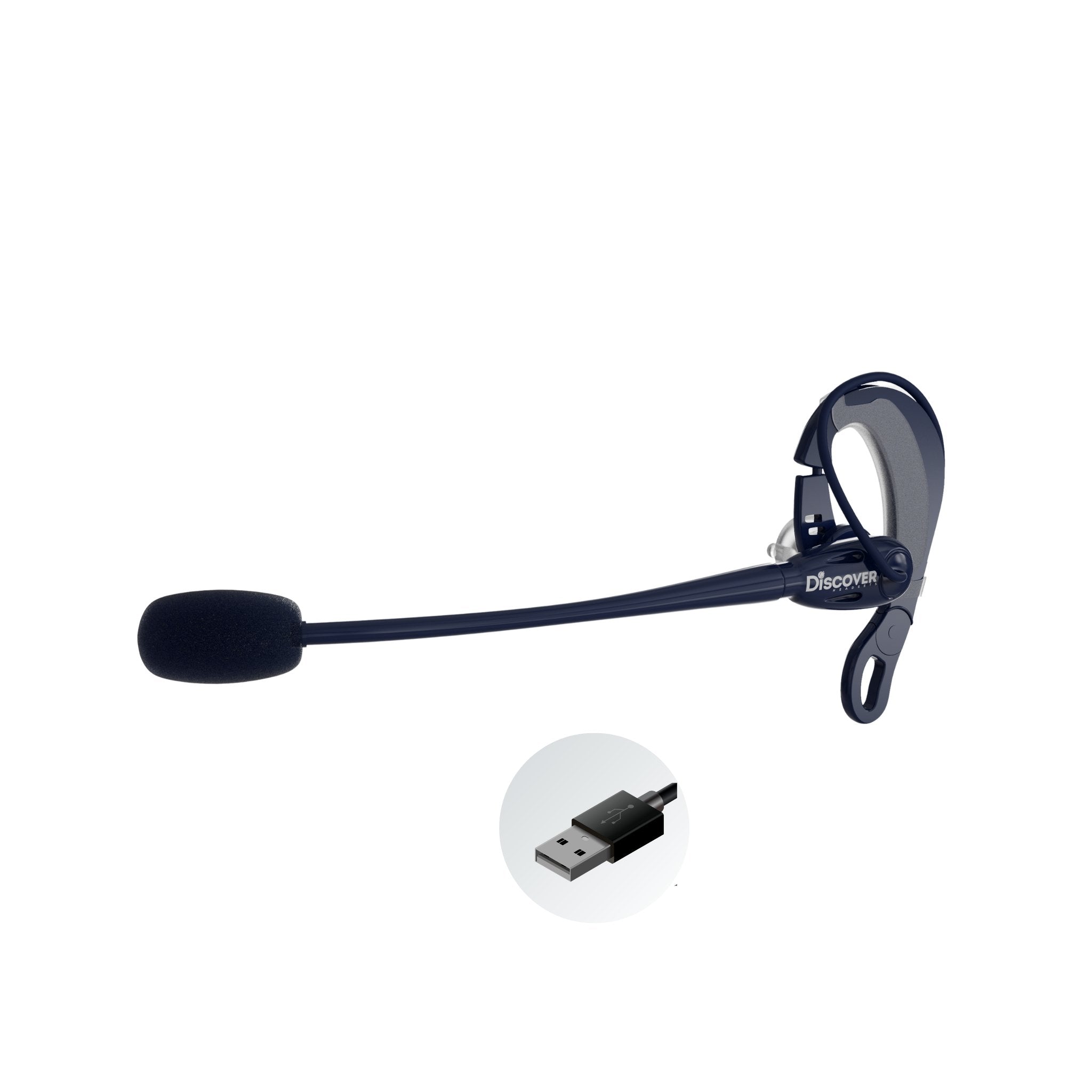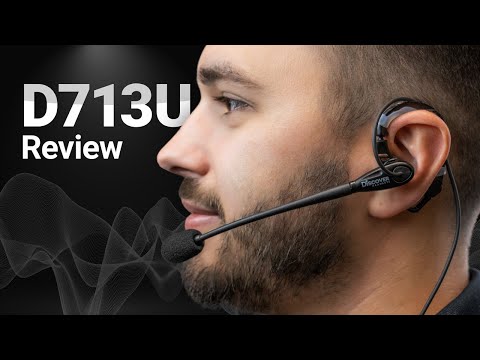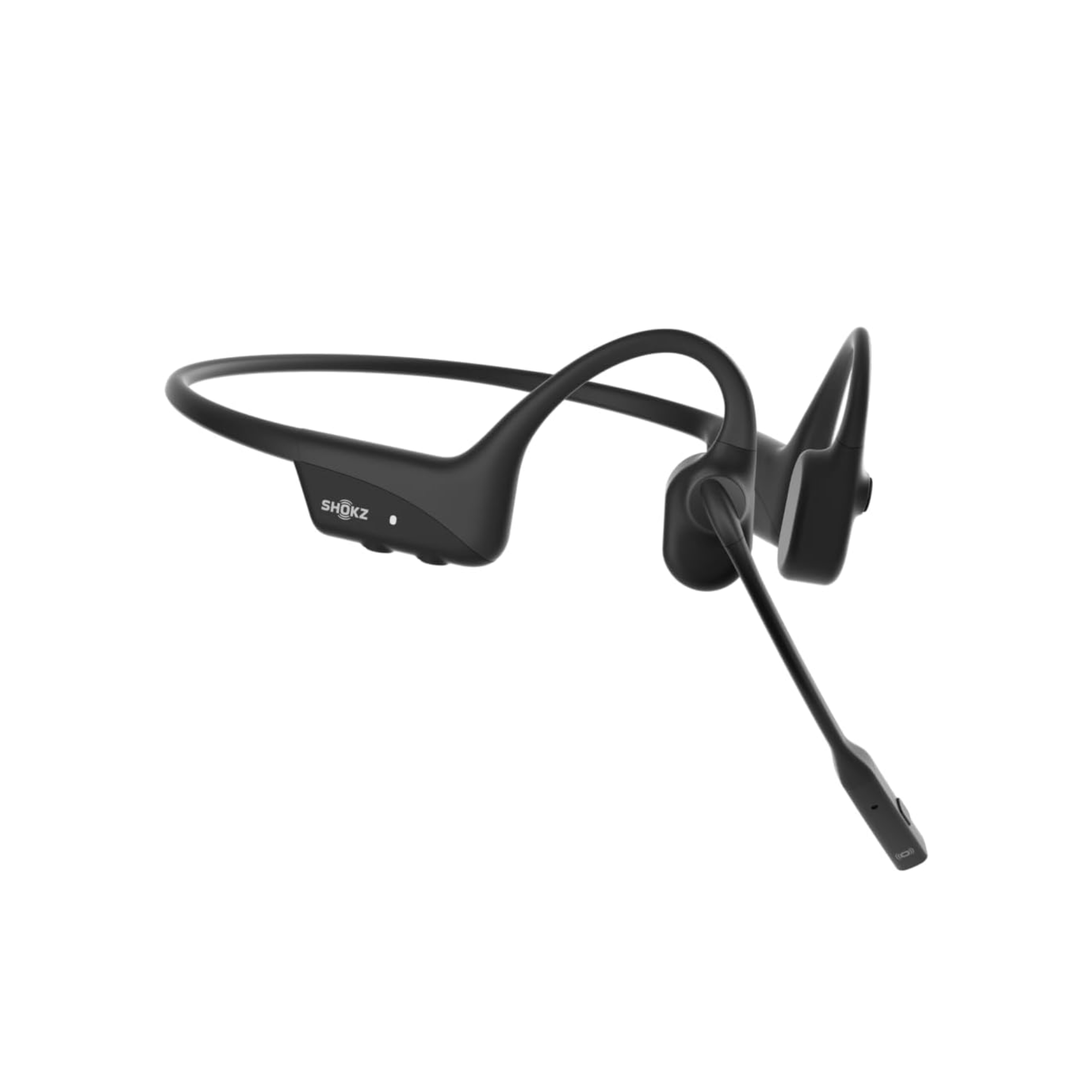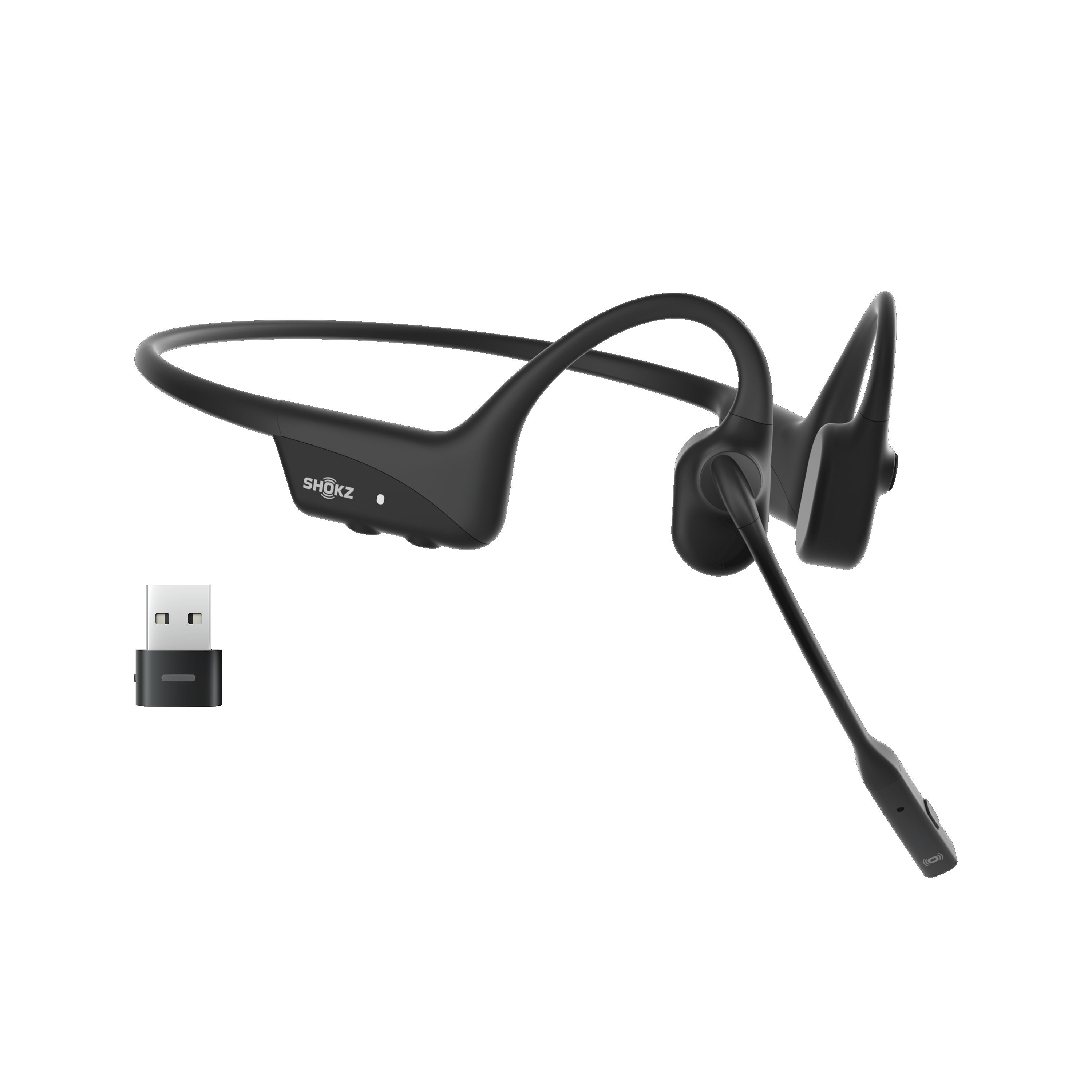
For decades, if you wanted the best microphone performance from a business headset, the formula was pretty simple: put the microphone close to your mouth.
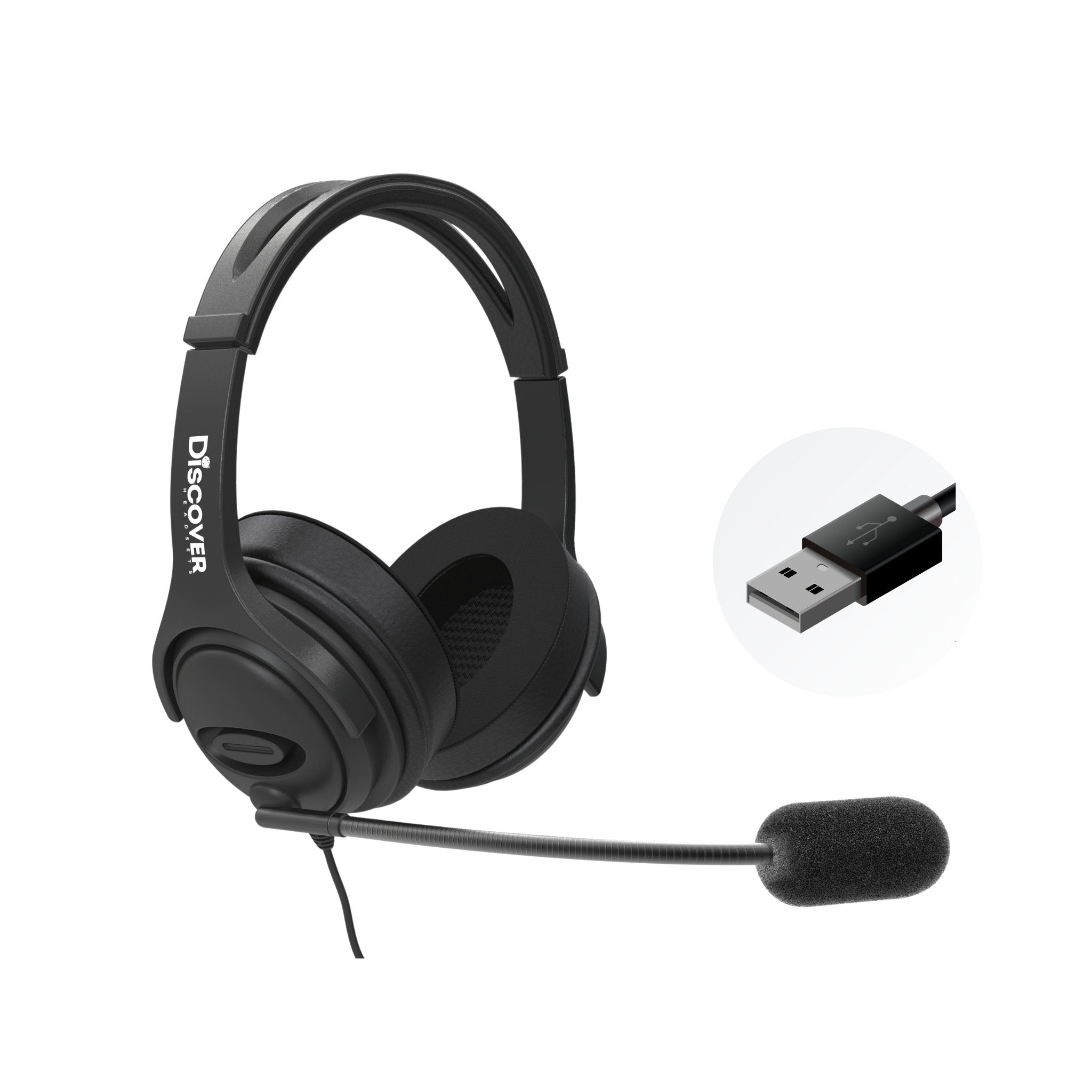
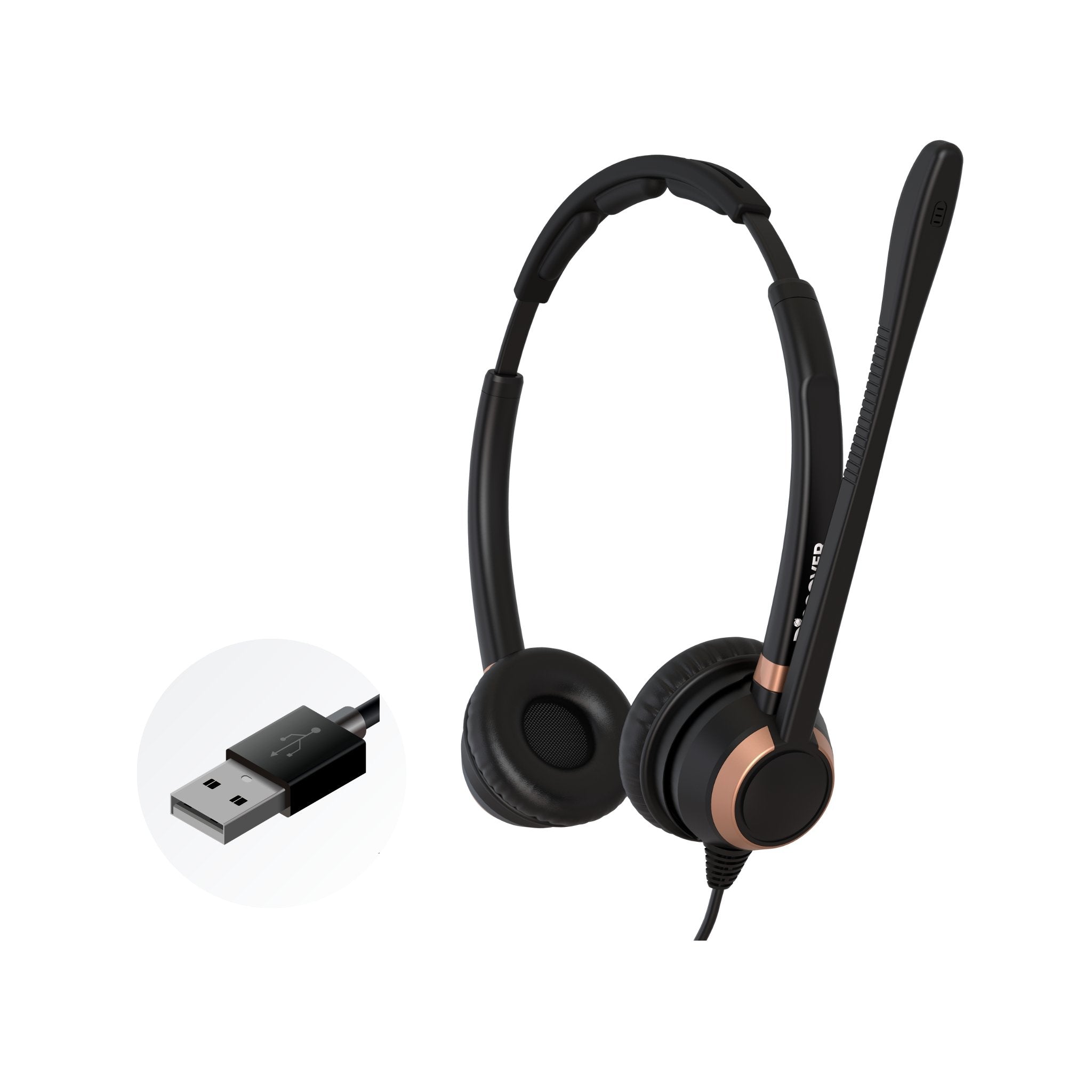
That's why microphone booms became such a familiar part of business headsets. Whether you worked in a call center, private office, home office, or somewhere in between, that little arm extending toward your mouth helped your voice come through clearly while reducing the amount of background noise.
But headset technology is changing.
Microphones have improved, noise reduction has become more sophisticated, and software is playing a much bigger role in separating your voice from everything happening around you. At the same time, the way we use headsets has also changed.

A headset that was once primarily used at a desk might now follow you from a Teams meeting at home, to music on your phone, to a call from the airport, and then onto a flight.
And that's creating an interesting question:
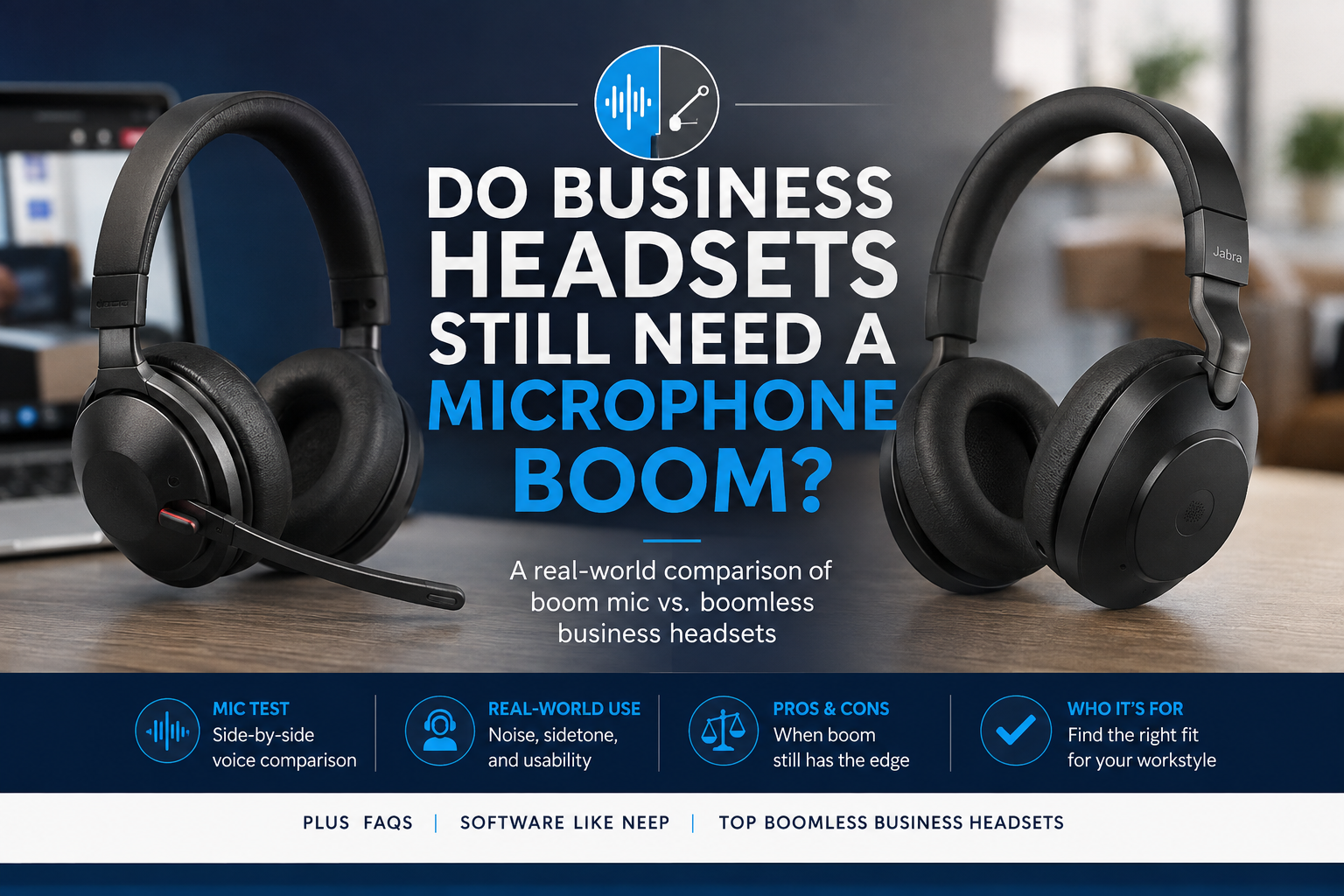
Do business headsets still need a microphone boom?
The recently introduced Jabra Evolve3 75 and Evolve3 85 add to that discussion. Both are designed as business headsets, but neither uses the traditional microphone boom we've come to expect.
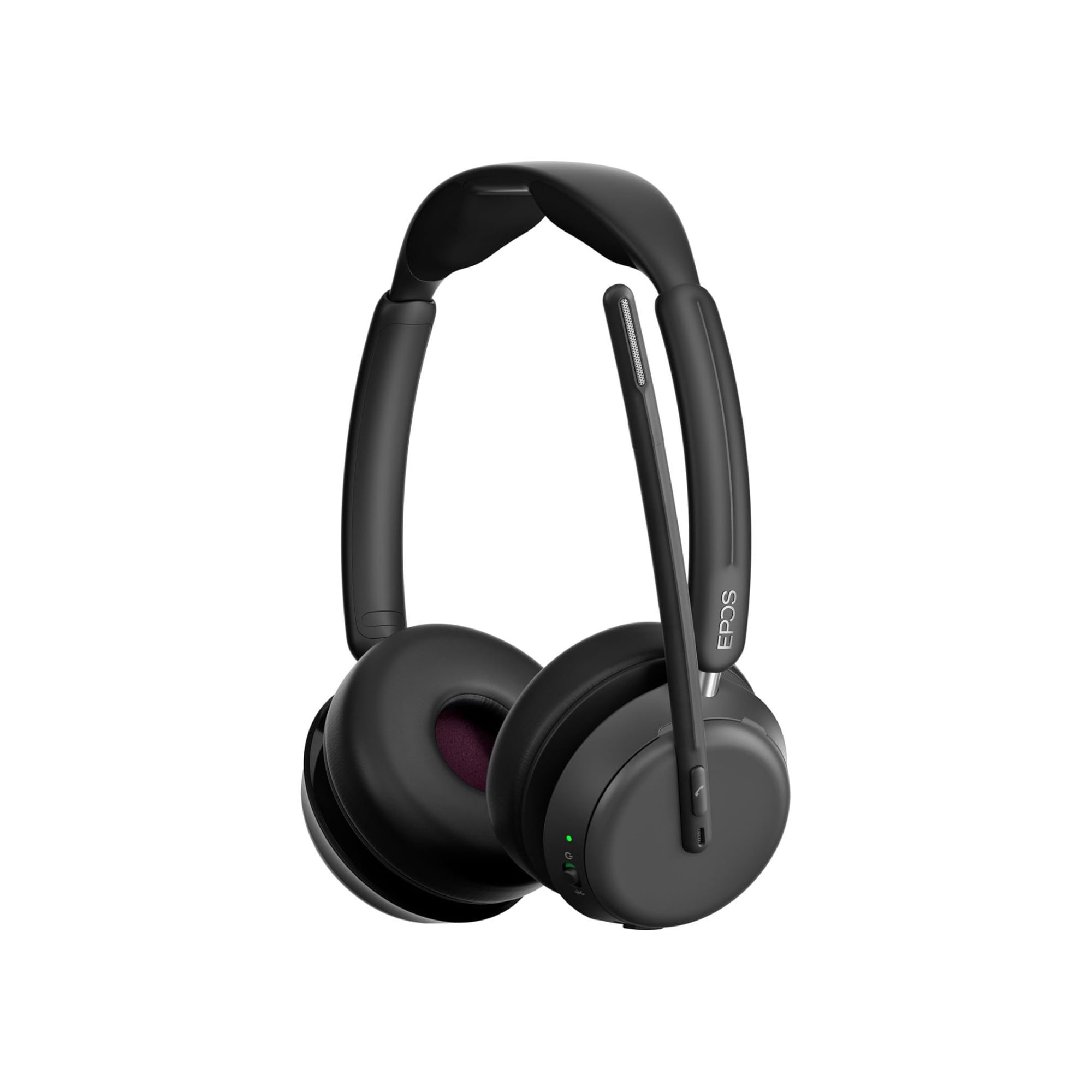
Jabra isn't alone. The Poly Surround 80 and Surround 85, along with the EPOS Adapt 300 and Adapt 600, are other examples of business-oriented headsets that have eliminated the visible boom microphone.
So we're no longer talking about an isolated product or manufacturer. We're beginning to see a new category emerge.
That doesn't necessarily mean the microphone boom has become obsolete. In fact, our testing suggests there are still some very good reasons to have one.
But boomless headsets are beginning to look less like a compromise and more like a legitimate alternative for certain business users.
So, has technology finally reached the point where you can have a serious business headset without a microphone sitting in front of your mouth?
Let's take a closer look.
Why Business Headsets Are Starting to Go Boomless

One of the biggest reasons has little to do with microphone technology and a lot to do with how people work today.
Traditional business headsets were designed primarily as communication tools. You put the headset on when you needed to make or receive calls, and when the workday was over, you took it off. End of story.
Today, those lines have blurred.
You may use the same headset for Microsoft Teams or Zoom meetings, listen to music while you work, take calls from your mobile phone, travel with it, and continue using it after the workday ends.
That's where the traditional microphone boom can become less appealing.
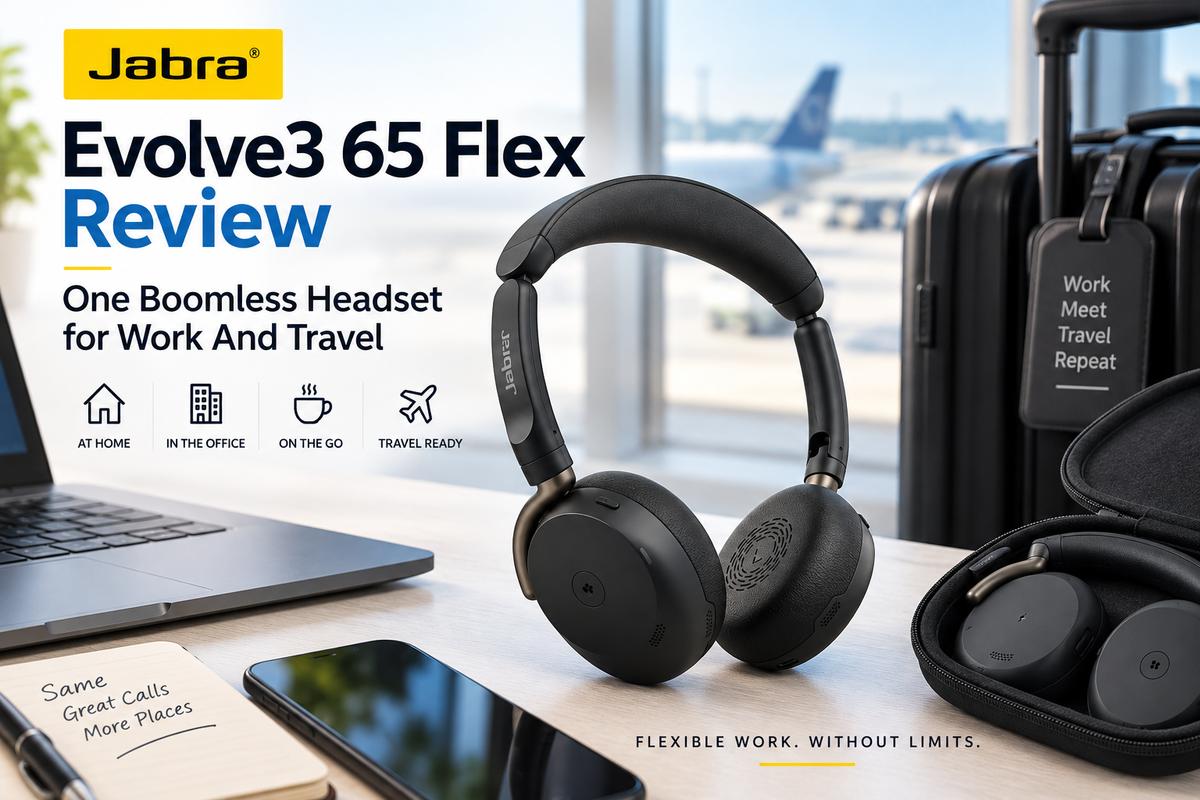
Walk through an airport wearing a headset with a microphone positioned in front of your mouth and you still look like you're wearing an office headset. Remove the boom and suddenly that same device looks much more like a conventional pair of headphones.
But appearance is only part of the story.
The important distinction is that boomless business headsets aren't simply entertainment headphones that happen to have Bluetooth and can be pressed into service for an occasional Teams meeting.
They're designed around work.
Depending on the model, that can mean USB wireless connectivity, call controls, mute synchronization, sidetone, enterprise management tools, and compatibility or certification for the communication platforms businesses use every day.
That's what makes products such as the Evolve3 75 and Evolve3 85 noteworthy. Jabra kept the business orientation while removing one of the most recognizable features of the traditional business headset.
Poly and EPOS have also moved in this direction with their own boomless business models.
That raises the obvious question:
What happens to microphone performance when you eliminate the microphone boom?
Boom Mic vs. Boomless: What Our Testing Revealed
This is where specifications only tell you so much.
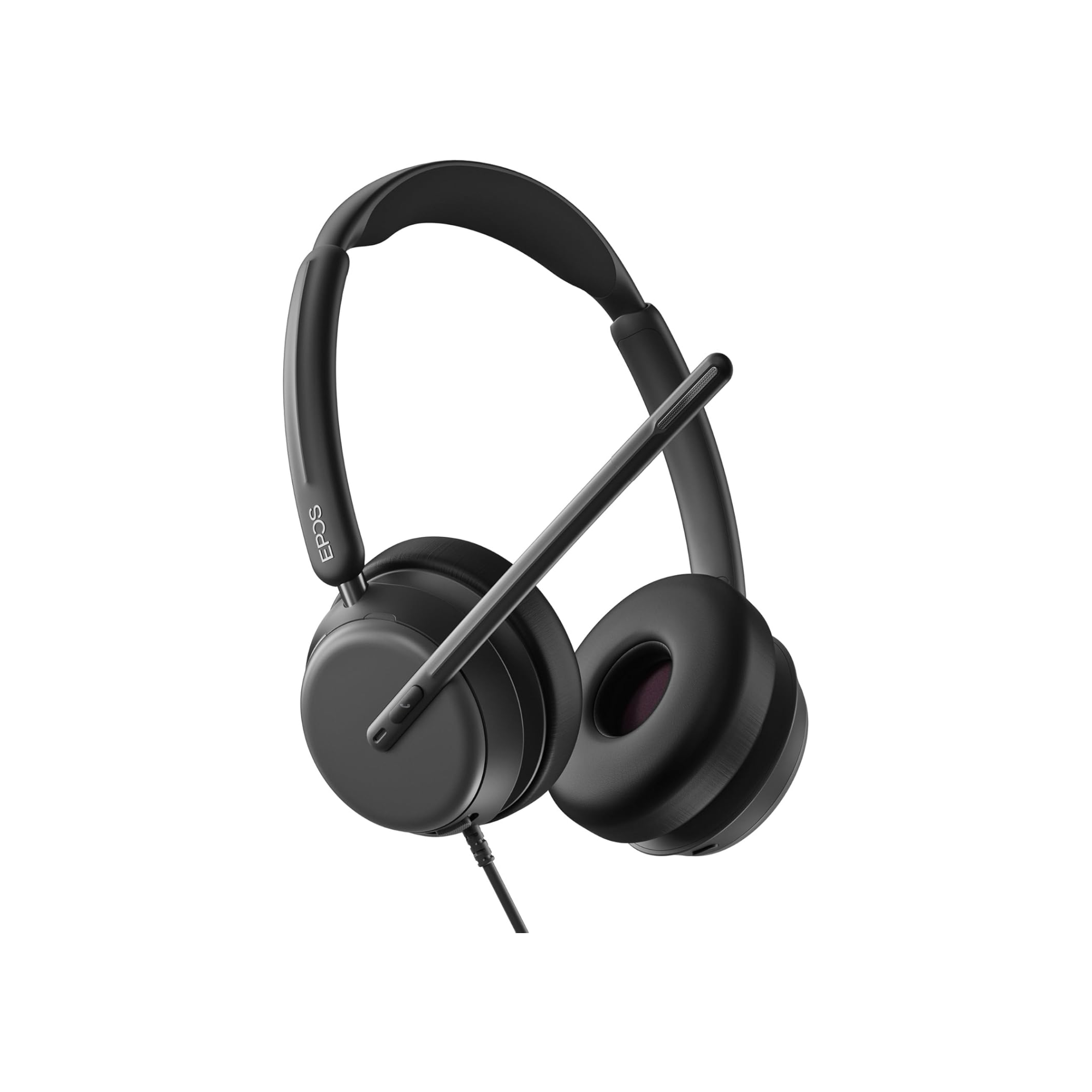
We wanted to actually hear the difference, so we compared the boomless Jabra Evolve3 85 against the EPOS IMPACT 1000, a business headset with a dedicated noise-canceling microphone boom.
Listen to the microphone samples in a quiet environment and you may be surprised by how far boomless microphone technology has come.
The gap is nowhere near what it would have been years ago.
But introduce background noise, such as the keyboard typing used in our test, and the advantages of putting a microphone close to your mouth become easier to hear.
There's a pretty simple reason for that.
Physics still matters.
A microphone sitting just a few inches from the corner of your mouth has an inherent advantage over microphones located farther away in the headset earcups. Your voice reaches the boom microphone more directly and at a stronger level relative to the sounds around you.
Modern microphone arrays, beamforming, noise suppression, and sophisticated processing can compensate for some of that distance. The Evolve3 85 demonstrates just how much progress has been made. Impressive really.
But compensation and microphone placement aren't necessarily the same thing.
Our takeaway from the testing isn't that boomless microphones aren't good enough. Quite the opposite.
They're becoming surprisingly good.
It's simply that a good dedicated boom microphone still generally has the advantage when your priority is consistently transmitting the clearest possible voice, particularly when you're working around competing noise.
For someone taking a few meetings from a quiet home office, that difference may not be particularly important.
For someone spending several hours every day talking with customers, patients, coworkers, or clients, especially in a busy environment, it could matter considerably more.
And microphone quality isn't the only difference between these two designs.
There's More to a Boom Mic Than Sound Quality

One feature that's easy to overlook is flip-to-mute.
On many traditional business headsets, you simply raise the microphone boom and you're muted. Bring it back down and you're ready to speak again.
It's fast, intuitive, and after you've used it for a while, you may not even think about it, but it’s a feature that most people find very useful and convenient.
Remove the boom and that option disappears. Instead, you'll typically use a physical mute button or another control on the headset. And for those times when you need a quick mute (think sudden dog or children noise), finding that mute button quickly can be challenging when moments matter.
That's hardly a deal breaker, but it's one of those small conveniences you may not appreciate until you no longer have it.
Sidetone is another example.
If you're unfamiliar with sidetone, it's simply the ability to hear some of your own voice through the headset while you're speaking. Without it, particularly when you're wearing a headset with good passive isolation or active noise cancellation, you can feel like you're talking with your ears plugged.
To learn more about sidetone, and why it's important, check out our sidetone video below.
Both boom and boomless business headsets can provide sidetone.
What we've noticed, however, is that a dedicated microphone positioned close to your mouth can provide a more natural sidetone experience because it's capturing your voice directly at the source.
Again, that's probably not going to be a leading reason for someone to buy a headset.
But if you're talking for hours every day, little differences in how natural a headset feels can become much bigger differences by the end of the workday.
That's why we wouldn't reduce the boom-versus-boomless decision to “Which microphone sounds better?”
The boom affects how you interact with the headset as well as how you sound.
Boomless has an important everyday advantage of its own.
It gives you a headset that can look equally at home on a Teams call, listening to music, walking through an airport, or sitting on an airplane.
For someone who wants one headset rather than separate work and personal headphones, that's a meaningful benefit.
Where Software Like neep Changes the Equation

There's another reason the boomless conversation is becoming possible: the headset itself no longer has to do all the work.
Noise reduction can now take place at the software level as well as inside the headset.
For example, neep noise canceling software can provide another layer of noise defense regardless of whether you're using a headset with a traditional microphone boom or a boomless design.
And neep does more than simply remove background noise.
It learns your voice, helps enhance it, and isolates it from competing sounds and voices around you. So in that sense, it's doing double duty: reducing unwanted noise while helping your voice stand out more clearly.
There's another important distinction between software noise cancellation and the noise-canceling microphone built into your headset.
Your headset microphone can work on the noise happening around you because that's the audio its microphones are receiving. What it can't do is remove the barking dog, keyboard noise, conversation, or other distractions coming from the person you're talking with.
neep can help on both ends of the conversation.
That means it can reduce distracting noise in your environment as well as noise being transmitted to you from the other caller, something the headset itself can't do.
That doesn't mean adding neep automatically makes every boomless headset perform better than a high-quality boom microphone. Hardware design and microphone placement still matter.
Instead, it illustrates something larger that's happening with business audio.
Increasingly, good communication isn't being determined by one piece of hardware alone. Microphones, onboard processing, software, and AI are beginning to work together, and that's helping narrow a performance gap that once made a boom microphone almost mandatory for serious business use.
Which Design Makes More Sense for You?

This is where we don't think there's a clear winner.
If you're on calls and meetings for roughly 30% or more of your workday, regularly work around background noise, or simply want the best voice sound quality you can get, we'd still lean toward a quality headset with a dedicated microphone boom.
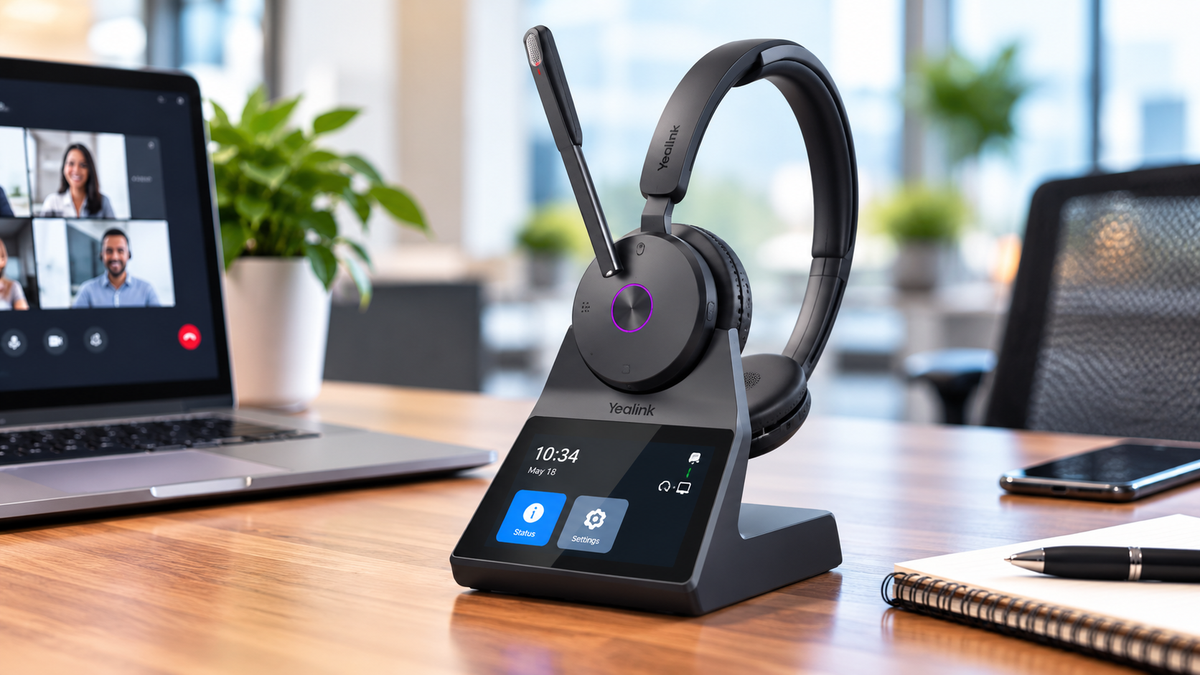
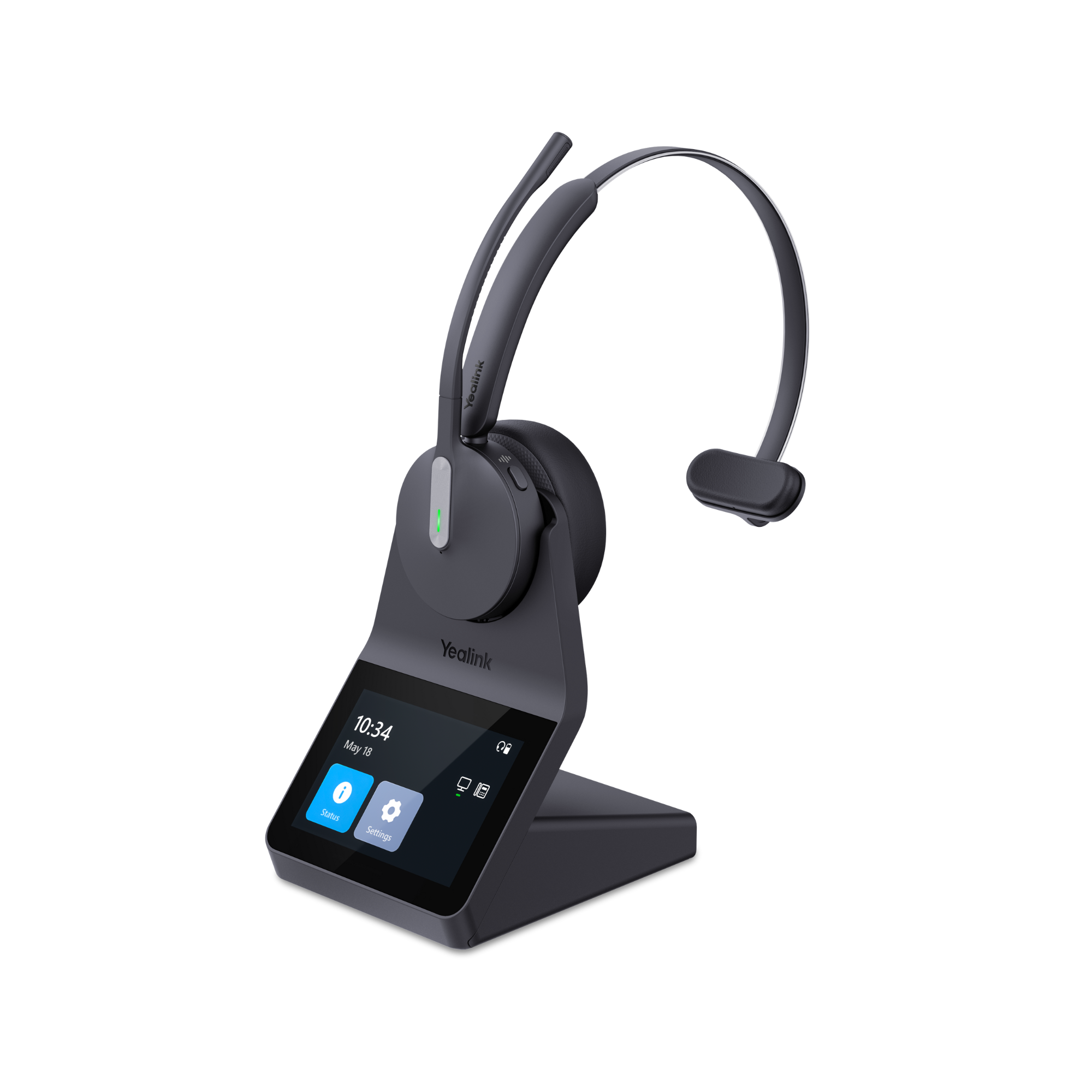
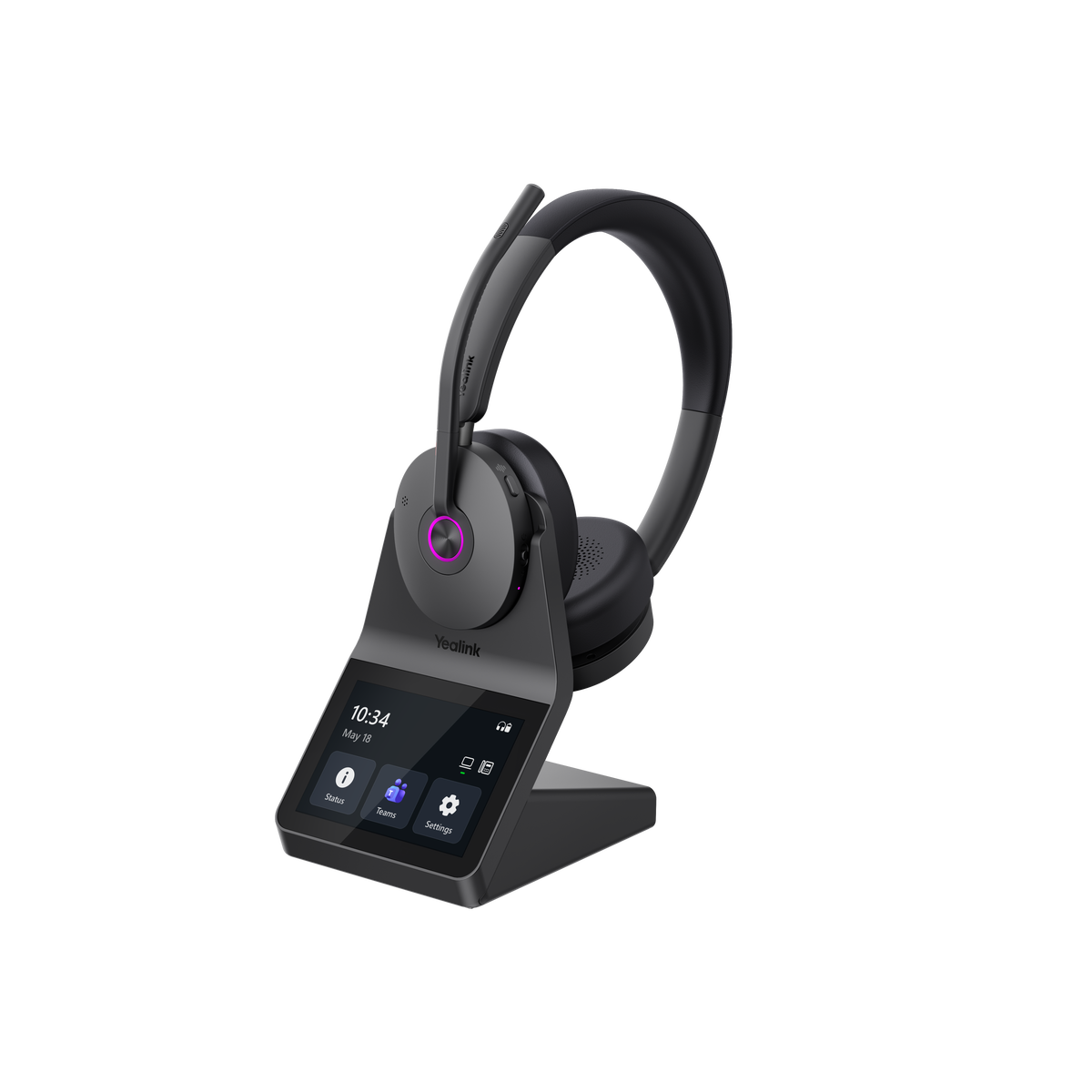
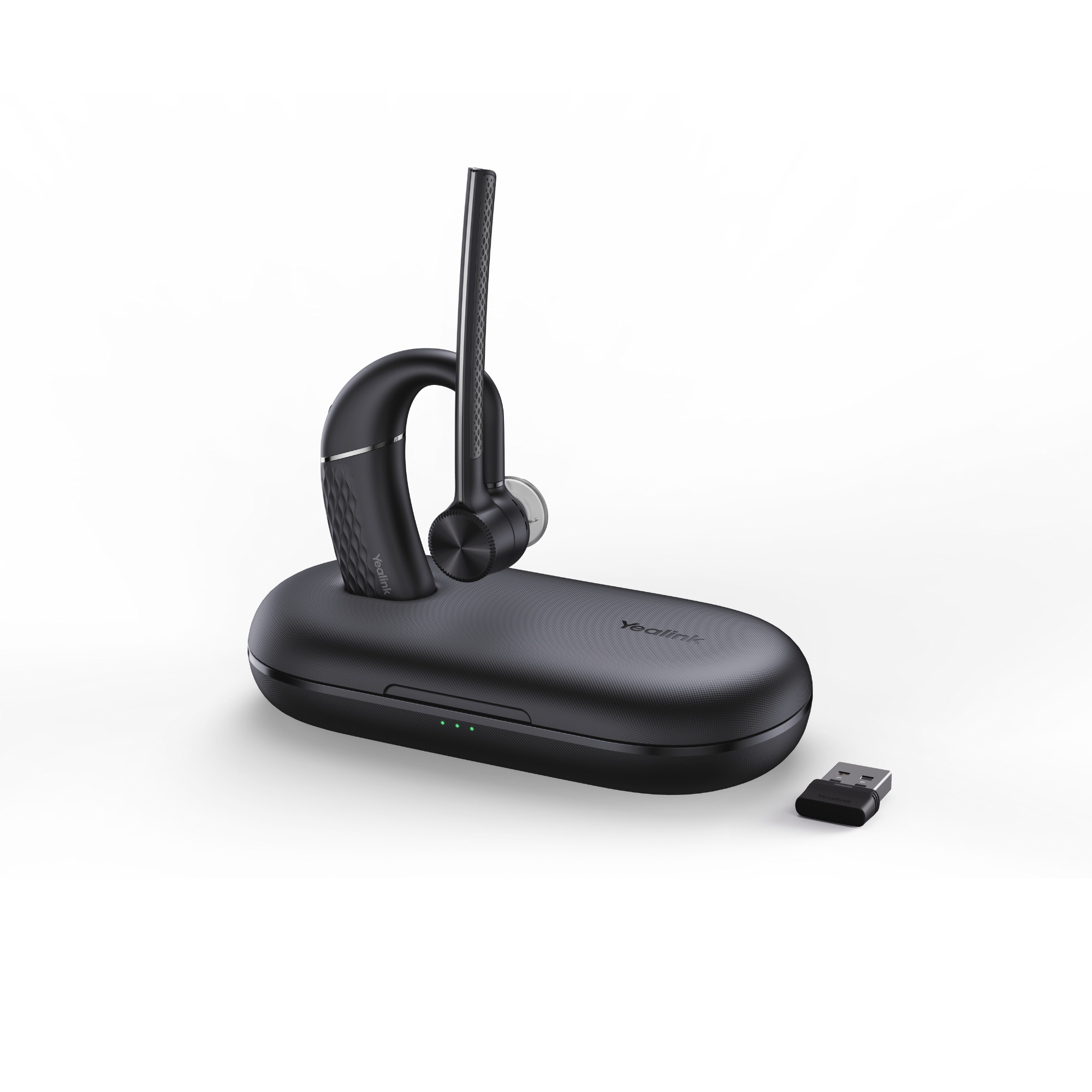
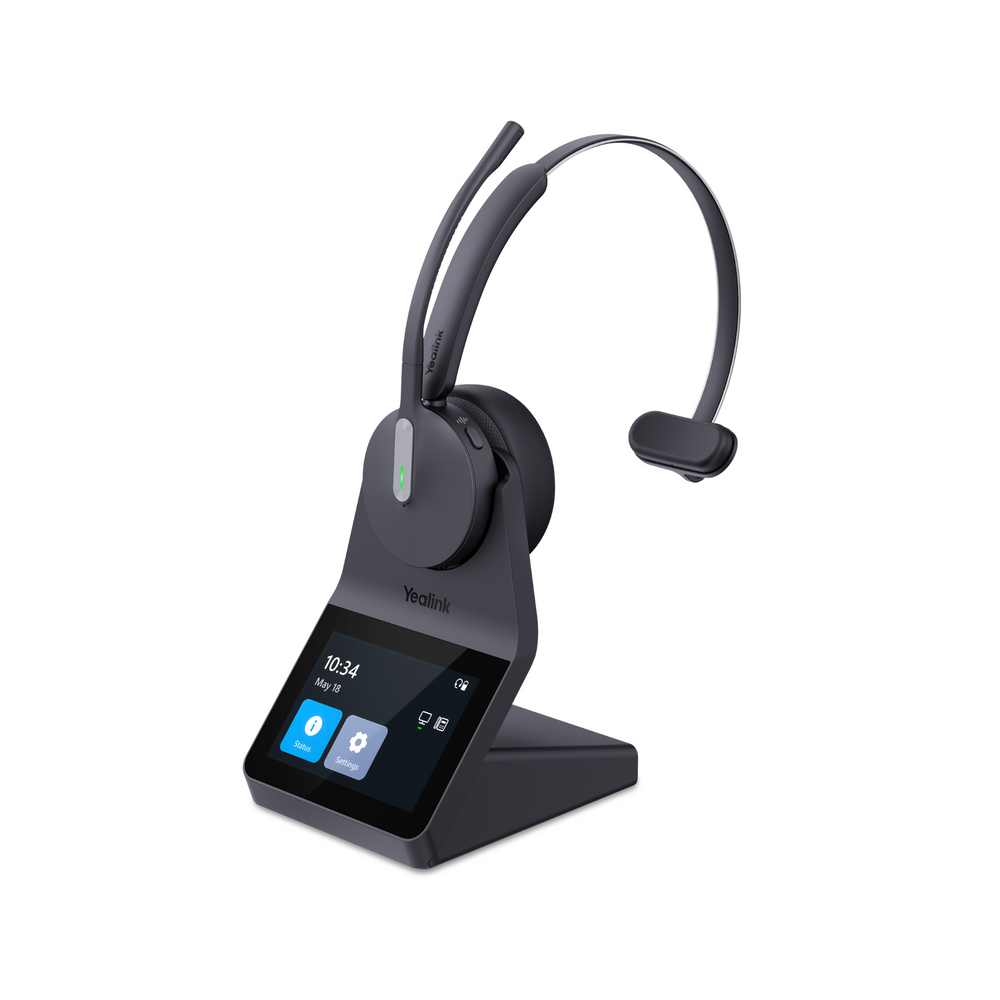
Products such as the Yealink HA64 Pro and EPOS IMPACT 1000 are good examples. Communication is their primary job, and their designs reflect that priority.
A boom microphone can also make sense for salespeople, customer-service representatives, contact-center agents, healthcare workers, dispatchers, and others whose voice is one of the primary tools they use throughout the workday.
But suppose your day looks different.
Maybe you have a couple of Teams meetings, spend part of the day listening to music, take calls from your mobile phone, travel regularly, and don't want to carry separate headphones for work and personal use.
That's where a boomless business headset starts looking much more attractive.
The Jabra Evolve3 75 and Evolve3 85, Poly Surround 80 and 85, and EPOS Adapt 300 and Adapt 600 are examples of this emerging middle ground: products intended for business communication but designed more like the headphones people are accustomed to wearing outside the office.
With a boomless headset, you're giving up some of the inherent advantages of having a microphone positioned near your mouth (ideally, two fingers width from the corner of your mouth, and just below your lower lip).
What you're getting in return is flexibility.
And depending on how you work, that may be a very worthwhile trade.
Are Boom Microphones Going Away?
We don't think so, at least not anytime soon.
There's simply too much value in placing a microphone close to the person speaking, particularly in communication-intensive jobs and noisy environments.
But something important is changing.
Until recently, choosing a boomless headset for work often meant accepting a consumer-oriented product that wasn't really designed around business communications. You might get excellent music and active noise cancellation, but you'd sacrifice some of the business features found on a dedicated office headset.
That's becoming less true.
Products from Jabra, Poly, and EPOS demonstrate that major business-headset manufacturers see an opportunity to combine professional communication features with a more conventional headphone-style design which is appealing to a lot of people.
In other words:
Boomless is becoming a legitimate business-headset category.
Technology has narrowed the microphone performance gap considerably, while hybrid and mobile work have increased demand for headsets that can comfortably transition between professional and personal use.
That doesn't make one design better than the other.
It gives you another choice.
And it will be interesting to see where manufacturers take this next. As microphone technology, processing, and AI continue improving, we wouldn't be surprised to see more boomless business models introduced with even greater capabilities.
For now, our conclusion is pretty straightforward:
If communication is the primary reason you're wearing a headset, the microphone boom still has an advantage.
If you want one headset that can comfortably handle business calls, music, travel, mobile calls, and everyday listening, boomless business headsets have become good enough to deserve serious consideration.
Frequently Asked Questions
Do boomless headsets cost more than headsets with a microphone boom?
No. In general, boomless business headsets are priced comparably to headsets with similar features that use a traditional microphone boom.
Keep in mind that the Jabra Evolve3 75 and Evolve3 85 mentioned in this article are considered premium business headsets, so they're priced accordingly, just as premium business headsets with boom microphones are.
Do boomless headsets have shorter warranties?
No. Whether a headset has a microphone boom doesn't typically determine its warranty length. Warranty coverage is generally established by the manufacturer and product line, so you'll find boom and boomless business headsets with comparable warranty coverage.
Is the Jabra Evolve3 the only boomless headset designed for business use?
No. The Jabra Evolve3 75 and Evolve3 85 are newer examples, but they're not the only boomless headsets designed specifically for business use.
The Poly Surround 80 and Surround 85, along with the EPOS Adapt 300 and Adapt 600, are other examples of business-oriented headsets that don't use a traditional microphone boom.
The growing number of choices suggests that boomless business headsets aren't simply a one-product experiment. They're developing into a legitimate category for people who want business communication features combined with a more conventional headphone-style design.
Can a boomless business headset be used with Microsoft Teams and Zoom?
Yes. Removing the microphone boom doesn't prevent a headset from being designed for applications such as Microsoft Teams and Zoom.
Depending on the model, boomless business headsets can include USB adapters, integrated call controls, mute synchronization, sidetone, and other features normally associated with traditional business headsets. You should always check the specific model for compatibility with the applications and devices you use.
Can I use a boomless business headset with my mobile phone?
In many cases, yes. Bluetooth boomless business headsets can typically pair with compatible mobile phones in addition to computers.
That's actually one of the attractions of this type of headset. You can use the same device for a work meeting on your computer and later use it for business or personal calls from your mobile phone.
Can boomless business headsets be used for music?
Yes. In fact, this is one area where the boomless design can be particularly appealing.
You get the appearance and convenience of conventional headphones for music and personal listening while retaining the communication features you'd expect from a business headset.
Is a boomless headset more durable because there's no microphone boom to break?
Not necessarily.
Eliminating a moving microphone boom does remove one mechanical component, but that doesn't automatically make the entire headset more durable. Overall durability depends on the materials, hinges, headband, ear cushions, electronics, and general construction of the particular headset.
Have Questions, Or Need Some Help?

With so many different headsets available today, it's easy to become confused about which one makes the most sense for your particular work environment. That's where we can help.
Headset Advisor has been helping businesses with their communication needs for more than 30 years, backed by 800+ five-star Google reviews. Our knowledgeable Advisors can help you sort through the choices, check compatibility, answer your questions, and recommend a solution based on how you actually work, not simply what's newest or most expensive.
And our help doesn't end when you buy. We provide setup assistance along with free lifetime product support, so you'll have someone to turn to if questions come up later.
You don't have to figure it all out on your own. Contact Headset Advisor today for a tailored recommendation or answers to your most pressing headset questions.