Do you want the best headset?
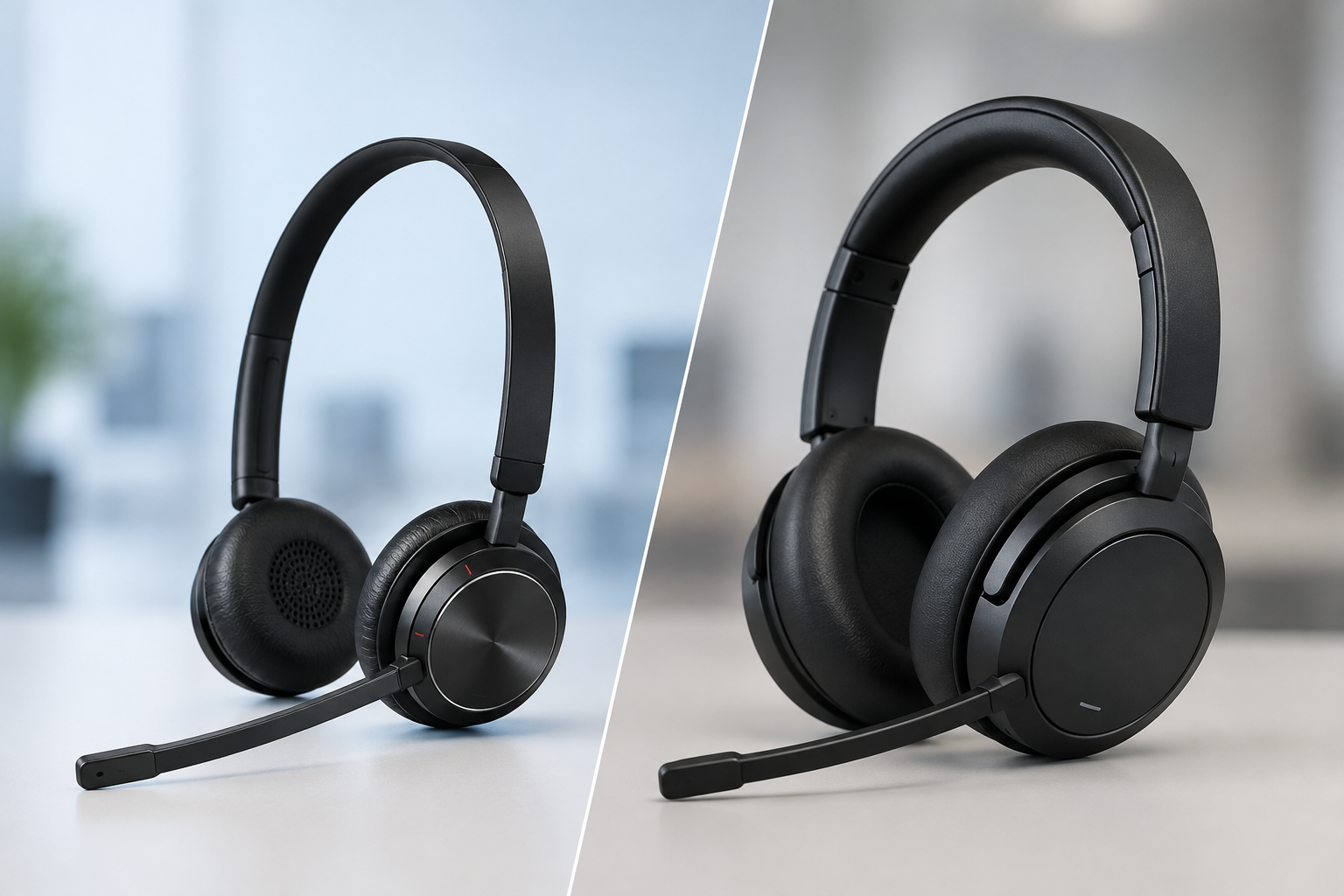
The Poly Voyager Focus 2 has been one of the more popular Bluetooth headsets for business professionals working from home, in the office, or somewhere in between.
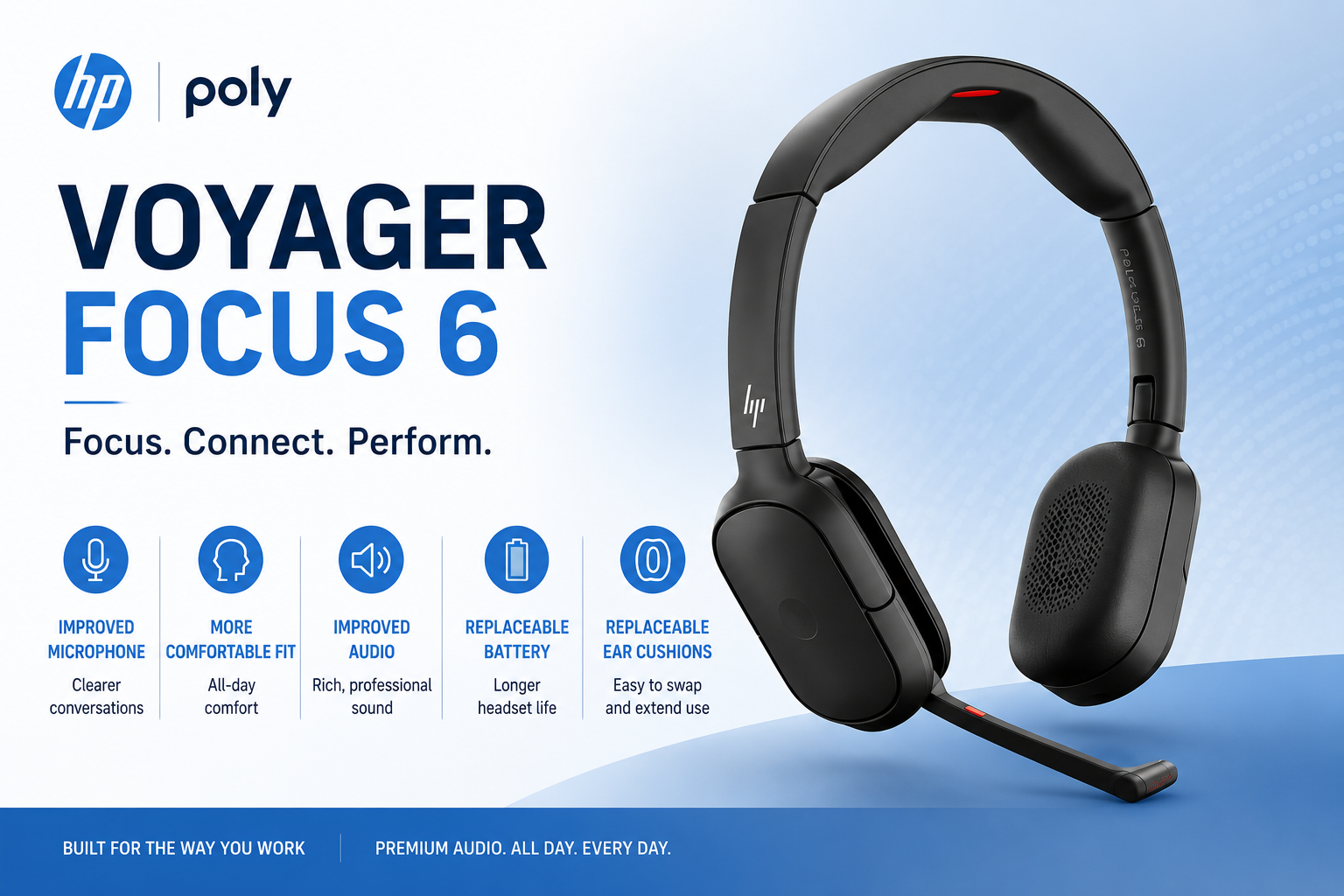
Rather than making a few cosmetic changes and attaching a new model number, HP took a much more ambitious approach with the HP Poly Voyager Focus 6.

This is a substantial redesign where they didn't alter the Focus 2. Instead, they started with a clean sheet of paper, and from the ground up, created a totally new design.
HP changed the appearance, design and construction, updated the microphone and noise-canceling technology, added a replaceable battery, introduced magnetically attached ear cushions, and even created a foldable version for people who travel or regularly move between work locations.
The result is a headset that looks and feels less like an updated Focus 2 and more like HP asking:
“If we designed the Voyager Focus from scratch today, what would we change?”
In this review, we’ll explain what the Voyager Focus 6 is, what it does, who it’s designed for, and, most importantly, how it compares with the Voyager Focus 2 it replaces.
Watch Our Hands-On Voyager Focus 6 Review
Our review includes microphone, ANC and wireless-range testing, so you can hear and see how the Focus 6 performs rather than relying only on manufacturer specifications.
What Is The HP Poly Voyager Focus 6?
The HP Poly Voyager Focus 6 is a premium stereo Bluetooth business headset designed for professionals who spend a significant portion of their workday on calls and video meetings.
It's intended for use with applications such as Microsoft Teams, Zoom, Google Meet and other popular Unified Communications platforms. HP lists Microsoft Teams, Zoom and Google Meet certifications for the Focus 6 series.
The headset combines Bluetooth connectivity with Hybrid Active Noise Cancellation, a retractable/hideaway microphone boom, smart sensors, a busy light and tactile controls.
HP rates the Focus 6 for up to 25 hours of talk time with ANC and the online indicator enabled, or up to 30 hours with those features turned off.
There are also two versions of the Focus 6:
1. Standard non-folding model - Focus 620/625 - part number C56XPAA - For the Teams version: C56XPAA#AC3
2. Foldable version - Focus 620/625 Fold - part number: C56XSAA - a foldable version designed to pack more easily for commuting and travel. C56XSAA#AC3 for the Teams version.
The standard version comes with a soft pouch, while the Fold version includes a hard case.
An optional HP Poly wireless charging stand is also available separately or in select bundles. The part number for the charging stand is: C56Y0AA
What's New With The Voyager Focus 6?
The easiest way to understand what HP did in making the Focus 6 is to recognize that this isn't a minor refresh of the Voyager Focus 2.
The entire headset has been rethought, and completely redesigned.
- The physical design is different
- The microphone technology has been updated
- ANC performs better in our testing
- The battery is replaceable
- The ear cushions attach magnetically and extremely easily. In fact, I more or less tossed the ear cushion in the right direction, and it grabbed it, and attached it properly. Saying it’s simple to attach would be an understatement. The available cushions are on-ear, and optional over-ear.
- Travelers can now choose a foldable version for greater convenience.
Before we dig into each change, here's the big-picture comparison.
Voyager Focus 2 vs. Voyager Focus 6

HP confirms that the Focus 6 uses six microphones, Acoustic Fence 2.0, enhanced noise reduction and Hybrid ANC.
Now let's look at the changes individually.
A Completely Redesigned Headset
Visually, the Voyager Focus 6 bears little resemblance to the Focus 2. In fact, you could argue that it looks like a completely different headset entirely.
The new headset is slimmer and more contemporary, with a cleaner overall design and a microphone boom that hides alongside the ear cup when you're not using it.
HP describes the Focus 6 as having a slim design, hideaway boom, soft cushions and an ergonomic headband intended for all-day use. The headset profile is slimmer, with a tighter, more slender look, rather than having a wide profile that can look a bit bulky.
The redesign isn't only about appearance, though.
Several of the most useful improvements are things you may appreciate more after owning the headset for a few years.
Replaceable Battery: A Small Change With Big Long-Term Benefits

Bluetooth headset batteries don't last forever.
As rechargeable batteries age, their capacity gradually declines. Traditionally, that can mean replacing an otherwise perfectly usable headset simply because its battery no longer delivers acceptable runtime.
The Voyager Focus 6 takes a different approach.
The battery is replaceable.
That can extend the service life of the headset considerably.
For an individual user, that could mean avoiding an unnecessary replacement and its cost.
For an organization deploying dozens or hundreds of headsets, replaceable batteries could help reduce long-term replacement costs and electronic waste.
It's one of those improvements that isn't particularly glamorous, but we think it's one of the smartest and more useful changes HP made.
Magnetic Replaceable Ear Cushions

The ear cushions have also been redesigned. Most ear cushions tend to be more circular in shape, but these cushions are more elongated, which we found to fit nicely against, and around the ear.
The Focus 6 uses magnetically attached replaceable ear cushions, making them much quicker and easier to remove and replace. The design and magnets are so good, that these cushions practically install themselves, and no, I'm not kidding.
HP also offers optional over-ear cushions - part number: C56Y3AA (2 pack)
That means the same headset can be configured as the standard on-ear design or converted to an over-ear experience for users who prefer more ear coverage, more noise reduction and a more immersive feel. HP specifically identifies the optional over-ear cushions as a separately available accessory.
For companies with different user preferences, that's a useful design feature.
The Microphone Sounds Better
This is one of the areas where our testing brings you more value than simply reading a specification sheet.
HP uses a six-microphone system in the Focus 6. Two microphones are dedicated to handle noise reduction, two are dedicated to ANC, and another two are shared between noise reduction and ANC.
HP also upgraded its noise reduction to Acoustic Fence 2.0 with Enhanced Noise Reduction, which is designed to make nearby distracting sounds less perceptible to people on the far end of your call.
But specifications don't tell the entire story.
In our side-by-side testing, we found the Voyager Focus 6 microphone had noticeably better voice fidelity than the Focus 2. Watch our review video above and see if you don't agree.
To me, speech sounded fuller, richer and more natural. Then again, sound can be very subjective, so listen and decide for yourself.
Headset Advisor Test Results — Microphone
Focus 2: Good business-call microphone performance.
Focus 6: Noticeably improved voice fidelity with a fuller, more natural sound, along with stronger background-noise reduction.
Our takeaway: This isn't simply a specification change. The improvement is something you’ll notice, especially if you’re a current Voyager Focus 2 user.
Active Noise Cancellation Is Better Too
ANC, or Active Noise Cancellation, reduces the environmental sounds you hear through the headset.
That's different from microphone noise cancellation, which is designed to prevent background noise from reaching the person you're speaking with.
HP equips the Focus 6 with Hybrid Active Noise Cancellation.
During our testing, we found the Focus 6 ANC to be more effective than the ANC on the Voyager Focus 2.
For people working around conversations, office noise, or home sounds like dogs and children, that improvement can make concentrating a lot easier.
Headset Advisor Test Results — ANC
Focus 2: Good ANC performance.
Focus 6: Better environmental noise reduction in our testing.
Our takeaway: HP made a meaningful improvement here. If controlling surrounding noise, and keeping better concentration is important to you, the Focus 6 has the advantage.
Wireless Range: HP Doesn't Publish It, So We Tested It
Interestingly, wireless range is one specification HP left off the Focus 6 product datasheet. It’s unlikely that this was intentional because the Focus 6 doesn’t underperform.
So that's okay.
We tested it ourselves.
We compared the Voyager Focus 2 and Focus 6 at approximately:
- 30 feet
- 50 feet
- 100 feet
Both headsets performed very similarly.
At 30 and 50 feet, the connection and sound quality remained clear and stable.
At approximately 100 feet, voice breakup began on both headsets which is about the normal range for most Bluetooth headsets.
We would describe the range of both models as good and typical for a Bluetooth business headset.
Our takeaway: Wireless range is essentially unchanged between generations.
If you need substantially greater roaming distance, a DECT wireless headset would generally be a better solution as DECT headsets will provide 3-6 times the wireless range. The Yealink HA64 Pro, for example, is rated at over 600 feet. Check out our one minute Bluetooth vs. DECT wireless range video to see how they compare.
Bluetooth 5.4
The Voyager Focus 6 uses Bluetooth Core 5.4.
For most headset users, Bluetooth version numbers aren't something you'll pay much attention to.
The practical benefit is that the Focus 6 uses a newer Bluetooth platform designed around improved wireless efficiency and modern device compatibility.
The important point is that Bluetooth 5.4 does not translate into significantly greater wireless range in this headset, which our testing confirmed.
Fold Or Non-Fold: Which One Is Better?
HP gives you a choice that didn't exist with the Focus 2.
The standard Focus 620/625 does not fold, while the Focus 620/625 Fold does.
The Fold version is especially appealing for:
- Frequent travelers
- Commuters
- Hybrid workers
- And anyone regularly carrying their headset between locations.
HP supplies the Fold version with a hard carrying case, while the standard model uses a soft pouch.
If your headset spends most of its life at your desk, the standard version should be perfectly fine. But, if you're regularly putting it into a laptop bag or suitcase, we'd recommend that you consider the Fold.
Optional Wireless Charging Stand

HP also offers an optional wireless charging stand for the Focus 6 - part number C56Y0AA
For desk-based users, the stand gives you a place to park the headset when it's not being worn, while at the same time recharges the battery so it's ready for the next call.
Regarding recharging time, HP lists approximately one hour for USB-C charging and approximately three hours using wireless charging.
The charging stand isn't essential, but for someone who spends most of the workday at one desk, it's a convenient accessory worth considering.
Add Another Layer Of Noise Defense With neep

The Focus 6 already does a good job reducing noise through its microphone system and ANC.
But even excellent headsets have limitations, and no headset removes all the noise.
A headset can only process the noise its own microphones hear.
It can't remove the noise of barking dogs, loud coworkers, or construction noise coming from the person you're talking to.
That's where neep AI Noise Canceling Software adds another layer of noise defense.
neep helps remove distracting noise from both ends of the conversation.
It also learns your voice, enhances it, and helps isolate your speech from competing voices and surrounding noise.
Think of the headset as the first layer of defense and neep as another intelligent layer operating on top of it.
For people regularly taking calls in noisy environments, or speaking with customers and coworkers who may be in noisy environments themselves, the combination can provide a noticeably cleaner conversation.
Voyager Focus 6 Worth Upgrading From The Focus 2?
That depends partly on the condition of your current headset.
If your Voyager Focus 2 is working perfectly and is meeting your needs, there isn’t a strong argument for replacing it.
The Voyager Focus 2 is still a very capable business headset.
But the Focus 6 brings several meaningful improvements:
- Better microphone fidelity
- Improved ANC
- Completely redesigned construction
- Replaceable battery
- Magnetic replaceable ear cushions
- Optional over-ear cushions
- Foldable model
- Newer Bluetooth technology
- Improved long-term serviceability
For someone buying a new headset today, and were looking at both, we’d recommend the Focus 6.
For existing Focus 2 owners, the strongest reasons to upgrade are improved microphone performance, better ANC and the more serviceable design with battery and ear cushion replacements.
Who Is The Voyager Focus 6 Best For?
We think the Focus 6 is especially well suited for professionals who spend several hours each day on calls and want one headset capable of handling communication, music and video meetings.
It's particularly attractive for hybrid workers because it combines portability with business-focused microphone technology, and enhanced noise reduction.
The Fold version makes particular sense for people who travel or regularly switch between work locations, while the standard version should suit users whose headset primarily stays at one workstation in an office, or at home.
Organizations looking for longer equipment life may also appreciate the replaceable battery and cushions.
Outfitting A Team? Ask About Our Leasing Program
Buying one professional headset isn't usually a major budget decision.
Buying 100, or 1000 can be.
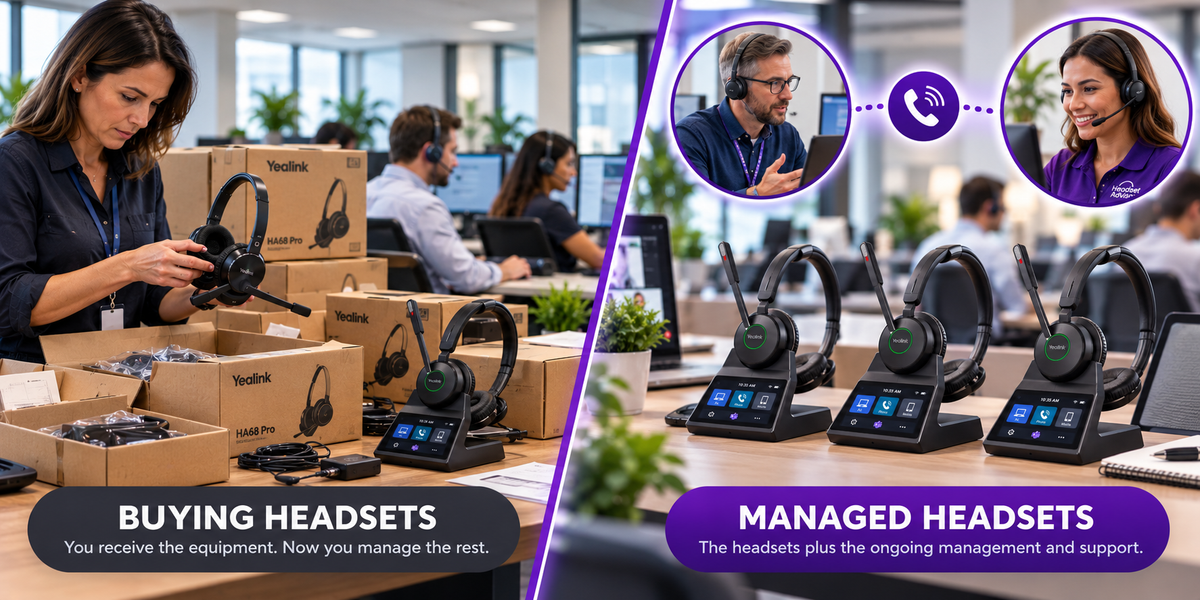
Headset Advisor offers an attractive headset lease option for larger deployments, allowing organizations to equip teams with current communication technology while preserving cash and spreading equipment costs over time. The lease also includes replacement accessories, and a warranty that runs the term of the lease, which adds convenience and cost savings.
If you're outfitting a department, opening a new office or planning a company-wide headset refresh, contact us to discuss available leasing options. We think you'll be pleasantly surprised by how affordable, and convenient this program is.
Have Older Headsets? Ask About Trade-In
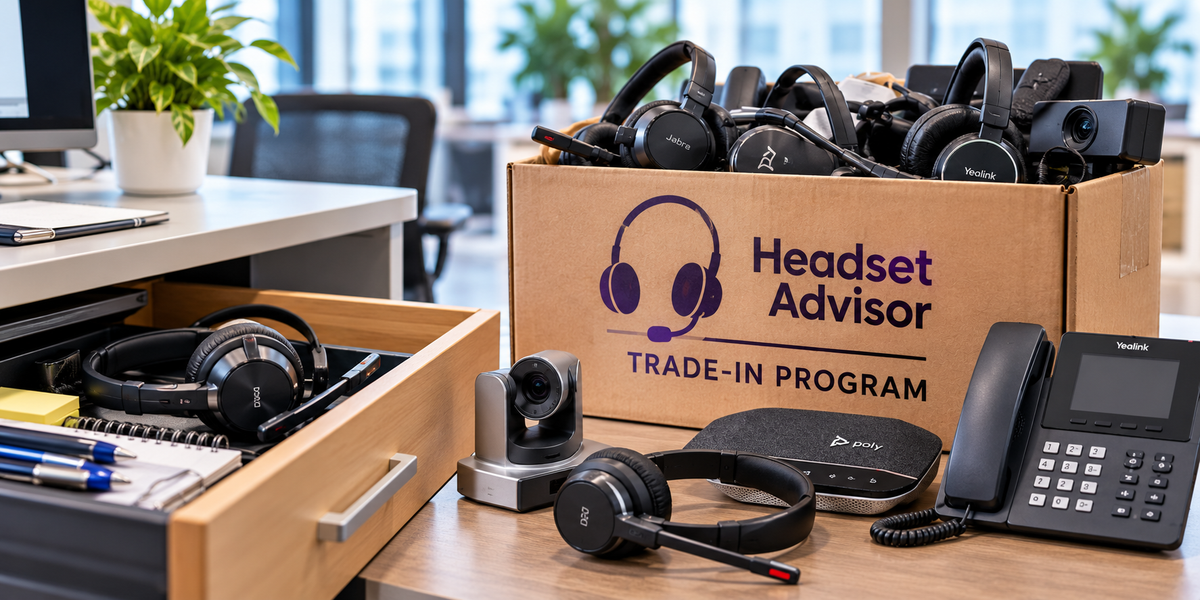
You may also be able to reduce the cost of your upgrade through the Headset Advisor Trade-In Program, whether you're purchasing or leasing.
If your company has older Poly, Jabra, Yealink, EPOS, Logitech or other professional headsets, contact us to see whether your equipment qualifies.
Trade-in can help lower the cost of moving to newer technology while providing an environmentally responsible path for retiring older equipment.
Frequently Asked Questions
Is the HP Poly Voyager Focus 6 better than the Voyager Focus 2?
In our testing, yes. We found noticeably better microphone fidelity and improved ANC, and HP also redesigned the headset with a replaceable battery, magnetic cushions and an optional foldable design. It’s more modern looking too.
Does the Voyager Focus 6 have better wireless range than the Focus 2?
Not in our testing.
Both performed well at approximately 30 and 50 feet, with voice breakup beginning around the 100-foot mark. These results are typical to most Bluetooth headsets.
How far can the Voyager Focus 6 actually go?
Our test produced reliable audio through approximately 50 feet, with breakup beginning at around 100 feet.
Your real-world results can vary depending on walls, wireless interference and other environmental conditions.
Is there a foldable Voyager Focus 6?
Yes.
HP offers standard non-folding Focus 620/625 models and Fold versions.
What's different about the Fold version?
The headset folds for easier transport and comes with a hard case instead of the standard model's soft pouch. By having a foldable design, it makes the headset easier to transport.
Can you replace the Voyager Focus 6 battery?
Yes.
HP designed the Focus 6 with a replaceable battery.
Are the ear cushions replaceable?
Yes.
The standard cushions attach magnetically for easier replacement. HP also offers optional over-ear cushions for those who want more noise reduction, and a more immersive experience.
How much talk time does the Voyager Focus 6 provide?
HP rates it for up to 25 hours with ANC and the online indicator enabled and up to 30 hours with those features disabled.
Does the Voyager Focus 6 support Microsoft Teams and Zoom?
Yes. HP lists Microsoft Teams, Zoom and Google Meet certifications.
Does it come with a USB Bluetooth adapter?
Yes. HP lists a USB-C BT700 adapter along with a USB-C-to-A adapter.
Does the Focus 6 have Active Noise Cancellation?
Yes. It uses Hybrid Active Noise Cancellation.
Can neep improve noise cancellation beyond what the headset does?
Yes.
A headset can only process the noise captured on your side of the conversation. neep provides an additional software layer that can remove distracting noise from both ends of the call while learning, enhancing and isolating your voice.
Final Thoughts
The HP Poly Voyager Focus 6 isn't simply a Voyager Focus 2 with a new look.
HP made meaningful changes to the areas that matter most during everyday ownership.
- The microphone sounds better.
- ANC performs better.
- The battery can be replaced.
- The magnetic cushions are easier to service.
- Optional over-ear cushions provide another comfort choice.
- Travelers can choose a Foldable model.
And despite all of those changes, the familiar Voyager Focus concept remains intact: a comfortable stereo Bluetooth headset designed around professional communication.
The one thing that didn't improve was wireless range as we noted earlier, with both models having essentially the same range at 100 feet, which true to most Bluetooth headsets.
HP's specifications tell you what technology is inside the headset.
Our testing tells you what happens when you actually use it.
And based on what we experienced, the Focus 6 represents a meaningful step forward from the Voyager Focus 2.
Have Questions, Or Need Some Help?
Choosing a headset can be confusing.
There are dozens of models, different connectivity options, different noise-canceling technologies and countless specifications that don't always tell you what the product is actually like to use.
That's where Headset Advisor can help.
We've been helping businesses and professionals find the right headset solutions for more than 30 years.
We're also proud to have earned more than 800 five-star Google reviews from customers we've helped along the way.
When you purchase from Headset Advisor, you don't just receive a headset.
You also receive:
- Personalized help choosing the right solution
- Setup assistance
- Free lifetime product support
- Help with larger deployments
- Leasing options for qualifying business purchases
- Trade-in opportunities for eligible equipment
Whether you're buying one headset for yourself or outfitting an entire organization, we're here to help.
Call us, chat with us, or reach out online and one of our headset specialists will help you find the right solution for your needs. So don't hesitate to contact us if we can help.
Downloads
Poly Voyager Focus 2 datasheet
Poly/HP Voyager Focus 6 datasheet