Do you want the best headset?

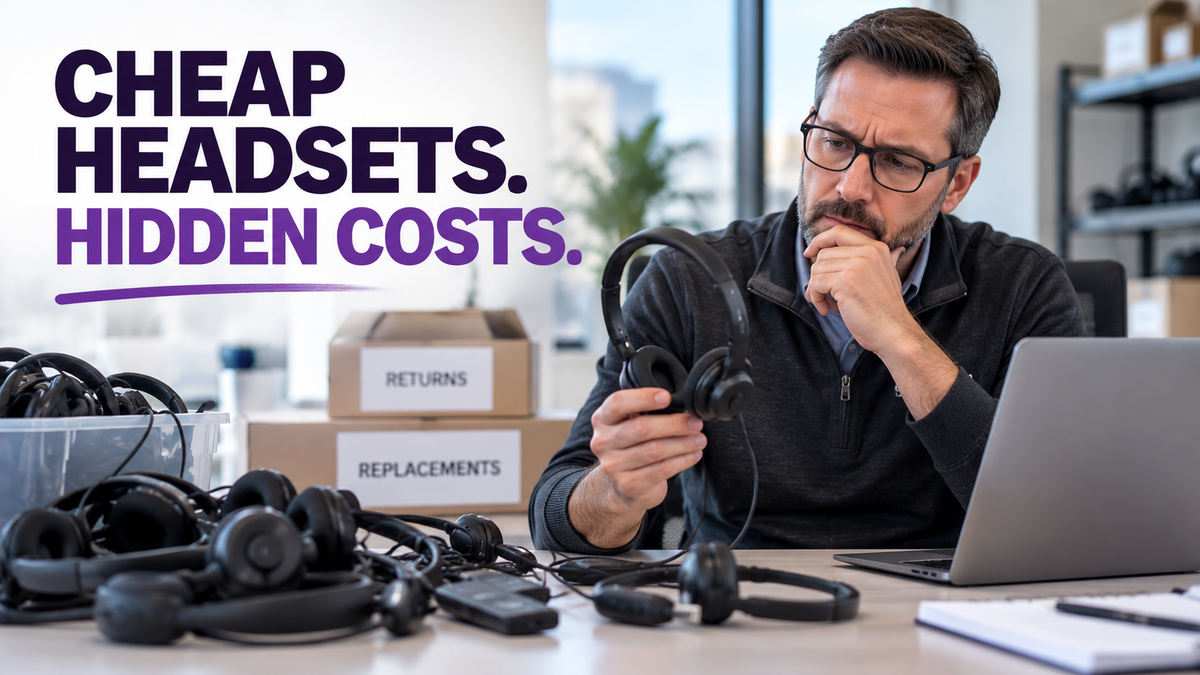
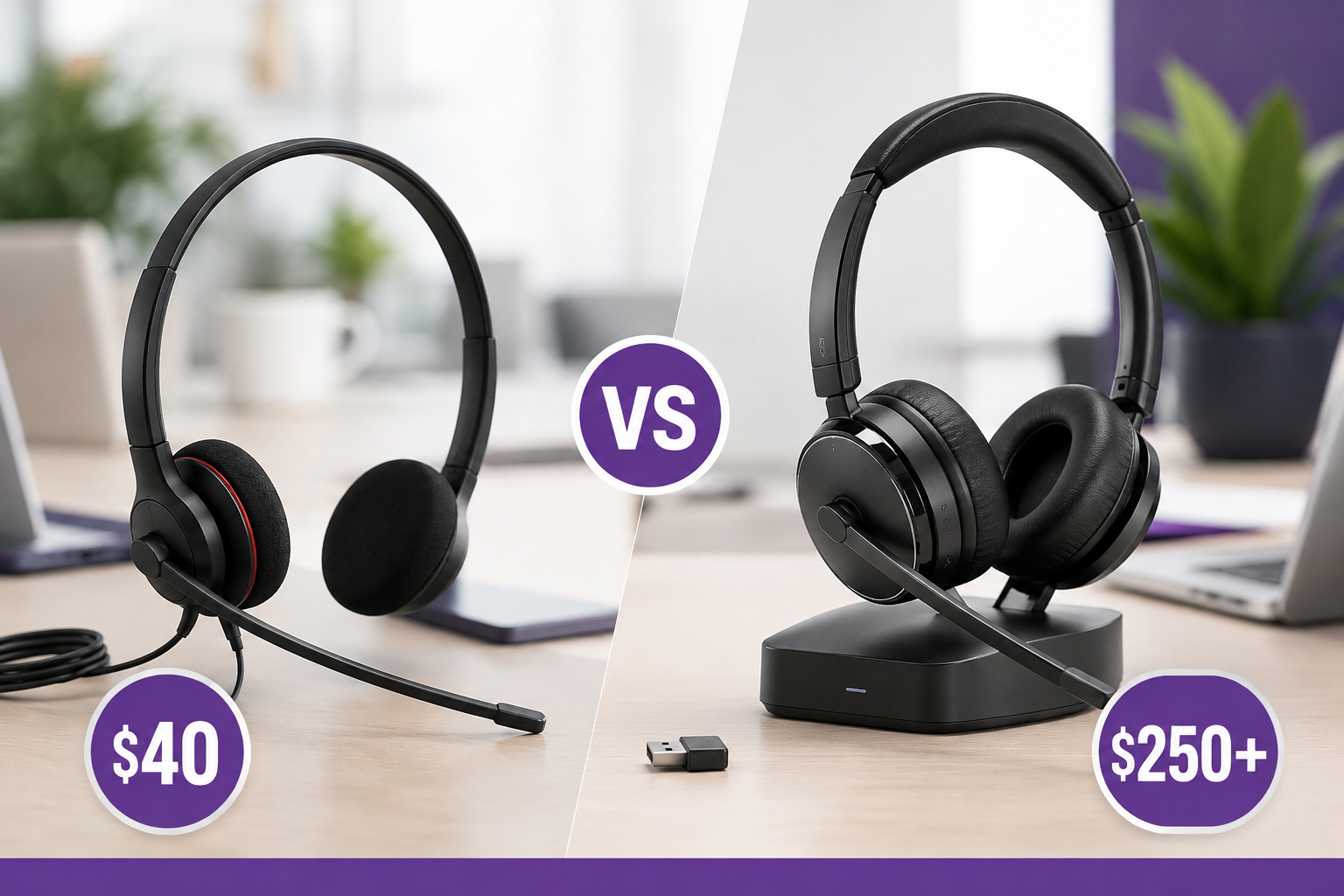
Buying inexpensive office headsets might seem like a smart way to save money and control costs. After all, why spend $150 on a headset when you can buy one for $40 or $50?
But what happens when those inexpensive headsets don’t hold up and need replacement? Or when employees complain about comfort, customers complain about audio quality or background noise, and your IT department spends their valuable time troubleshooting headsets when there’s probably higher priority matters to take care of.
Suddenly, that inexpensive headset might not seem like such a bargain.
The real question isn't necessarily how much you're paying for your headsets. It's how much those headsets are costing your business over time, because the true cost is more than the price you pay.

Let's look at some overlooked expenses, when inexpensive headsets make sense, and what you can do to get better value from your company's headset investment.
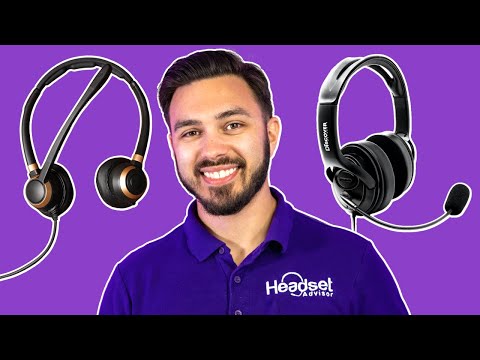
Watch: Are Cheap Office Headsets Costing Your Company More?
Before we get into the details, watch this video where Drew from Headset Advisor examines real discussions among IT managers about headset replacement costs.
He also compares the microphone performance of two wired business headsets at different price points, so you can hear the differences for yourself.
It's a useful demonstration of why headset purchasing decisions shouldn't be based on price alone.
The $30,000 Headset Replacement Problem
Imagine managing headsets for a company with 1,000 employees.
Each year, approximately 300 headsets are replaced at an average cost of $100 each.
That's $30,000 annually just for replacement headsets.
And that's before accounting for the time spent troubleshooting problems, processing replacement requests, managing inventory, and distributing equipment.
This example comes from an online discussion among IT professionals that Drew highlights in our video.
Interestingly, several IT managers considered this replacement rate perfectly normal. Some even suggested that headsets should be treated like disposable office supplies.
And depending on the circumstances, they might have a point.
Headsets wear out. Cables get damaged. Ear cushions deteriorate. Employees leave, and equipment sometimes gets lost.
But before accepting a 30% annual replacement rate as normal, there's a question worth asking:
Why are so many headsets being replaced in the first place?
If they're wearing out after several years of daily use, that might be reasonable. But if they're being replaced because of minor problems, poor durability, or preventable damage, there's an opportunity to improve.

Should Office Headsets Be Considered Disposable?
Some companies treat inexpensive headsets the same way they treat computer mice or keyboards.
When something stops working, they replace it.
There are situations where this makes perfect sense.
For example, if a $40 wired headset reliably lasts two or three years, spending considerable IT time tracking and maintaining it probably isn't worthwhile.
But there's a difference between choosing an inexpensive headset because it performs well and choosing one simply because you've accepted that headsets are disposable.
Before adopting a replace-and-discard approach, consider a few things:
-
How long do your headsets typically last?
-
Are employees satisfied with their comfort and performance?
-
Are most replacements caused by actual equipment failures?
-
Could minor repairs or replacement parts extend their useful life?
-
How much time does your IT department spend managing & troubleshooting replacements?
-
How much administrative time is spent purchasing, and replacing headsets?
You don't necessarily need an expensive asset management system to answer these questions.
Sometimes a simple record of replacement quantities, reasons, and headset models can reveal valuable patterns which can be used to better manage the headset population, and make better buying decisions.
Headset Comfort and Microphone Quality Matter More Than You Think
Consider an employee who spends six to eight hours a day answering customer calls.
A headset that feels comfortable during a five-minute test might become uncomfortable after several hours.
Excessive clamping pressure, poorly designed ear cushions that lack sufficient padding, or an awkward headband can turn an otherwise functional headset into something employees dislike wearing.
Microphone performance is equally important.
Imagine a busy customer service department where employees sit close together. Phones are ringing, keyboards are clicking, and multiple conversations are happening around you..
If a headset's microphone picks up too much background noise, the customer may have difficulty understanding the employee, and in the end, the core message may be lost or misunderstood.
That can lead to repeated questions, frustration, and less productive conversations.
However, a higher price doesn't automatically guarantee better performance.
We've tested inexpensive headsets that perform surprisingly well, along with more expensive models that don't always live up to expectations, and its price.
That's why we recommend evaluating comfort and microphone quality before making a large purchase.

Cheap vs. More Expensive Headsets: Can You Hear the Difference?
In our video, Drew demonstrates two wired business headsets:
-
Jabra Evolve 20
-
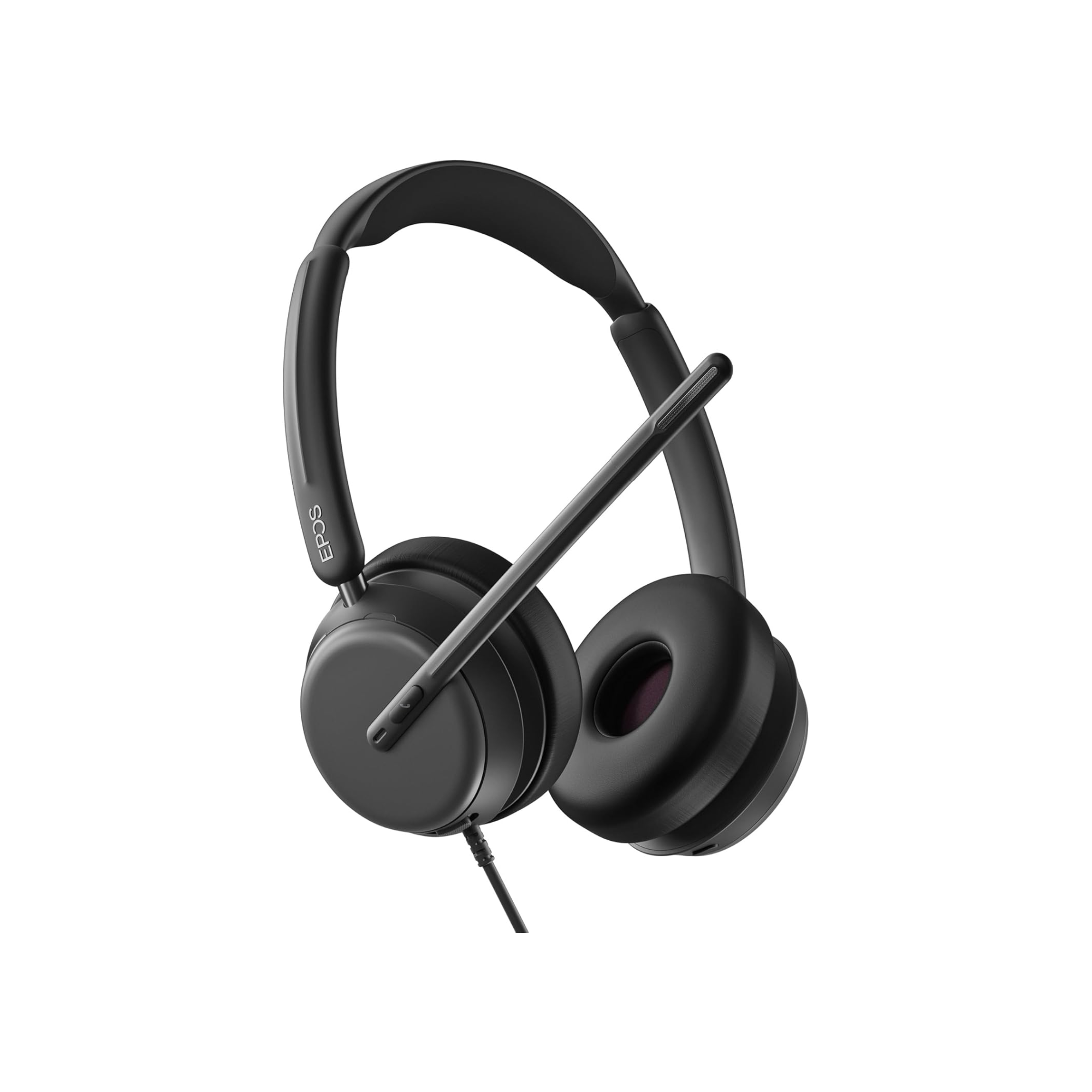
EPOS IMPACT 860
These headsets are positioned at different price points, but both are designed for professional communication.
Both are tested in the same environment using the same background noise, allowing viewers to hear what someone on the other end of a call would experience.
Rather than saying one is better, we'd encourage you to listen and decide for yourself because sound quality is a subjective matter, so it’s important for you to draw your own conclusions.
The important takeaway is that headset performance should be tested, not assumed based on the price tag or manufacturer claims.
If an inexpensive headset provides clear conversations, dependable performance, and good comfort, there may be no reason to spend more.
But if a different model significantly improves microphone clarity, comfort, or durability, the additional investment could be worthwhile.

Don't Replace a Headset Before Checking What's Wrong
Not every headset problem requires buying a replacement.
Sometimes an employee reports that a headset isn't working when the problem is actually a computer setting or software configuration. And, believe it or not, sometimes it’s just a matter of the microphone being muted.
The computer might have the wrong microphone selected, the headset may not be configured correctly in Microsoft Teams or Zoom, or the audio settings may have changed. These are possibilities that could lead to what might be seen as a defective headset, where it’s not the headset at all.
Other problems involve components that may need to be replaced.
Depending on the headset model, these might include:
-
Worn ear cushions
-
Damaged or detachable cables
-
Aging batteries that no longer hold a full charge.
-
Other manufacturer-supported replacement components
Replacing a pair of ear cushions or other components can be considerably less expensive than purchasing another headset.
Of course, not every headset is repairable, and spending $50 to repair a $30 headset doesn't really make financial sense.
The goal is simply to avoid unnecessary replacements.

The Hidden IT Costs of Replacing Office Headsets
Let's return to our example of a company replacing 300 headsets annually at $100 each.
The annual expense is $30,000.
But replacing a headset may involve more than ordering another unit.
An employee might submit an IT ticket. Someone needs to troubleshoot the problem, check warranty coverage, determine who to contact for a replacement, authorize the replacement, arrange delivery, get it to the employee, and decide what to do with the old equipment.
Even a relatively efficient process takes time, and that can add up.
Let's use a hypothetical example where each replacement requires 30 total minutes of combined employee time, valued at $40 per hour.

That's an additional $6,000 annually in administrative time alone.
And it doesn't include shipping, spare inventory, or lost productivity while employees wait for working equipment.
These figures are illustrative, and your actual expenses may be higher or lower.
The important point is that the purchase price is only one part of a headset's total cost of ownership.
A headset that lasts longer, requires fewer support requests, or is easier to maintain could provide better overall value, even if its initial price is higher.
How to Reduce Unnecessary Headset Replacement Costs
You don't need to overhaul your entire IT operation to improve headset management.
A few practical changes can make a meaningful difference.
Track why headsets are being replaced. Rather than simply counting replacements, identify whether the problem involves damage, normal wear, employee turnover, loss, or technical issues. Knowing this is a very good first step.
Standardize a few approved headset models. This makes purchasing, support, and compatibility management easier while giving employees appropriate choices for their work, and, to a degree, personal preference.
Establish a simple replacement policy. Define who approves replacements, which department pays for them, and when a headset should be exchanged under the warranty, repaired or replaced.
Maintain a reasonable spare inventory. Having replacement equipment in stock and available can minimize employee downtime, and help to keep operations running smoothly.
Test before making large purchases. Give a small group of employees different headset models and collect feedback about comfort, microphone performance, and reliability. This can go a long way towards selecting the right headset or headsets, which can make the deployment more successful.
The objective isn't to create more administrative work. It's to identify opportunities to reduce waste and improve the employee experience.
What About Background Noise? Could neep Help?
Even a well-designed headset can encounter challenging background noise.
Busy offices, nearby conversations, barking dogs, and other distractions can make calls difficult.
That's where additional noise-canceling technology may help.
At Headset Advisor, we offer neep, AI-powered, noise-canceling software designed to reduce unwanted background noise during conversations.
Unlike microphone noise cancellation alone, which primarily focuses on what the person you're speaking with hears, neep can help reduce distracting noise on both sides of the conversation.
This can be particularly useful when employees work in noisy environments or communicate with customers whose surroundings are less than ideal.
And because neep is software-based, it may provide another way to improve call clarity without automatically replacing otherwise functional headsets. It works with any audio device, and it learns, enhances and isolates your voice so your callers hear you loud, clear and consistent.
Of course, software can't fix an uncomfortable headset, damaged hardware, or every audio problem.
But if background noise is your primary concern, it may be worth exploring before purchasing new equipment.
You can learn more and to request your free trial go to neep.com.

Your Old Business Headsets Might Still Have Value
What happens to headsets when employees leave or your company upgrades its equipment?
In many organizations, old headsets end up in storage closets or are simply discarded.
But depending on their condition and model, some of those headsets may still have value.
For example, a headset with worn ear cushions might be perfectly functional once the cushions are replaced and the equipment is properly cleaned.
Other equipment may qualify for trade-in credit.
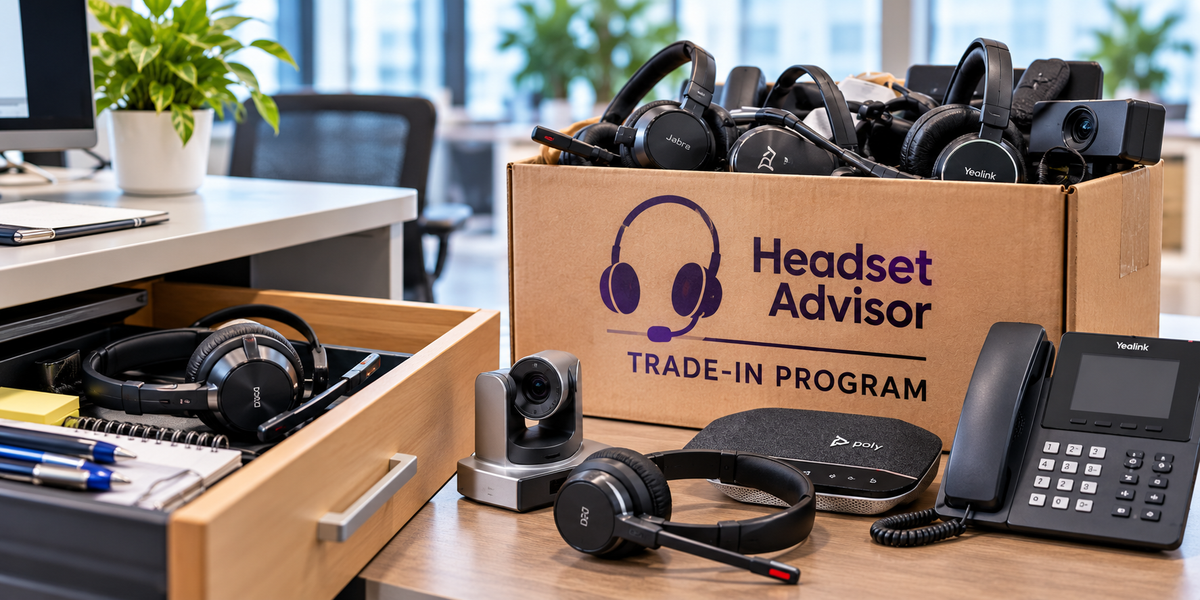
Through the Headset Advisor Trade-In Program, businesses can submit information about their used business headsets and communication equipment for a trade in estimate.
Qualifying equipment may receive credit toward new purchases, and even certain nonworking devices may have some trade-in value.
Equipment without resale value may be eligible for responsible recycling.
So before throwing away your collection of old headsets, it's worth finding out whether they can be reused, traded in, or recycled.

Can Spending More on a Headset Actually Save Money?
Sometimes it can. But not always.
Consider two hypothetical headset purchasing options over four years.

In this example, the hardware expense is identical.
But what if the $100 headset also provides better comfort, clearer microphone performance, or fewer support requests?
It could offer better overall value.
On the other hand, if the $50 headset performs just as well and employees are satisfied, there's no reason to spend more.
And remember, a $100 headset isn't guaranteed to last twice as long simply because it costs twice as much.
That's why real-world testing, warranty information, replacement-part availability, and employee feedback are so important.
The best headset investment is the one that delivers the right combination of performance, reliability, comfort, and long-term value.
An Alternative to Buying Headsets: Headset Advisor's Managed Headset Program
For organizations managing larger headset deployments, there's another option worth considering.
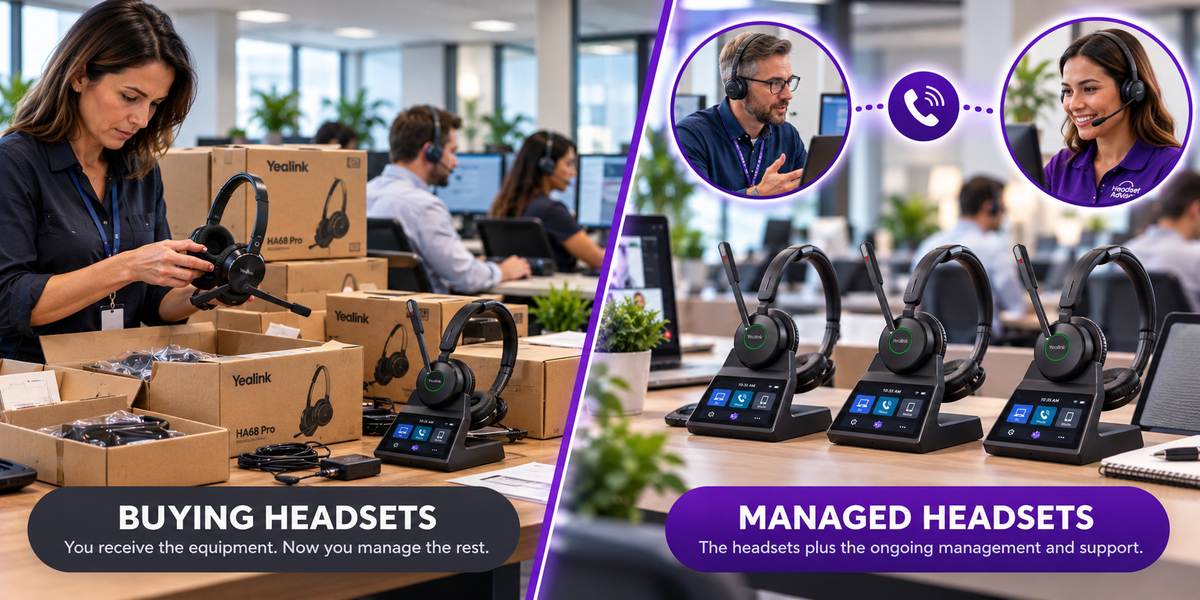
Instead of purchasing headsets outright and then having to manage their entire life cycle internally, you can use Headset Advisor's Managed Headset Program.
The program combines business headsets with defined management and replacement services for a predictable monthly rate.
Benefits include coverage for normal wear such as worn ear cushions, batteries that no longer hold a charge, employee turnover swaps, and a defined accidental damage allowance.
For covered issues, advance replacement service can help employees get back to work quickly, without waiting for the original equipment to be returned first.
Monthly rates generally range from approximately $4 to $20 per headset, depending on the model selected.
The program is designed for organizations deploying 10 or more headsets and has a 36-month term. Lost or stolen equipment isn't covered though.
Is this the right approach for every business?
Not necessarily.
If your current headsets are inexpensive, dependable, and easy to manage, purchasing them outright may still be your best option.
But if your IT team spends valuable time managing replacements, employee turnover, and headset issues, a managed program could simplify operations while making expenses more predictable and streamlined.

So, the Headset Advisor Managed Headset Program may be worth your time to consider given its simplicity, economic predictability, and all inclusive nature.
Five Steps to Making Better Office Headset Purchasing Decisions
If you're responsible for buying headsets for dozens, hundreds, or even thousands of employees, here's where we'd recommend starting.
1. Understand your current replacement rate. Find out how many headsets you're replacing annually, why they're being replaced, and which models have the most problems.
2. Match headsets to employee needs. Someone handling customer calls eight hours a day may need a different headset than an employee who attends a few online meetings each week.
3. Test several models before buying in quantity. Evaluate comfort, microphone clarity, noise cancellation, compatibility, and employee satisfaction under actual working conditions.
4. Create a straightforward replacement process. Keep procedures simple, define responsibilities, and avoid unnecessary administrative work.
5. Compare ownership with managed alternatives. Determine whether purchasing and maintaining equipment internally makes more sense than a program that includes advance replacements, accessories as needed, and the other features that help to make headset management easy, affordable and trouble free.
Frequently Asked Questions About Office Headset Costs
Are cheap office headsets worth buying?
Absolutely, provided they meet your needs. An inexpensive headset that delivers clear audio, good comfort, and reliable performance can be an excellent value. The key is evaluating overall performance and useful life rather than focusing exclusively on the purchase price. And, don’t overlook the vendor that is providing the inexpensive headset. Vendor selection matters, especially when needs arise.
How long should a business headset last?
That depends on the headset's construction, how frequently it's used, the working environment, and how it's maintained. Some headsets can provide several years of dependable service, while others may require earlier replacement. Manufacturer warranties and replaceable components are worth considering when shopping for new headsets.
Is replacing 30% of a company's headsets every year excessive?
Not necessarily. A 30% annual replacement rate might be reasonable depending on the age of the equipment, employee turnover, and usage conditions. What's more important is understanding why replacements are happening and whether those expenses can be reduced.
Are more expensive office headsets always better?
No. We've tested lower-priced headsets with excellent microphone performance and higher-priced models that didn't perform as well as we would have expected. Comfort, noise reduction, compatibility, reliability, and actual testing are better indicators of value than price alone. So if you have the option to try before you buy, that would allow you to gain insights up front and help to avoid frustrating exchanges later.
Can worn-out headset ear cushions be replaced?
Many professional headsets are designed to allow cushions to be replaced, but this depends on the manufacturer and model. Replacing worn cushions can improve comfort and extend the headset's useful life without purchasing an entirely new device. Before you buy, it’s a question worth asking.
Can software improve headset noise cancellation?
Yes. Software such as neep can help reduce background noise during conversations, potentially improving call clarity without requiring new hardware. Unlike a headset, neep can remove noise on both ends of the call, as well as learn, enhance and isolate your voice for optimum voice audio quality for better sounding calls for both parties.
Can businesses trade in old office headsets?
Yes. Headset Advisor offers a trade-in program for qualifying used business headsets and communication equipment. Trade-in value depends on the equipment and its condition, and some nonworking devices may also qualify for some credit.
What is a managed headset program?
A managed headset program combines equipment with defined support and replacement services for a predictable monthly rate. Headset Advisor's program is available for deployments of 10 or more headsets and can help organizations simplify headset management while reducing IT and administrative responsibilities. This can make the task of managing headsets far easier, and less time consuming.
Have Questions or Need Some Help?
Choosing the right office headsets shouldn't be complicated. But with so many brands, models, connection types, and features available, it's easy to purchase equipment that looks good on paper but doesn't perform as expected once you deploy them.
That's where Headset Advisor can help.

At Headset Advisor, we've been helping businesses select, deploy, and support professional communication headsets for more than 30 years.
We work with companies of all sizes, from small offices purchasing a handful of headsets to organizations managing hundreds or thousands of employees.
Whether you're struggling with frequent headset replacements, poor microphone performance, employee comfort complaints, or uncertainty about compatibility, we're happy to help you evaluate your options.
We can assist with headset comparisons, compatibility questions, product recommendations, trade-in opportunities, and determining whether our Managed Headset Program makes sense for your organization.
And if your current headsets are already a good fit, we'll tell you that, too.
With more than 800 five-star Google reviews, our reputation has been built around straightforward recommendations, knowledgeable assistance, and ongoing customer support.
Not sure whether your current headsets are costing you more than they should?
Contact Headset Advisor and let us help you find a solution that works for your employees, your IT department, and your budget.
Final Thoughts
The least expensive headset isn't always the best value, and the most expensive headset isn't automatically the best choice.
What matters is how well the equipment performs, how comfortable it is for employees, how reliably it handles daily use, and what it costs your organization over time.
If your company is replacing hundreds of headsets every year, don't automatically assume that's just the cost of doing business. Take a closer look at what's driving those replacements and whether there's a better approach.
At Headset Advisor, our goal is to help you make informed decisions, not simply sell you a more expensive headset. With over 30 years of experience, hundreds of positive customer reviews, and options ranging from traditional headset purchases to trade-ins, neep noise-canceling software, and managed headset services, we're here to help you find the right solution.
Because the best headset isn't necessarily the cheapest or the most expensive. It's the one that works best for your people and makes the most sense for your business.