Do you want the best headset?
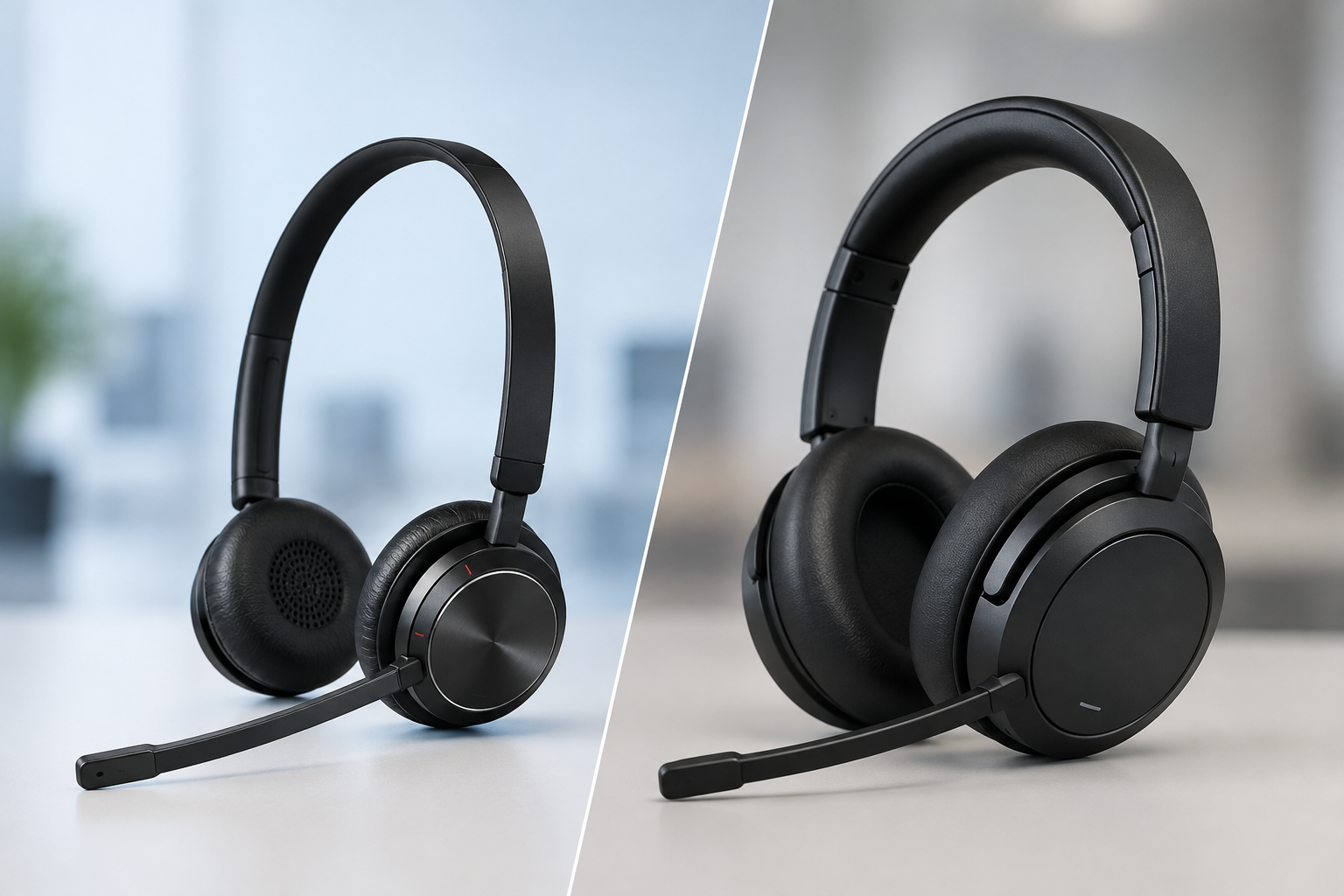
If you spend a good part of your workday wearing a headset, there's a good chance you've developed a preference for how you want it to fit and feel. Some people prefer cushions that rest directly against their ears. Others wouldn't consider anything except a headset with cushions that completely surround them. Wearing experiences can vary from person to person.
So, when choosing a business headset, which is better: on-ear or over-ear?
The answer isn't as simple as you might think.
Neither design is automatically better. Your comfort preferences, work environment, how long you wear a headset each day, whether you wear glasses or have ear piercings, and even how much of your surroundings you want to hear can all influence which design makes the most sense for you.
And today you have more choices than ever.
For years, the traditional business headsets provided by Plantronics (later to be branded Poly, and now operates under the HP banner), GN Netcom (later to be rebranded as Jabra), and others, were primarily an on-ear design. Over-ear choices were comparatively limited and were more commonly associated with consumer headphones used for music and entertainment.
That's changing. Headset manufacturers are introducing more over-ear models with the features businesses need, including professional microphones, excellent noise cancellation, USB wireless adapters, Microsoft Teams and Zoom compatibility, call controls, active noise cancellation, HearThrough, and enterprise device management.
So let's look beyond appearances and compare the differences that can actually matter when you're wearing one of these headsets throughout your workday.
What's the Difference Between On-Ear and Over-Ear Headsets?
The basic difference is pretty simple.
An on-ear headset has cushions that rest directly against your ears. These headsets are typically smaller and lighter, and they've been the standard wearing style for business headsets for many years.
An over-ear headset uses larger cushions with openings that allow your ears to sit inside them. Instead of pressing directly against your ears, the cushions make contact with the area surrounding them.

That may sound like a relatively minor design difference, but after you've worn a headset for several hours, it can make a significant difference in comfort, noise isolation and how connected, or disconnected you feel from what's happening around you.
Is One Wearing Style Actually Better?
We've been in the headset business for over 30 years, and if there's one thing we've learned about comfort, it's that it's highly personal, and subjective.
We've had customers who love over-ear headsets and others who couldn't wait to get out of them. The same is true with on-ear models.
That's why we wouldn't tell you that one wearing style is universally more comfortable than the other.
What we can do is look at the characteristics of each design. Cushion size, padding, materials, headset weight, clamping force and headband design all give you clues about how a headset may feel.
Once you've identified the wearing style you generally prefer, those details can help you narrow your choices and give you a better chance of finding something you'll be comfortable wearing all day.
Comfort May Be the Biggest Difference

This is where the on-ear versus over-ear decision becomes much more important.
Because an on-ear cushion rests directly against your ear, the headset's clamping pressure is concentrated on a relatively small area. If the headset has a stronger clamping force, you'll generally feel that pressure more directly against your ears.
That may not bother you at all during a 15-minute call. But if you're in meetings or on calls for several hours every day, pressure that initially seemed insignificant early in your call can become much more noticeable further into it.
Over-ear cushions distribute that pressure differently. Because the cushions make contact with a larger area surrounding your ears, the clamping force is spread across a wider surface rather than being concentrated directly on the ears. And that wider surface is the area around the ear rather than against it.
For someone with sensitive ears, that alone can make an over-ear design more appealing.
But that doesn't mean over-ear automatically wins the comfort contest.
Heat can be an issue with either wearing style, but for different reasons.
With an on-ear headset, the cushion is in direct contact with your ear as I've mentioned. That contact can restrict airflow where the cushion meets the ear and trap heat and moisture against the skin, particularly if the headset has a firmer clamping force or uses less breathable cushion materials, like non-perforated covers for example.
With an over-ear headset, most of the ear isn't being pressed against the cushion. Instead, the cushion surrounds it. The tradeoff is that your ear is now sitting inside a relatively enclosed earcup where air circulation may be limited and heat can accumulate, but perhaps in a different way from an on-ear model.
So we wouldn't say that one wearing style is automatically cooler than the other.
Cushion materials and construction can be just as important. A generously padded memory-foam cushion can feel very different from a thinner standard-foam cushion. The cushion covering (perforated vs non-perforated for example), breathability, shape, ear opening, headset weight, clamping force and headband padding all contribute to the overall wearing experience.
In other words, on-ear versus over-ear is only the beginning of the comfort conversation.
What About Glasses and Ear Piercings?

These are two considerations that are easy to overlook when you're looking at a headset online.
If you have ear piercings, an on-ear cushion may press directly against them depending on their location. For some people, that's no problem. For others, several hours of pressure against a piercing can become uncomfortable to the point where you may prefer to avoid wearing the headset entirely.
An over-ear cushion may avoid that direct contact because the ear and piercing can sit inside the cushion opening. Of course, that depends on the size of the cushion and where the piercing is located.
Eyeglasses present a slightly different challenge.
With an on-ear headset, the cushion can press the temple of your glasses against your ear or the side of your head. Depending on the headset and your frames, that pressure can become uncomfortable or cause your glasses to move out of their normal wearing position.
Over-ear headsets aren't immune to glasses-related issues either. The temples of your glasses have to pass underneath the cushions, or just above them, which can create a pressure point and interfere with the seal around your ears.
A Headset Advisor tip for eyeglass wearers: We've found that the order you put things on can make a difference. Try putting your headset on first and adjusting it until everything feels properly positioned. Then slide your glasses into place, gently working the temples underneath the cushions until they're sitting naturally and comfortably.
Doing it the other way around: glasses first and headset second, can cause the headset cushions to catch your glasses, move them out of position or make it harder to get the headset situated correctly.
It won't eliminate every glasses-related fit issue, but it's a simple technique that can make a surprising difference, and it’s easy to do.
Over-Ear Headsets Generally Provide Better Passive Noise Isolation

Noise reduction is another area where the physical design matters.
An over-ear cushion completely surrounds your ear and creates a physical barrier between your ears and the surrounding environment. This naturally reduces some outside sound before any electronic noise cancellation is activated. This is often referred to as an acoustic seal.
That's called passive noise reduction.
An on-ear headset provides passive reduction too, but because the cushion sits against the ear rather than surrounding it, you'll generally hear more of what's happening around you.
The quality of the seal matters, though.
Glasses, hair, cushion size, cushion material and the shape of your head can all affect how completely an over-ear cushion seals around your ear. Break that seal and more outside noise can find its way through.
And passive noise isolation shouldn't be confused with active noise cancellation, or ANC. Passive isolation comes from the physical cushion and its seal. ANC uses microphones and electronics to reduce background sounds reaching your ears, by projecting counter signals to the incoming noise. A sort of anti-noise feature.
The two can work together, but they're not the same thing.
More Isolation Isn't Always Better
It's easy to assume that blocking more background noise is automatically an advantage.
Not necessarily.
If you work in a noisy office and need to concentrate, greater passive noise reduction may be exactly what you're looking for. Combining a well-sealed over-ear cushion with ANC can provide an even greater degree of separation from surrounding distractions.
But some people don't like that feeling of isolation.
Maybe you work from home and need to hear the doorbell, your family or what's happening elsewhere in the house. Or perhaps you're in an office where you want some awareness of coworkers and the activity around you.
An on-ear headset naturally lets more of those sounds through.
So this is another case where what appears to be an advantage on a specification sheet may not be an advantage for you, based on your specific needs and circumstances.
Size, Weight and Portability Matter Too
On-ear headsets have traditionally had an advantage when it comes to size and portability.
Smaller cushions usually mean a smaller overall headset footprint, and on-ear models are often lighter as well. If your headset travels back and forth between home and the office every day, or spends a lot of time in your laptop bag, those differences can matter.
Over-ear models are naturally larger because the cushions need to surround your ears.
But the portability gap isn't as wide as it used to be.
Some newer over-ear business headsets fold, collapse or rotate flat for storage, making them considerably easier to carry than earlier designs. And these designs continue to improve.
If you travel frequently, don't look only at whether the headset is on-ear or over-ear. Look at its actual weight, whether it folds or lies flat, and the size of its carrying case. Those details may tell you more about portability than the cushion style alone.
Also, some models may have easy to remove ear cushions (some being magnetic) which can make transporting them easy as well.
Business Headsets Don't Have to Look Like Traditional Office Headsets Anymore
This is one of the more interesting changes we're seeing in business headsets.
For decades, a business headset looked like, well...a business headset: a very stereotypical, traditional business headset look.
That wasn't necessarily a bad thing. Those products were designed primarily for telephone calls and workplace communication which is much different from the modern workplace today.
So, the way we work has changed.
You might use the same headset for a Teams meeting in the morning, music while working, a Zoom call in the afternoon, a personal call later and then take it home with you, or when you travel.
Manufacturers have responded by designing business headsets that increasingly resemble premium consumer headphones while retaining business-oriented features which is helping to make them far more versatile from earlier models.
Over-ear designs are a natural fit for that trend because people are already accustomed to wearing similarly styled headphones for music and travel.
That doesn't make the traditional on-ear business headset obsolete. Far from it. For someone whose priority is business communication, a lightweight on-ear headset remains an excellent choice.
It simply means you have more options today for choosing a headset that fits both how you work and how you want to wear it.
Which Design Makes More Sense for You?
Here's a quick comparison:

The important word in several of those comparisons is generally.
A well-designed on-ear headset may be more comfortable than a poorly designed over-ear headset, and vice versa. A lightweight over-ear model could even weigh less than some on-ear models.
That's why specifications are useful for narrowing your choices, but they can't make the final comfort decision for you.
Try Before You Buy Whenever Possible
You can read specifications, compare weights and study cushion materials all day long, but there's one thing none of those can tell you:
How will this headset feel on your head after you've worn it for two or three hours or longer? Or, after a day, or a week?
A headset may feel fantastic when you first put it on, many do. But, you may find that it becomes uncomfortable later in the day. Or something that initially feels unfamiliar may turn out to be extremely comfortable once you've worn it for a while.
That's why, whenever possible, we recommend trying a headset before making your final decision, particularly if you spend several hours a day wearing one.
Pay attention to more than the first impression. Notice the pressure on your ears or around them, whether they’re beginning to feel warm or sweaty, the headband, your glasses if you wear them, and whether you like the amount of outside sound you're able to hear.
Finding those things out before you've parted with your hard-earned money is much better than discovering them afterward.
A Few On-Ear and Over-Ear Business Headsets Worth Considering
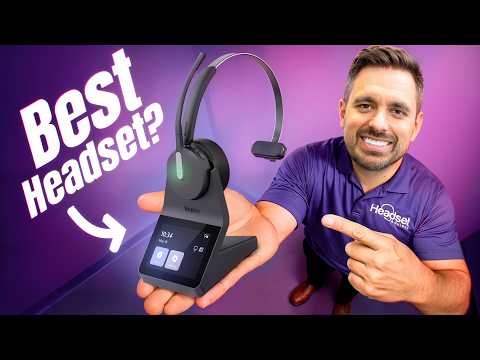
If you've decided which wearing style you prefer but aren't sure where to start, here are a few examples Drew discusses in the video above.
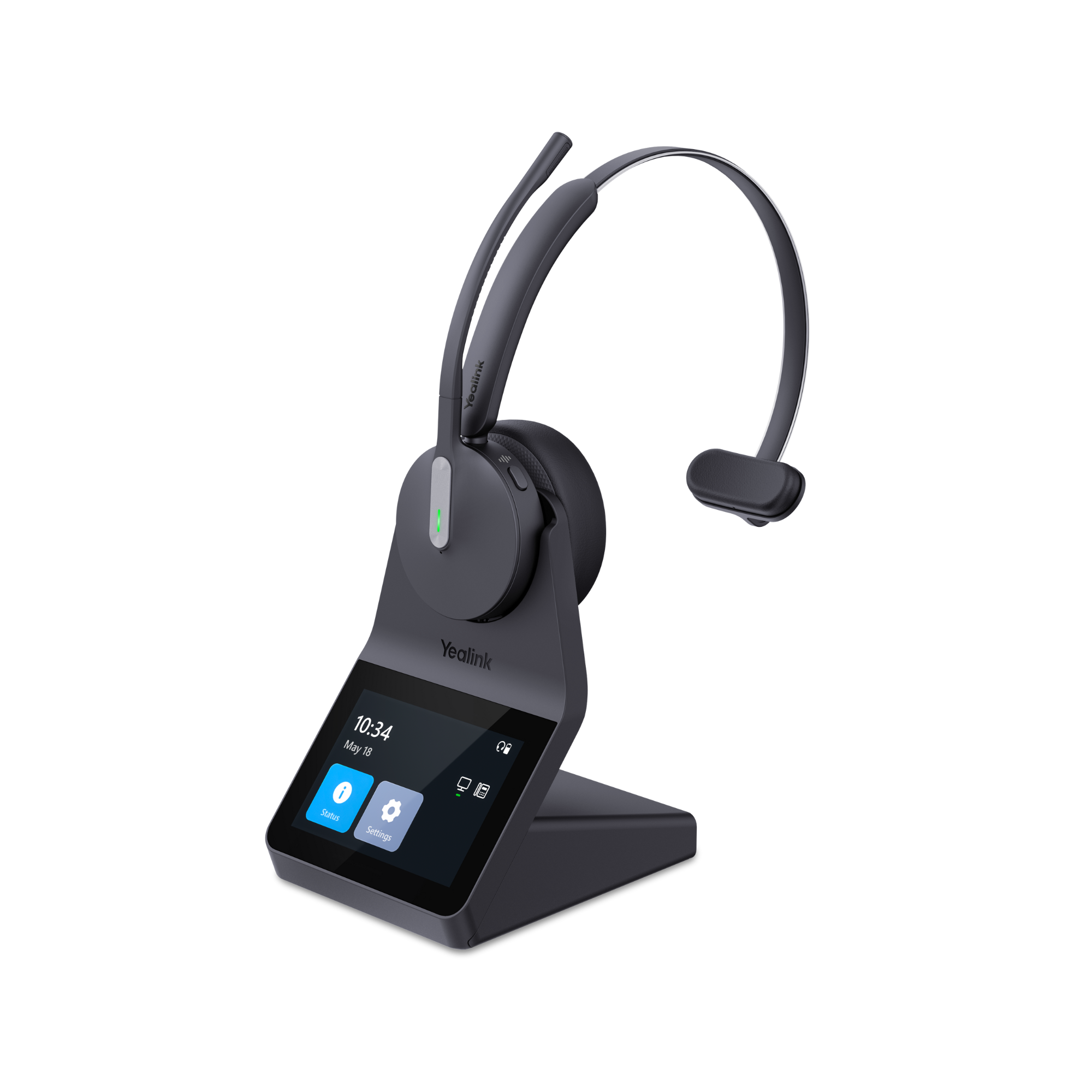
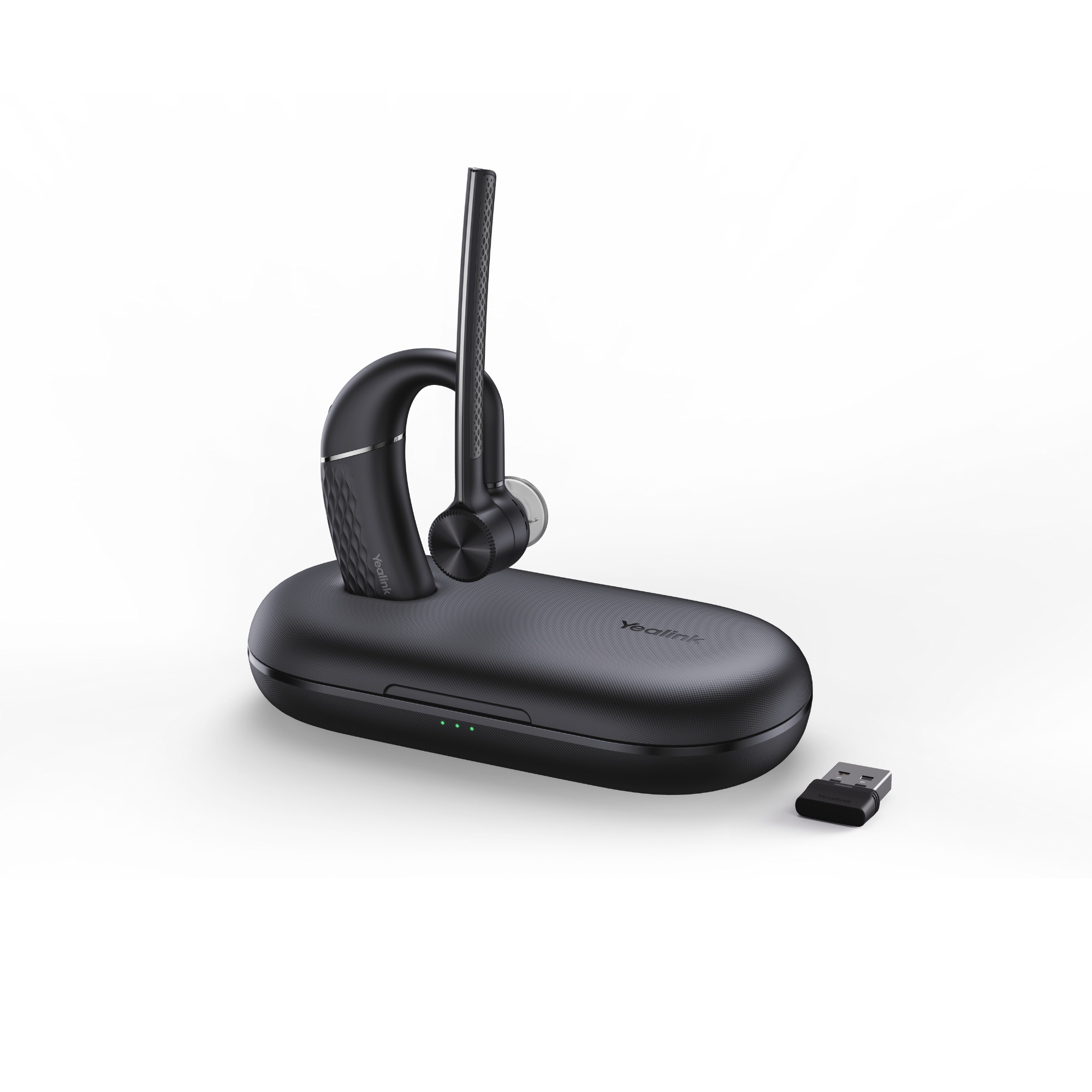
For an on-ear headset, the Yealink HA64 Pro is worth considering if wireless range is especially important. It uses DECT for extended wireless range around the workplace (rated at over 600 feet), while also providing Bluetooth connectivity for use with a mobile phone in, or out of the office because unlike other Bluetooth headsets, the HA64 Pro has the Bluetooth located in the headset rather than in the headset base.
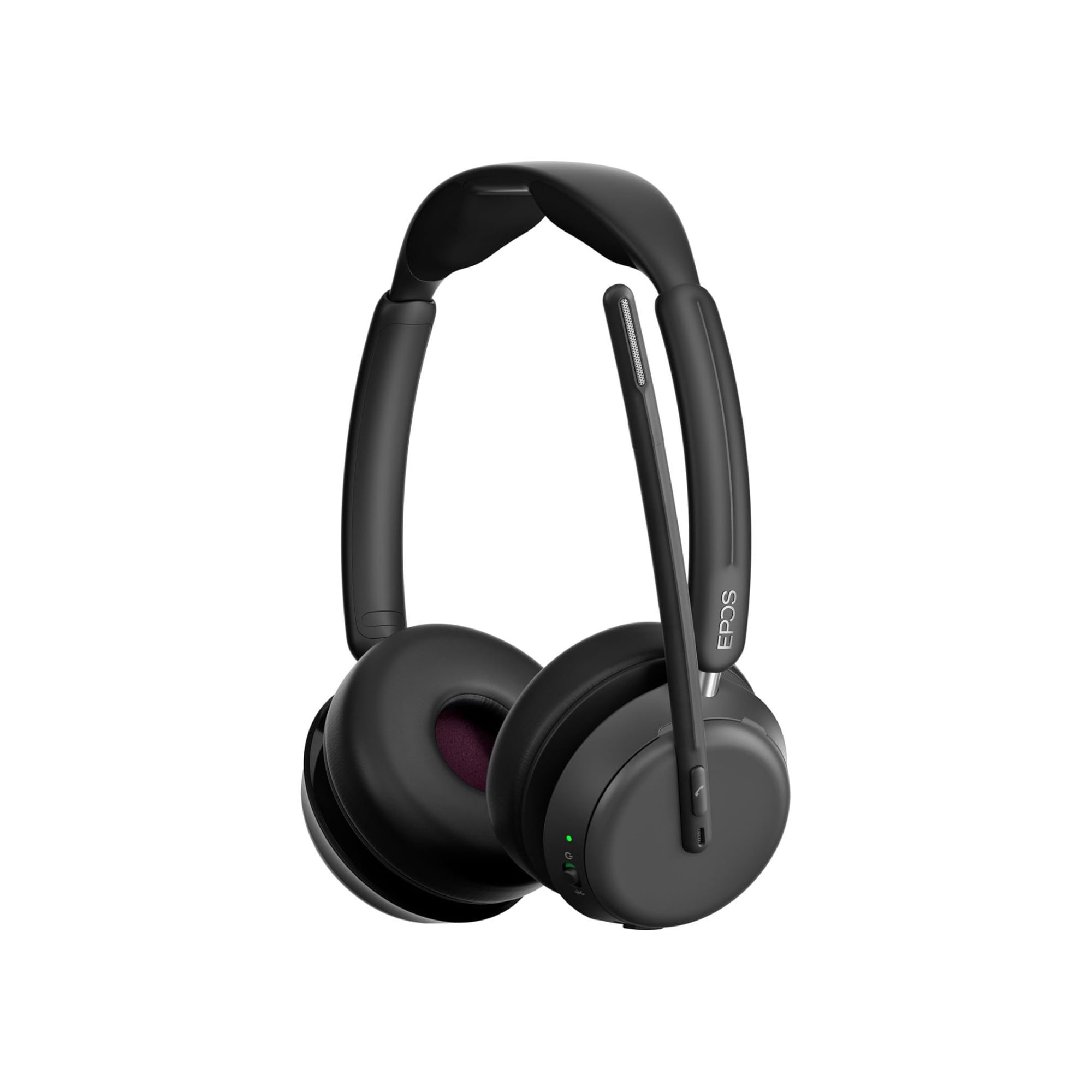
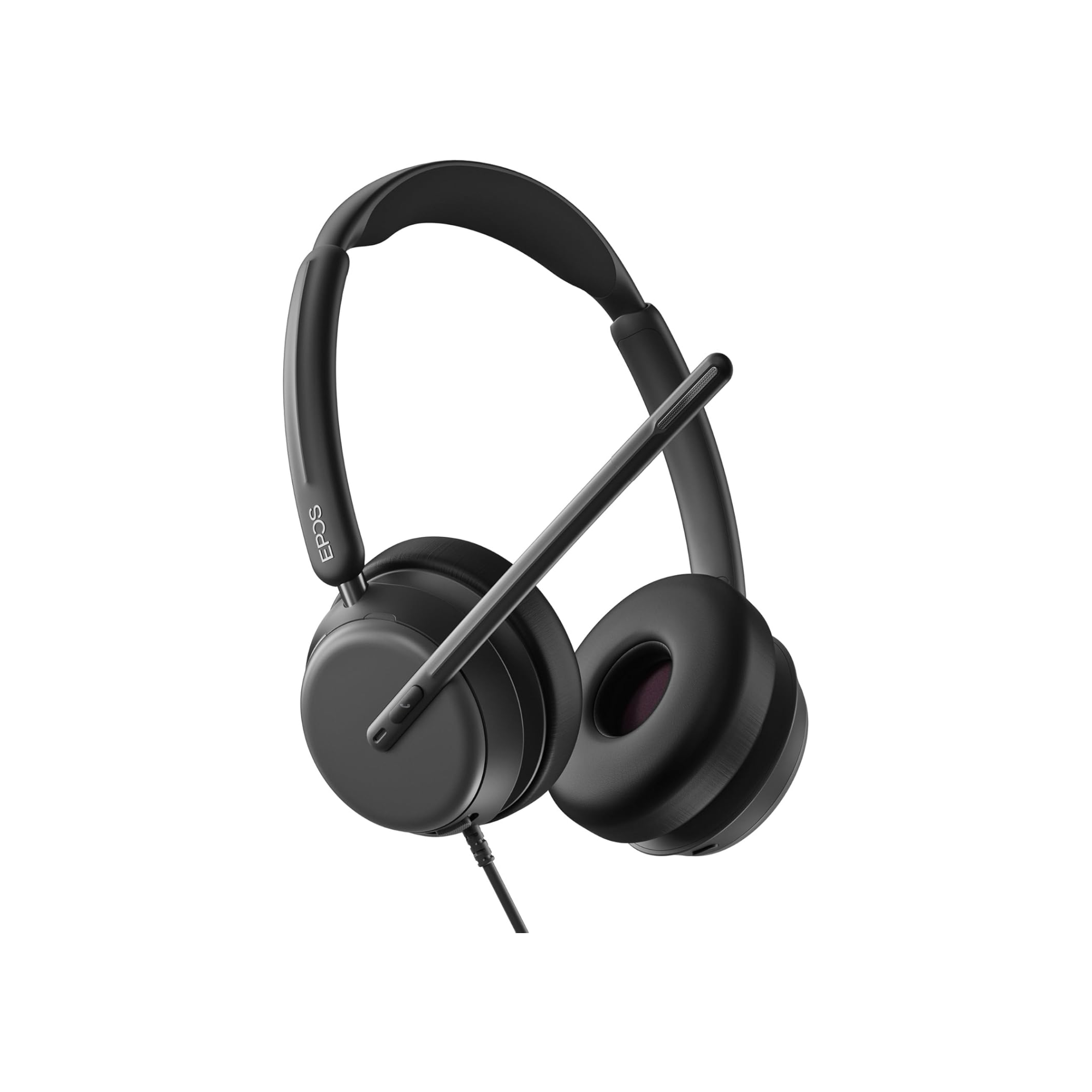
The EPOS IMPACT 1000 is another strong on-ear choice, particularly when microphone sound quality and noise reduction is a priority.
There's something especially interesting about the IMPACT 1000 for this discussion: over-ear cushions are available as an optional accessory. That gives you the ability to move from the traditional on-ear fit to an over-ear wearing style without replacing the headset itself. The Impact 1000 has one of the best, if not the best sounding microphones available today.
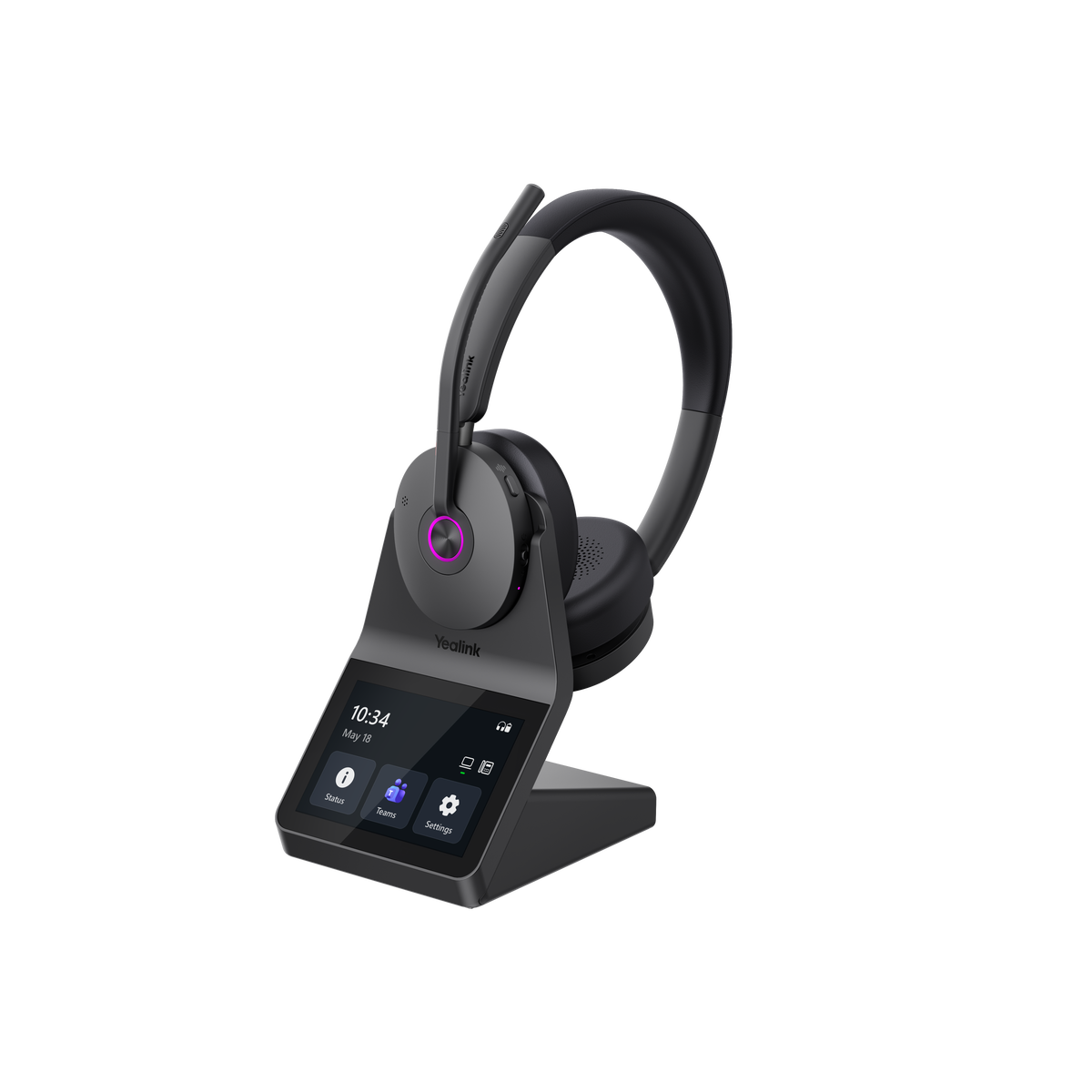
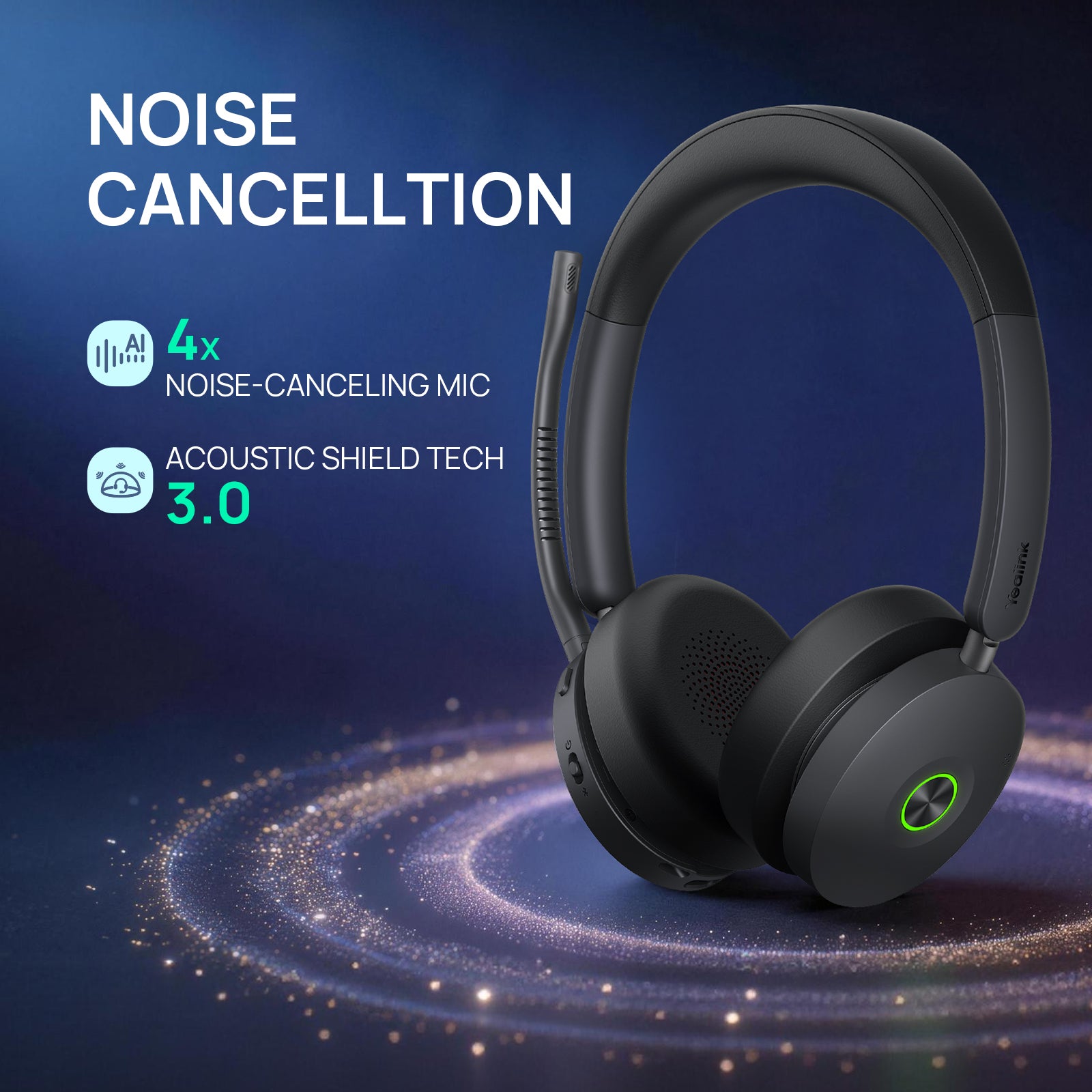
If you prefer over-ear, the Yealink BH78 combines the over-ear wearing style with active noise cancellation and a hideaway microphone boom, giving you a more consumer-inspired appearance without giving up a dedicated boom microphone for calls.
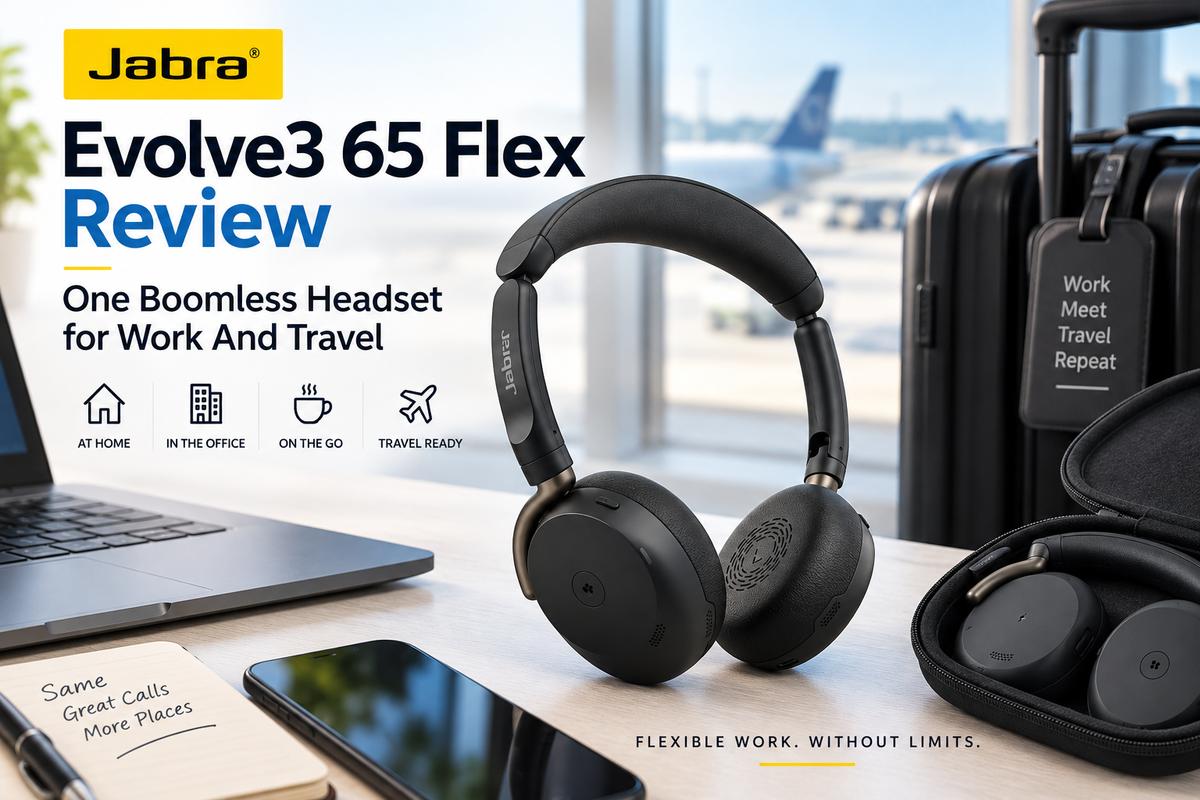
The Jabra Evolve3 85 takes that concept in another direction. It's an over-ear business headset without a traditional microphone boom, further blurring the line between business headsets and the headphones many people use outside of work.
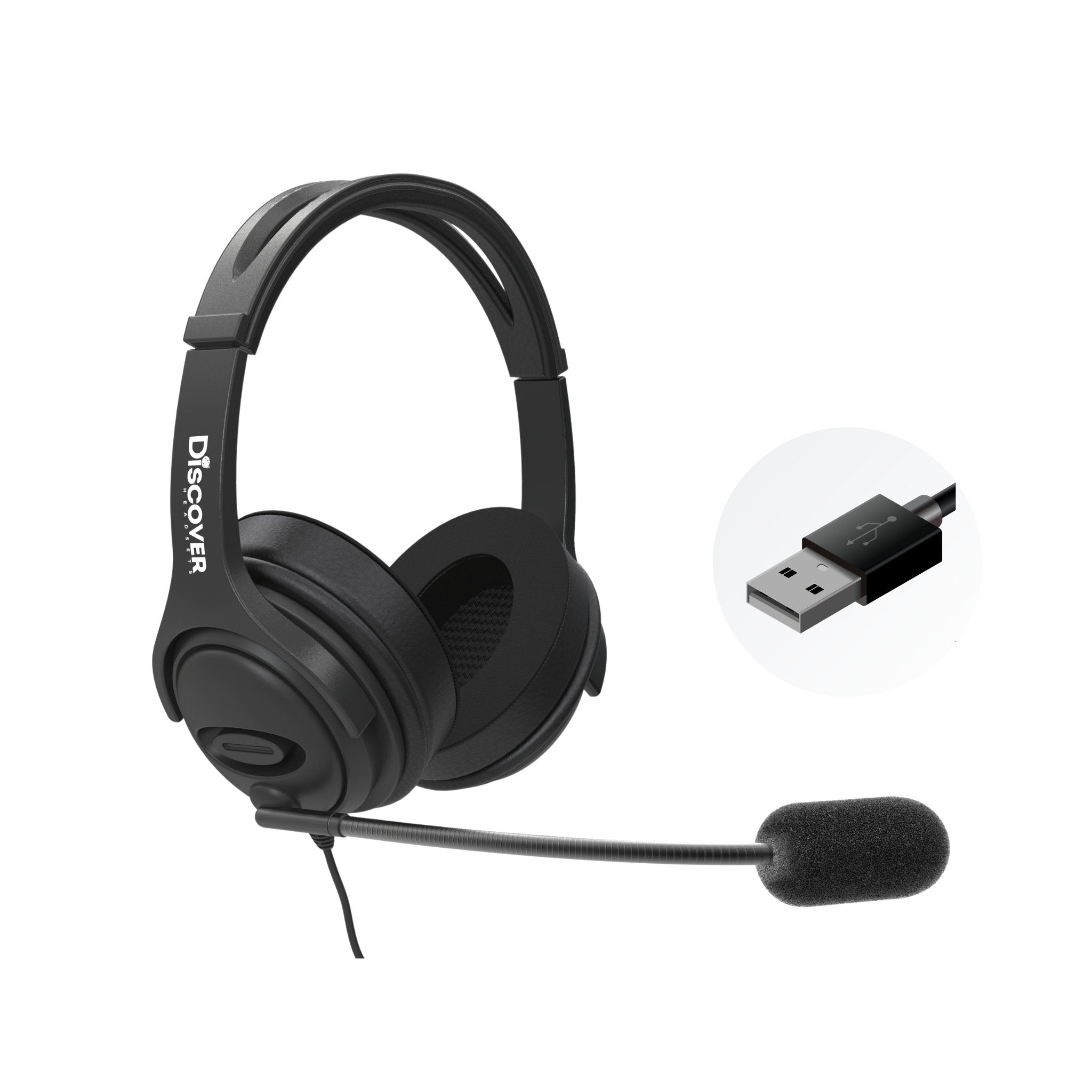
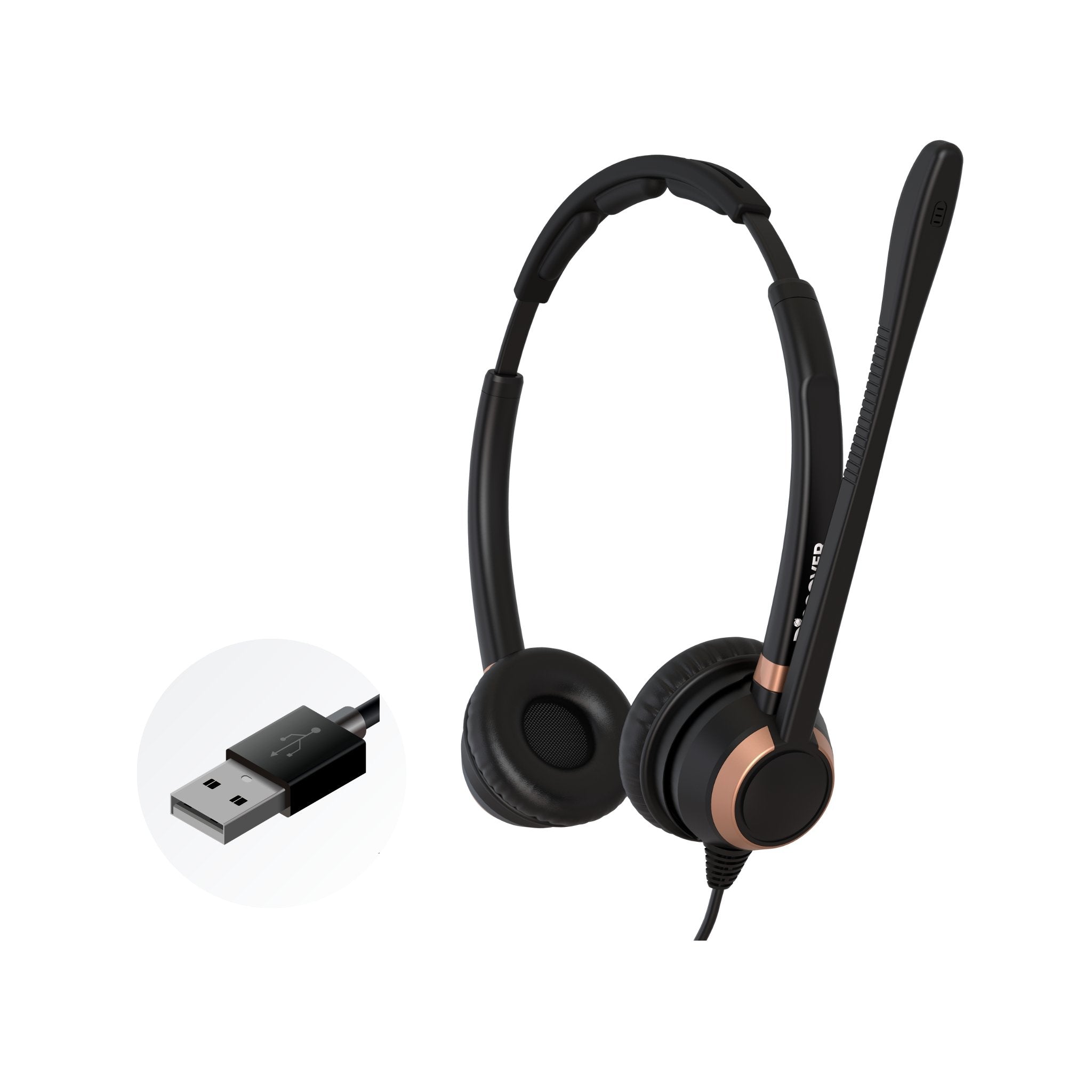
If a wired headset is what you’re looking for, then you can consider the Discover D722U, which comes with the over-ear cushions.
Otherwise, here are a few more for you to consider.
Yealink BH76 Plus. This headset comes with both types of ear cushions so you can interchange them whenever you want. It’s nice having the option.
HP Poly Focus 625. It comes with the on-ear cushions, but you can purchase separately, a pair of over-ear cushions for more noise reduction, and enhanced concentration.
These aren't the only good choices in either category. They're simply examples of how much the business headset market has expanded and how different the available designs have become.
So, On-Ear or Over-Ear: Which Would We Choose?
We wouldn't choose one for everybody.
If you like a smaller, typically lighter headset, want to maintain more awareness of your surroundings and don't mind cushions resting against your ears, on-ear may be the better choice for you.
If you don't like pressure directly against your ears, want greater passive noise isolation or simply prefer the feel and appearance of headphones that surround your ears, over-ear may be the better fit.
And if you ask two people who wear headsets all day, don't be surprised if they give you completely different answers.
That's the point.
The best headset isn't necessarily the one with the most padding, the largest cushions or the lowest weight. It's the one that gives you the combination of comfort, performance and fit that works best for the way you spend your workday, and what feels comfortable to you. Comfort is subjective which is why the choice rests upon you.
Have Questions or Need Some Help?

With so many business headsets available today, it's easy to become confused about which one makes the most sense for your particular situation. On-ear or over-ear is only one decision. You also have wired versus wireless, Bluetooth versus DECT, mono versus stereo, NC vs. ANC, different microphone designs, device compatibility and a long list of other features to consider.
That's where we can help.
Headset Advisor has been in business for over 30 years helping businesses with their communication needs. Our knowledgeable Advisors can learn about your work environment, the equipment you're using and what's most important to you, then help you narrow down the choices.
So don't feel like you're on your own in your search. Contact us at Headset Advisor for answers to your questions or a recommendation tailored to your specific needs.
Frequently Asked Questions
Do over-ear business headsets cost more than on-ear headsets?
Not necessarily. Price is usually influenced more by the headset's overall feature set, technology and positioning than whether the cushions rest on or surround your ears. You'll find both premium and more affordable choices in each category.
Are over-ear business headsets heavier than on-ear headsets?
Can be, but not always. Over-ear cushions are larger, and the headset itself may require a larger structure to accommodate them. However, materials and overall design can make a significant difference, so compare the actual weights of the models you're considering rather than assuming an over-ear headset will always be substantially heavier. In general, the weight difference is nominal.
Are on-ear or over-ear headsets better if you wear glasses?
Either can work well, but both can present fit challenges. On-ear cushions may press the temples of your glasses against your ears, while glasses can interfere with the seal of an over-ear cushion. One tip we've found useful is to put the headset on and get it situated first, then carefully slide your glasses into position.
Can you convert an on-ear business headset to over-ear?
Most headsets don't allow you to change between the two wearing styles, but there are exceptions. The EPOS IMPACT 1000, for example, has optional over-ear cushions, allowing you to change its standard on-ear wearing style. There are other wireless models that offer over-ear options. Those are listed in the blog content above.
Does an over-ear headset automatically have better active noise cancellation?
Not necessarily. Over-ear headsets generally have an advantage in passive noise isolation because the cushions surround your ears. Active noise cancellation is an electronic technology, and its effectiveness depends on how the headset's ANC system is designed and implemented. Beyond that, there may be some minor advantages of over-ear simply because it fully surrounds the ear which is known to remove more noise than on-ear cushions. When combined with ANC, you may find the over-ear to be slightly better. Again, it can depend on design.
Are over-ear headsets better for listening to music?
Many people prefer over-ear headphones for music because of their surrounding fit, greater passive isolation and more immersive listening experience. That doesn't mean an on-ear headset can't provide excellent audio quality, though. Speaker design, tuning and audio processing all play major roles in how a headset sounds.
Which wearing style is better when a company is buying headsets for many employees?
This can be challenging because comfort is so personal. If you're standardizing on one model for a larger group, consider weight, adjustability, cushion materials and the different environments employees work in.
When possible, allowing a small group of employees to evaluate potential models before a larger deployment can help identify fit or comfort issues before making a significant purchase. Most reputable vendors will provide you with the opportunity to try them before deciding.
And finally, given that there are models that can accept both types of ear cushions, or come with both, there may be value in considering those for a larger deployment. It will provide the employees with a choice.