Do you want the best headset?
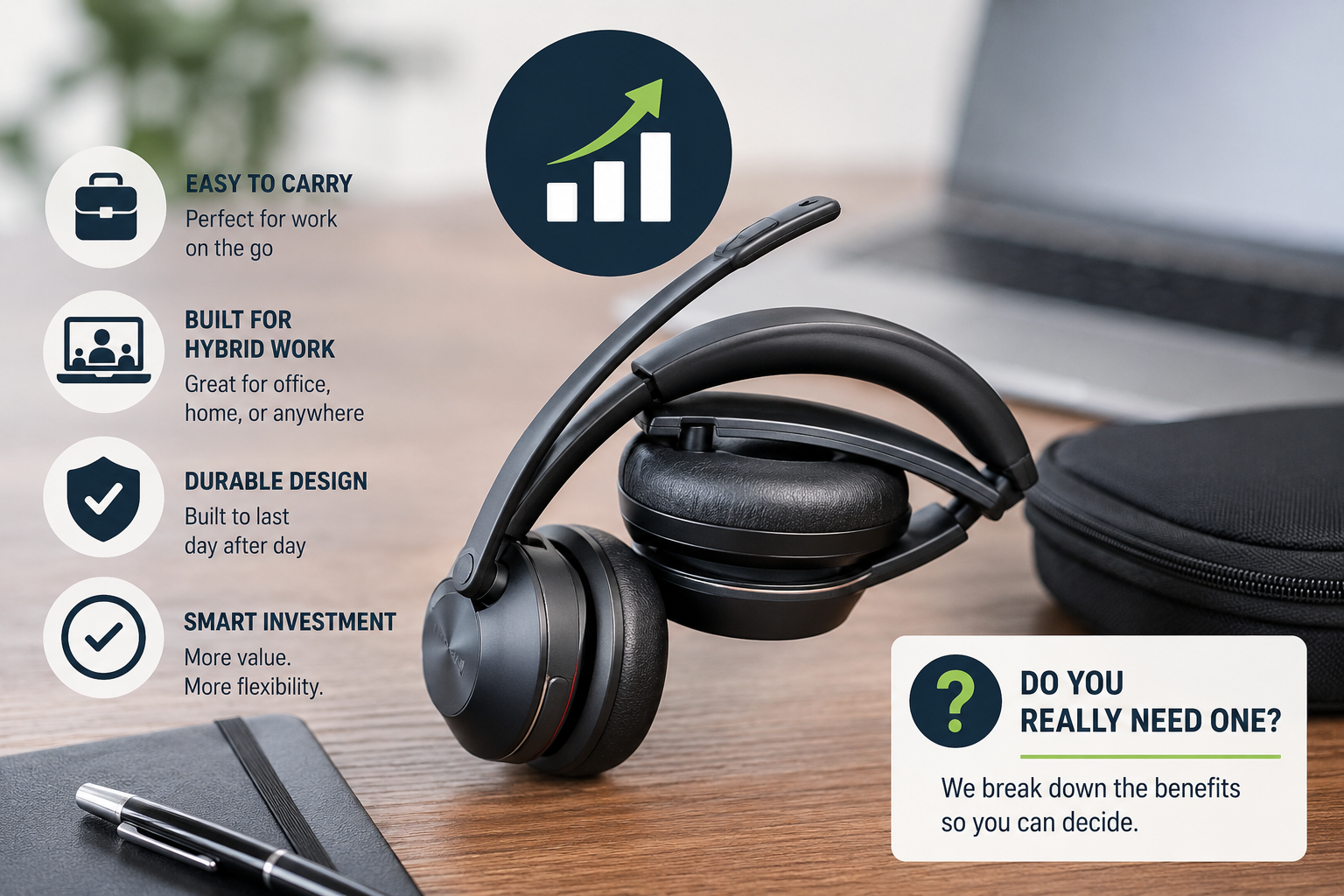
If you've been shopping for a new business headset lately, you've probably noticed something that wasn't very common just a few years ago.
Manufacturers are now introducing foldable business headsets.
At first glance, it may seem like just another feature added to an already long list of specifications. After all, business headsets have worked well for decades without folding, so why now?
Is this simply another marketing trend?
We don't think so.
After helping businesses find compatible communication solutions for more than 30 years, we've learned that meaningful product changes rarely happen by accident. Most are a response to changing customer needs and the way people work.
Foldable headsets are a good, recent example.
To understand why, it helps to look at how the workplace itself has changed.
The Workplace Changed Before the Headsets Did
Think back fifteen or twenty years.
Most people worked from the same desk every day. They answered calls on a desk phone, used the same computer, and when the workday ended, the headset stayed behind.
Choosing a headset was relatively straightforward.
Normally, things began by deciding on a wired or wireless model. If wireless fit your budget, the next decision was usually the wearing style: mono, stereo, or an earpiece. If background noise was a concern, you might choose a headset with a noise-canceling microphone.
Compatibility wasn't much of a discussion back then because nearly everything connected to the same device: a desk phone.
Today's workplace looks very different.
You may work in the office one day, from home the next, visit customers sometime during the week, or occasionally answer calls while traveling. Even if you rarely leave the office, you're probably communicating through multiple devices instead of just one.
Your headset may connect to a computer, mobile phone, Microsoft Teams, Zoom, Google Meet, Webex, and in many offices, a desk phone as well.
The role of the headset has expanded.
Instead of serving one desk and one device, it's expected to support multiple devices and the way you work today.
As the workplace evolved, business headsets evolved with it.

Business Headsets Continue to Evolve
One of the more interesting things we've observed over the years is that manufacturers rarely introduce meaningful new features without a reason.
As computers became the primary communications device, USB headsets became increasingly common.
And as smartphones found its way into everyday business, Bluetooth quickly followed.
As professionals began working with both computers and mobile phones, manufacturers introduced multipoint Bluetooth so a single headset could stay connected to both devices.
Even today, innovation continues.
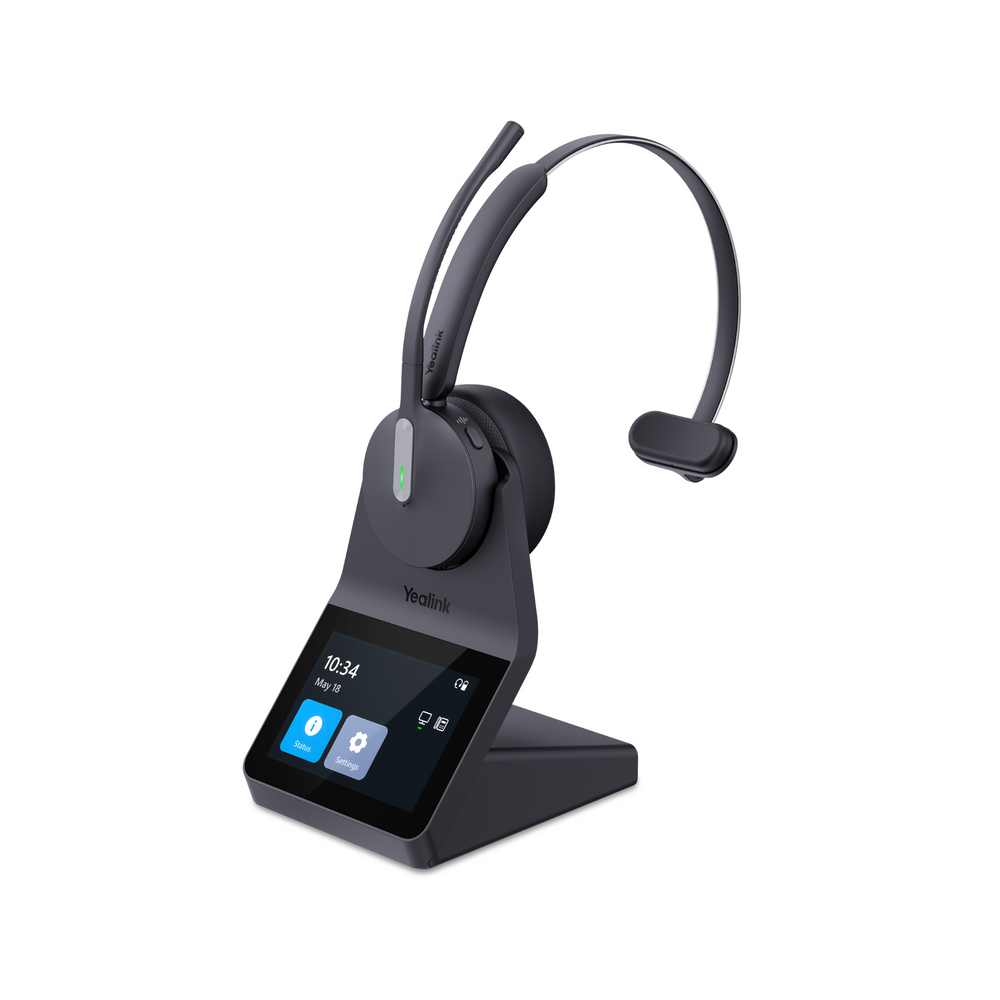
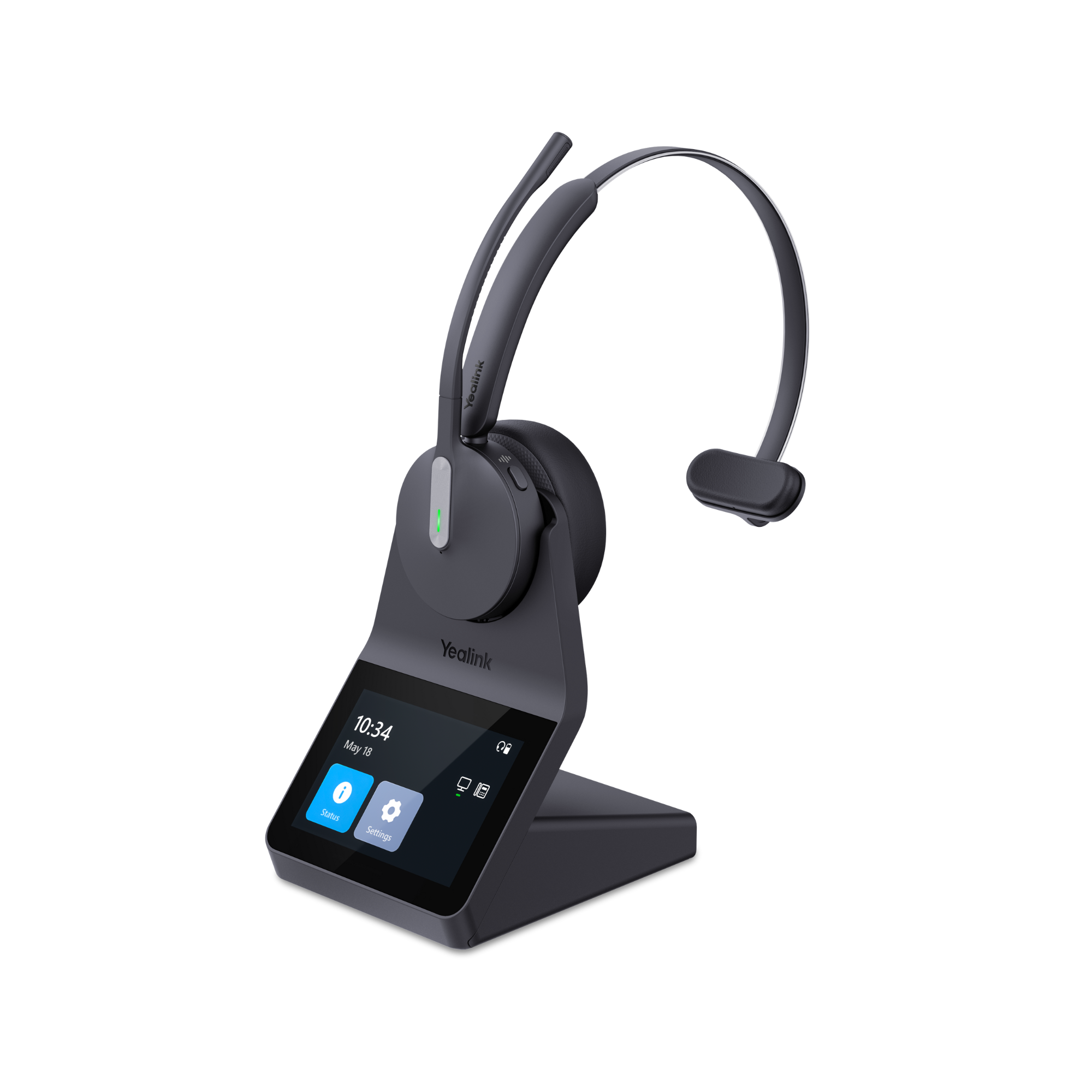
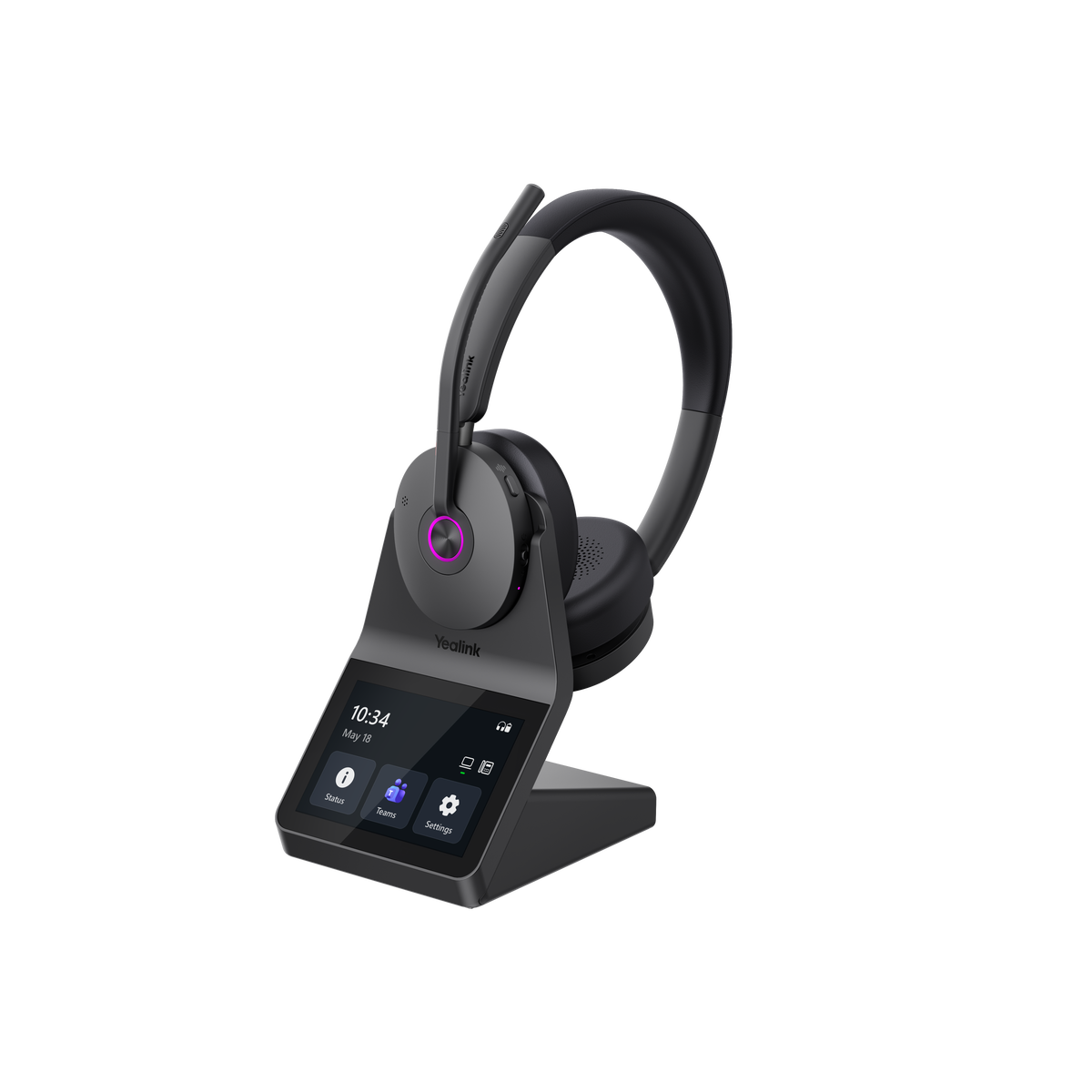
A good example is the DECT + Bluetooth Yealink HA64 Pro wireless headset.
Rather than placing Bluetooth in the base station, Yealink built Bluetooth directly into the headset itself. That means Bluetooth travels with you instead of remaining tied to your desk.
This may sound like a small, even insignificant change, but it's a practical improvement for people who have communication needs in, and out of the office across multiple devices.
It's another example of a feature designed to solve a real-world problem.
The same thinking has influenced improvements in microphones, battery technology, replaceable components, wireless connectivity, and now, foldable headset designs.
At Headset Advisor, we've always believed the best headset features aren't necessarily the newest ones, they're the ones that make your workday easier.

Why Foldability Matters
Here's a simple question.
Would a foldable headset make your workday easier?
For many people, the answer is no.
If you use a wired headset and don’t have a need for mobility, a foldable headset wouldn’t make sense. Likewise, if you use a wireless headset, say, with your computer, or desk phone, but don’t have a need for mobile connectivity, or taking calls remotely, then a wireless, foldable headset wouldn’t make sense for you.
But if you regularly carry your headset between the office and home, travel for business, or simply keep your headset in your laptop bag, portability starts becoming much more valuable.
That's where foldable headsets begin to make sense.
The value isn't in the hinge design itself. The value is that the headset becomes easier to pack, easier to protect, and easier to carry wherever your work takes you.
At Headset Advisor, we often remind customers that features only matter when they're connected to a benefit for you.
In this case, foldability is the feature. Portability is the benefit.
🎧 Headset Advisor Insight
The best headset isn't the one with the longest list of features. It's the one whose features best match the way you work.
If portability isn't important to your workday, you may never benefit from a foldable headset. But, if your headset regularly travels with you, it's a feature you'll likely appreciate every day.

When Two Manufacturers Reach the Same Conclusion
One thing we've learned over the years is to pay attention when long-time competitors begin moving in the same direction.
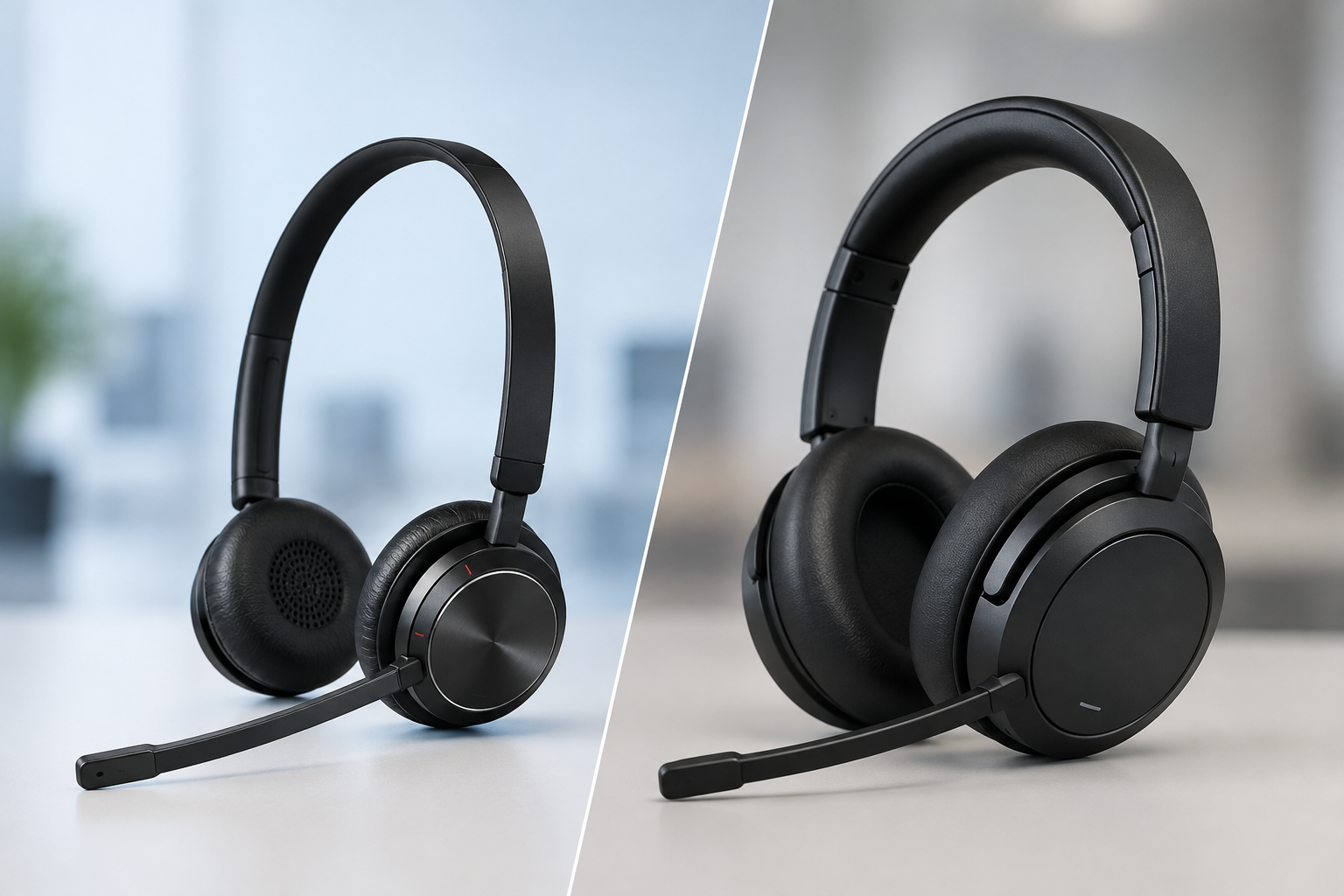
HP Poly and Jabra have competed for decades, yet both have begun to offer premium foldable business headsets.
That isn't a coincidence.
Both companies recognized that many professionals no longer work from a single location, and both designed products intended to make carrying a premium business headset more convenient without sacrificing the performance expected from business-class communications equipment.
Interestingly, foldability isn't the only similarity.
Both headsets feature user-replaceable batteries and replaceable ear cushions, allowing you to replace components that naturally wear over time instead of replacing the entire headset, which was the case for those models that had a sealed battery.
When you look at these products together, they tell a broader story.
Manufacturers aren't simply adding features.
They're adapting their products to support the way business professionals work today.
How HP Poly Approached Portability
If your work regularly takes you between the office, home, customer locations, or while traveling, the HP Poly Voyager Focus Fold 625 was designed with that type of workday in mind.
Its foldable design makes it easier to store inside a backpack or laptop bag, while the included hard carrying case helps protect it during travel. Those may seem like relatively small conveniences until you begin carrying your headset from one location to another on a regular basis.
Of course, portability is only part of the story. Once the headset is on your head, you'll care much more about microphone performance, comfort, background noise reduction, wireless range and reliability.
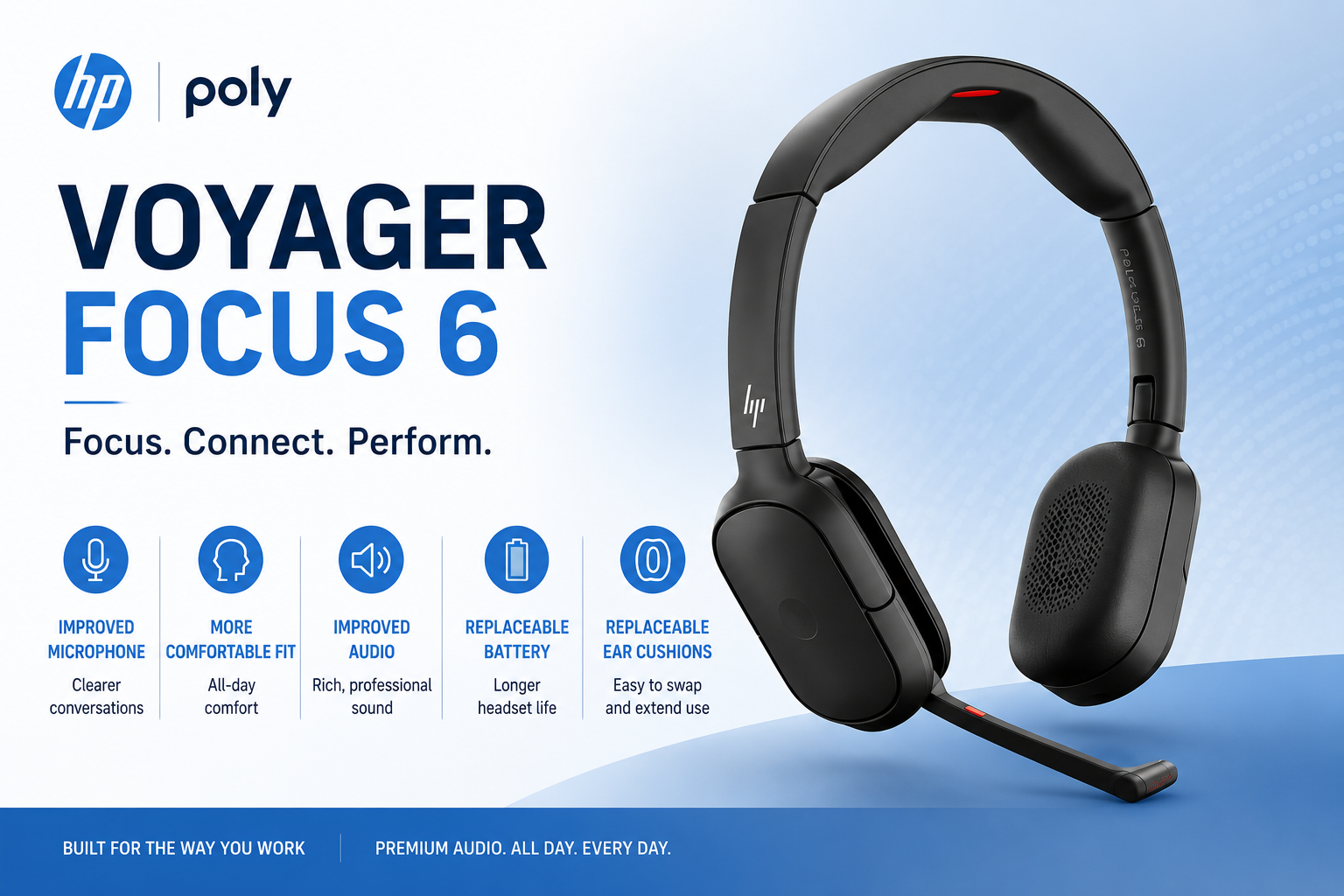
HP Poly addresses those priorities with a six-microphone system, Hybrid Active Noise Cancellation (ANC), and a premium stereo design intended for professionals who spend much of their day communicating. And in this model, there is no microphone boom arm, which means it takes on the appearance of a pair of headphones instead of looking like a typical business headset.
That feature alone should be appealing to a lot of people.
One question we expect many people will ask is about comfort.
That means the headset weight will be part of the discussion. The Fold 625 weighs approximately 7.36 ounces, placing it a little above average compared with many stereo business headsets that weigh arouond 6 ounces, or in some cases, less than 6 ounces.
Should that automatically make it the better headset, or should the modest additional weight concern you?
Not necessarily.
After evaluating business headsets for more than three decades, we've learned that published weight tells only part of the story.
Think about a good pair of walking shoes.
Two pairs may weigh almost exactly the same, yet one feels noticeably more comfortable after wearing it all day. The difference usually comes down to design, balance, cushioning, and how the weight is distributed.
Headset comfort works much the same way.
A well-designed headband, quality ear cushions, balanced weight distribution, adjustability and appropriate clamping force often have a greater impact on long-term comfort than an ounce or two on a specification sheet.
Until we've had an opportunity to spend meaningful time wearing the Fold 625 ourselves, we'd rather avoid drawing conclusions based solely on published specifications. As of this writing, the Fold 6 series is new, and not yet available, but we’ll produce additional content, including reviews once they’re released.
Specifications tell you part of the story.
Real-world experience tells you the rest.
HP Poly also rates the Fold 625 for up to 164 feet (50 meters) of wireless range under ideal conditions. Typically using line of sight test methods in an open, unobstructed environment.
Does that automatically make it the better headset?
Again, not necessarily.
If you spend most of your day within twenty or thirty feet of your desk, you'll probably never notice the difference between 100 feet and 164 feet.
However, if you regularly move throughout a larger office, warehouse, medical facility, or office campus while on calls, that additional wireless range could become a meaningful advantage.
Like so many headset features, it comes back to one simple question:
How do you work, where do you work, and what devices do you use?
That's always the best place to begin.
And, if the HP Poly Focus 6 series headset has your interest, here's a good place to begin, the Poly 6 series overview video:
How Jabra Approached the Same Challenge
Moving on to Jabra, you'll find that Jabra reached many of the same conclusions, although it chose a slightly different approach.
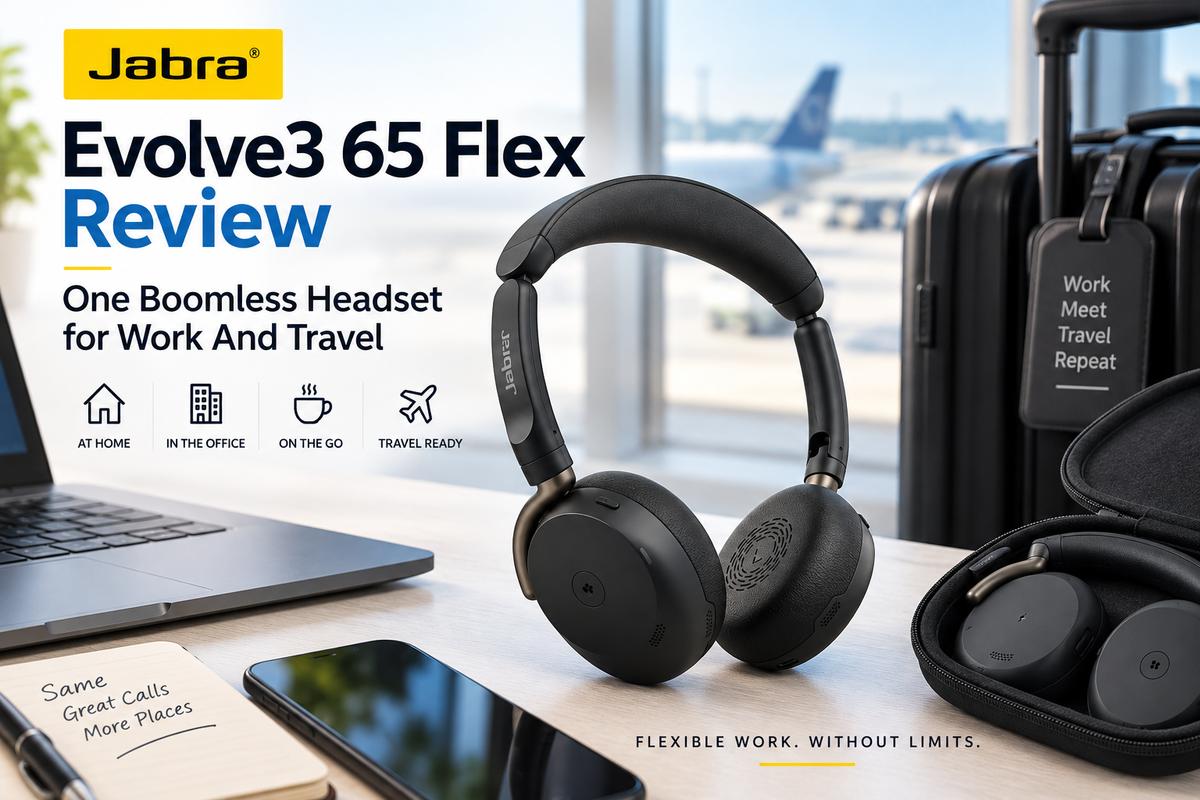
The Jabra Evolve3 65 Flex is also designed for professionals whose office changes throughout the week, but one of the first specifications you'll probably notice is its weight.
At approximately 5.04 ounces, it's a bit lighter than the Fold 625.
Will you feel that difference?
Possibly.
Weight isn't the only factor affecting comfort as we mentioned earlier, but it's certainly one of them. If you wear a headset throughout most of your workday, reducing even a couple of ounces may become noticeable over several hours of use.
Jabra rates the Evolve3 65 Flex for up to 100 feet (30 meters) of wireless range.
That's less than HP Poly's published specification, but it's worth asking an important question.
How much wireless range do you actually need?
If your work keeps you within a typical office, you may never approach either limit.
If you're constantly walking throughout a larger building while remaining connected to calls, additional wireless range may become more valuable.
Neither approach is right or wrong.
It simply depends on the way you work. And a point worth remembering is stated wireless range isn't always the range you'll end up getting. Wireless range can vary greatly depending on your work environment, and the obstructions and construction like concrete, brick, steel, sheetrock etc. The denser the material, the more a wireless signal can become degraded which can have an impact on wireless range.
Replaceable accessories. Like the Poly Fold, Jabra also features a replaceable battery and ear cushions, continuing a trend we're pleased to see evolving throughout the industry. Those aren't flashy features, but they add real value over the life of the headset by allowing you to replace components that naturally wear instead of replacing the entire headset.
Another thoughtful addition is Bluetooth Low Energy (LE), which is designed to consume less power while maintaining wireless connectivity, helping improve battery efficiency.
Sustainability. If sustainability is important to your organization, Jabra has also placed considerable emphasis on recycled materials and environmentally responsible packaging. According to Jabra, the Evolve3 65 Flex incorporates 37% recycled or biocircular materials by weight and ships in FSC-certified packaging.
I won’t pretend to be all knowing on biocircular, or FSC-certified packaging, but I’m pretty sure in the world of ecology and sustainability, both are very likely a good thing.
As with every new headset we evaluate, we'd want to spend meaningful time using the Evolve3 65 Flex before making any final recommendations.
Marketing specifications are helpful.
Living with a headset for several weeks tells you much more.
That's why we always prefer real-world experience over simply repeating a specification sheet because it allows us to provide you with more meaningful insights.

To learn more about the Jabra Evolve3 65 Flex, have a look at their product video below:
HP Poly Voyager Focus Fold 625 vs. Jabra Evolve3 65 Flex
Rather than comparing every published specification, we've highlighted the features we believe are most likely to influence your buying decision in the side-by-side comparison below.

Which Headset Is Right for You?
By now, you may be wondering which of these headsets we'd recommend.
The honest answer is neither:
The one that best matches how you work, and the devices you use would be the best one for you.
That may sound like we're avoiding the question, but after helping businesses choose communication solutions for more than thirty years, we've learned there's really not one headset that's best for everyone, even those that may be seen as the "latest and greatest"
Think about your own workday.
- Do you spend most of your time at one desk?
- Do you regularly move between the office and home?
- Do you travel?
- Do you walk throughout a larger office while on calls?
Those answers matter far more than simply comparing one headset specification against another.
The best headset isn't necessarily the one with the longest wireless range.
Or the lightest weight.
Or the longest battery life.
Or (fill in the blank).
It's the one whose features you'll actually use, and gives you benefit.
That's the philosophy we've followed for more than three decades, and it's the same philosophy we use every day when helping customers choose the right communication solution.
Who Should Consider a Foldable Business Headset?
A foldable headset isn't the right choice for everyone.
If any of these situations describe your workday, a foldable headset may be worth considering.
- You regularly work from both the office and home.
- You travel for business and carry your headset in a backpack or laptop bag.
- You visit customers.
- You're a technology consultant, managed service provider, systems integrator, trainer, salesperson, or field professional whose office can change from day to day.
- You simply prefer keeping your headset with your laptop so it's always available when you need it.
If that sounds like you, portability becomes more than a convenience.
It becomes part of your daily workflow.
A foldable headset won't make you more productive simply because it folds.
It may make your workday a little easier because it's easier to carry, easier to protect, and easier to have with you for your calls and entertainment wherever your work takes you.
Who Probably Doesn't Need One?
One thing we've learned over the years is that every feature isn't valuable to every buyer.
Foldable designs are a good example.
If your headset spends nearly every day on the same desk and really doesn't move from there, then portability probably isn't solving a problem for you.
Maybe you work from the same office every day.
Perhaps you work from home full-time and your headset rarely leaves your desk.
Or maybe your headset remains assigned to a permanent workstation inside a customer service department.
In situations like these, you may place greater value on microphone performance, Active Noise Cancellation, battery life, wearing style, comfort or additional connectivity options.
That doesn't make a foldable headset the wrong choice. It simply means you're less likely to benefit from one of its primary advantages.
One of the easiest ways to overspend on technology is by paying for features you'll rarely use.
One of the smartest ways to buy technology is by choosing features that match the way you work.
🎧 Headset Advisor Take
One thing more than thirty years in this business has taught us is that meaningful product improvements usually begin with a change somewhere else.
Years ago, the biggest decision was whether to buy a wired headset or spend more for wireless. Today, customers are thinking about Microsoft Teams, mobile phones, Bluetooth, AI-powered microphones, Active Noise Cancellation, comfort, connectivity, and now, portability.
Will foldable business headsets become the new standard?
For some people, yes.
For others, they may offer little advantage.
And that's perfectly okay.
At Headset Advisor, we've never believed in recommending products simply because they're new or feature rich.
We believe in recommending products because they're the right fit.
That's the philosophy behind every recommendation we make.
About Headset Advisor
For more than 30 years, Headset Advisor has helped businesses find communication solutions that fit the way they work. Every recommendation begins by understanding your needs, confirming compatibility with the devices and applications you use, and recommending solutions that fit your work environment, preferences, and budget.
Whether you need help selecting the right headset, confirming compatibility before you buy, setting up new equipment, exploring our affordable lease program, or reducing background noise with neep™ AI-powered noise canceling software, our team is here to help before and after the sale. So don't hesitate to contact us if we can assist you.
More than 800 five-star Google reviews reflect the trust businesses have placed in Headset Advisor, and we work every day to continue earning it.
Additional Resources
Product datasheets
Final Thoughts
The workplace will continue changing.
And as it does, the technology supporting it will continue changing too.
Five years from now, we'll probably be talking about features that don't even exist today. Perhaps in part driven by Ai.
The challenge isn't trying to keep up with every new specification that appears on a product page.
The challenge is understanding which of those features will actually improve your workday, or that of your team.
That's why we encourage customers to start with a simple question.
How, where, and with what devices do I communicate each day?
Once you answer those questions, choosing the right headset becomes much easier.
And if you're still not sure which direction to go, that's exactly what we're here to help with. We help filter out all the noise surrounding buying headsets. We make it easy! Contact us if you’d like some free, professional advice. We’d love to hear from you.